Yulu Launches Electric Delivery Fleet in Nashik With 100 DeX EVs

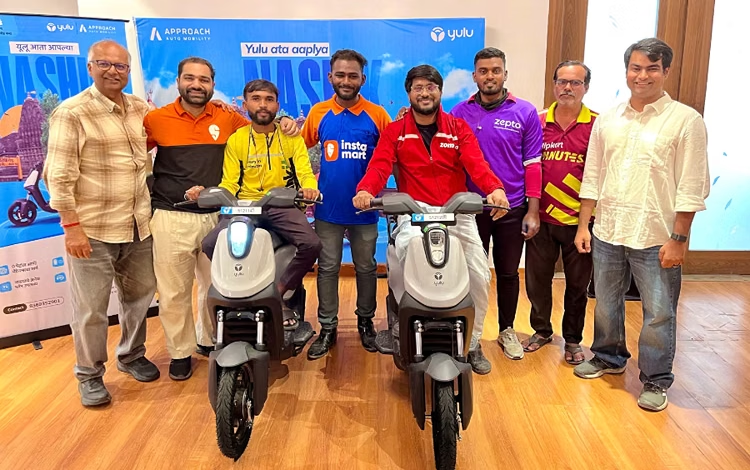
Yulu has launched its electric mobility service for delivery partners in Nashik, Maharashtra, with an initial fleet of 100 DeX electric two-wheelers. The rollout, under its Yulu Business Partner (YBP) vertical, is being undertaken with Approach Auto Mobility and will initially operate from a Yulu Centre in Rajiv Nagar.
The service is expected to expand into other parts of Nashik and nearby areas as demand develops. The launch makes Nashik Yulu’s second market in Maharashtra after Mumbai and its 13th city of operation overall, extending the company’s franchise-led model into another non-metro market.
The move targets a city where, according to Yulu, daily deliveries have doubled over the past year to around 25,000. For Yulu, the opportunity is to make electric two-wheelers a practical option for quick-commerce and food-delivery workers. The larger test is whether its rental, battery-swapping and service model can deliver dependable vehicle access while helping riders manage costs and protect their take-home earnings.
Yulu Targets Nashik’s Expanding Delivery Market
Yulu says Nashik has more than 25 operational dark stores and around 1,500 high-volume restaurants. These outlets serve demand from quick-commerce platforms, food-delivery services and other on-demand businesses that depend on vehicles for frequent, short-distance trips.
The initial fleet of 100 DeX electric two-wheelers gives Yulu a starting point in this market without requiring a city-wide deployment from day one. Operations will begin in Rajiv Nagar, with the company and its local partner planning to expand coverage in line with demand.
This phased approach is important for a fleet business. Vehicles need to be positioned where delivery activity is concentrated, and utilisation must be high enough to justify the costs of acquiring, maintaining and operating them. Expanding too quickly can leave vehicles underused; expanding too slowly can limit availability for riders and delivery businesses seeking dependable fleets.
For delivery partners, the appeal of an electric rental model is that it can reduce the need to purchase a vehicle outright and take on the associated ownership costs. However, the value of the arrangement depends on the rental or subscription price, the availability of vehicles and swaps, and how much time riders can spend completing paid deliveries.
Battery Swapping and Bundled Costs Are Central to the Offer
Yulu’s delivery service combines purpose-built electric two-wheelers with battery swapping through Yuma Energy. Its pricing plans are designed to include energy, maintenance and insurance, giving delivery partners a more consolidated view of vehicle-related expenses.
Battery swapping can help reduce the time a vehicle spends waiting to recharge, provided that a compatible, charged battery is available at a convenient location. For delivery workers whose earnings depend on completing orders, reducing downtime can be as important as reducing energy costs.
Bundled pricing can also make expenses easier to plan. Rather than managing energy, routine maintenance and insurance as separate items, riders may be able to access these services through a single offering. The practical benefit, however, depends on the exact plan terms, usage limits and what is covered by the subscription.
Yulu claims that delivery partners using its electric vehicles can retain 30–40% more earnings than petrol motorcycle users. That figure should be treated as a company-reported comparison: the launch announcement does not provide the methodology, assumptions or underlying cost data needed to independently verify it.
Actual savings can vary with daily distance, working hours, delivery incentives, rental charges, petrol prices and maintenance requirements. Riders also need to consider whether a vehicle’s range and operating characteristics suit the routes they work. The most useful measure will be the amount a delivery partner retains after vehicle and energy expenses, rather than a headline percentage alone.
Approach Auto Mobility Leads the Local Rollout
Yulu has partnered with Approach Auto Mobility, led by entrepreneur Jai Dhanani, to establish the Nashik operation. The local business is involved in EV charging solutions, ride-sharing operations and battery-swapping franchises, and already has a battery-swapping partnership with Yuma Energy.
The partnership gives Yulu a local operator to help build and manage the service as it enters the city. For a franchise-led mobility model, local execution is crucial: the fleet must be available where riders need it, vehicles need to be maintained, and battery-swapping access must support daily operating schedules.
Yulu co-founder and CEO Amit Gupta said the company is expanding its franchise-led model into non-metro markets as quick-commerce and on-demand delivery services grow. Jai Dhanani said the partnership would focus on lowering delivery partners’ operating costs while providing businesses with access to electric delivery fleets.
Nashik is Yulu’s ninth franchise-led operation launched over the past two years. Its other franchise-led markets include Indore, Bhopal, Kochi, Tirunelveli, Madurai, Coimbatore, Kolkata and Chandigarh Tricity. The company’s directly operated metropolitan markets include Bengaluru, Mumbai, Delhi-NCR and Hyderabad.
Can the Franchise Model Scale Beyond Major Metros?
Yulu’s Nashik launch reflects a broader opportunity for fleet operators: electric delivery services do not need to be limited to India’s largest cities. As quick-commerce and food-delivery businesses reach more urban markets, demand may grow for vehicles that can be accessed without a large upfront purchase and supported through an integrated operating model.
But replicating the model across cities requires more than finding a local franchise partner. Each market has its own delivery patterns, route distances, operating hours and concentration of businesses. Fleet size, battery-swapping coverage and maintenance capacity need to match those local conditions.
For franchise partners, the economics also need to work at the operating level. Vehicles must remain productive, maintenance needs to be predictable, and subscription income must support fleet and service costs. For riders, the arrangement must be affordable and reliable enough to justify continued use.
The initial deployment of 100 DeX vehicles gives Yulu a way to test demand in Nashik before expanding further. The next indicators to watch will be fleet utilisation, rider adoption, repeat usage and the pace at which the service expands beyond Rajiv Nagar. The company has not announced a specific timeline for city-wide expansion.
Yulu’s entry into Nashik is therefore more than a new-city launch. It is a test of whether a franchise-led EV delivery model can serve a growing non-metro market while making the economics work for the operator, delivery partner and business customer. The fleet count marks the beginning; sustained utilisation and verifiable rider savings will show whether the model can scale.