Tata Passenger Electric Mobility Charging Network: Testing the 1,000 Claim

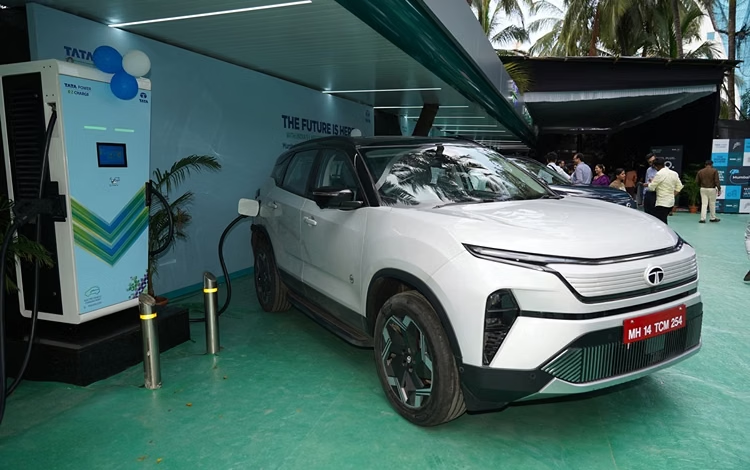
Tata Passenger Electric Mobility says its public charging network now has more than 1,000 live fast-charging connectors. The count matters, but the release mixes connectors, sites and capacity in ways that make the network hard to judge.
Tata Passenger Electric Mobility (TPEM), the passenger-vehicle arm of Tata Motors, says its public charging network has passed 1,000 live fast-charging connectors across 200 cities and 180 highway corridors, with 40 MW of installed capacity. The company says the network has supported more than 32 million electric kilometres for its customers and describes it as the largest OEM-led charging network in India. The announcement came on 22 October 2026. The number is significant, but it measures something narrower than the headline suggests. What matters is how many connectors are usable, where they sit, and who is allowed to use them.
The timing matters for buyers. Fast charging is where many petrol-car owners say the case for an electric car breaks down, particularly on long journeys. Industry estimates put India’s public charging stations at roughly 29,000 by the end of 2025, against a need of around 1.3 million by 2030. We have not verified either figure independently, but they indicate how small any single network remains. A carmaker-run network of 1,000 connectors is a modest share of that total. Its significance is that it signals how a manufacturer sees charging: as part of selling cars, not a separate utility.
Counting Connectors, Sites and Capacity
The release switches units. It counts 1,000 live connectors, 180 corridors and 200 cities, and then ranks states by “sites”: Maharashtra with 52, Karnataka with 44 and Tamil Nadu with 32. Those three states total 128 sites, which is far from the connector count and does not reconcile with it. Without a site count and a connector count reported side by side, it is not possible to tell whether the network averages several chargers per location or spreads single chargers across many sites. Those are very different networks for a driver to rely on.
The capacity figure allows a rough check. Dividing 40 MW by 1,000 connectors gives an average of about 40 kW per connector. That is plausible for a mix of fast and slower units, but it suggests that relatively few locations offer the high-power charging that makes long-distance travel practical. Our analysis is that 40 MW should be read as installed capacity, not what any car can draw at a given moment. A vehicle’s own charging limit and the grid connection at each site set the real charging speed.
Who Can Use the Network, and at What Cost
The company does not say whether the network is open to drivers of other brands, what tariffs apply, or what share of connectors are working at any given time. Those are the questions that determine whether a network billed as public is usable by the public. The release also does not say how the 32 million kilometres were measured, whether they include home or workplace charging, or how many vehicles they cover. Without those numbers, the figure cannot be converted into a per-vehicle or per-connector measure of use.
The ownership question adds complexity. Tata Power, a separate company, runs its own public and captive charging business under the EZ Charge brand. It announced a milestone of more than 1,000 public charging stations in October 2021, and later reports describe a much larger network. A UNI report on a co-branded Tata.ev MegaCharger Hub says many TPEM hubs are accessible through the Tata Power EZ Charge app. The two networks are therefore partners as well as separate businesses, and the TPEM release does not explain how responsibility for sites, billing and maintenance is divided. Readers searching for “Tata charging” may easily confuse the two.
Corridors, Coverage and Competitive Pressure
The release describes the network as spanning 2,570 km north to south, from Amritsar to Thoothukudi, and 1,800 km east to west, along the Dwarka–Kolkata–Jamshedpur route. We could not verify these endpoints or corridor spans against independent mapping. Even if accurate, a network that reaches two long corridors is not the same as a charger every 100 km. The southernmost point being 85 km from Kanyakumari suggests the network follows highways and major towns rather than delivering continuous coverage along every route.
Competition matters here. A carmaker’s charging network earns its keep mainly when its own buyers use it, and it competes with operators that serve all vehicle brands. For TPEM, the test is whether range-anxious buyers are persuaded to choose its cars because of its network, and whether the network can be used economically by owners of other vehicles without undermining its exclusivity. The release is silent on both points.
The question for the industry is whether OEM-owned networks will stay closed to other brands, or open through shared apps, common standards and published utilisation data. Connector counts show how much equipment has been installed. They do not show whether a driver can plug in on a busy Sunday, at the far end of a corridor, without a queue or a failed session. Until uptime, utilisation and third-party access are reported alongside installation numbers, 1,000 connectors is a measure of construction, not yet proof of a usable network.