Shakti EV Mobility: Can Capital Keep Pace With ₹24 Crore Revenue?

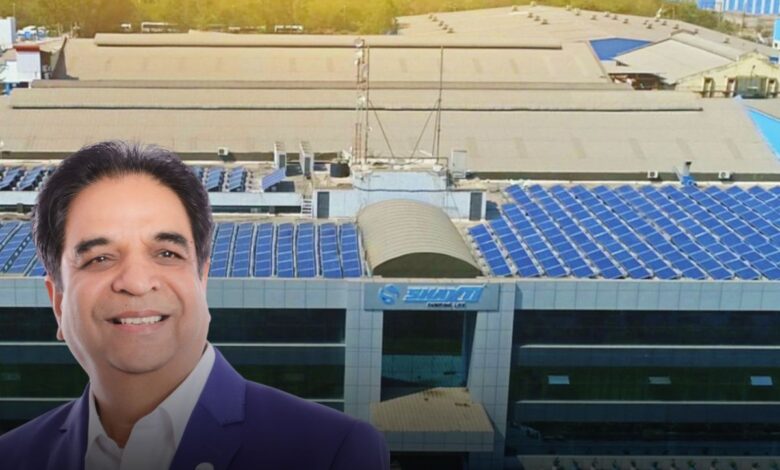
Shakti Pumps has invested a further ₹12 crore in its wholly owned subsidiary, Shakti EV Mobility, taking cumulative funding to ₹92 crore, according to the company. The subsidiary’s FY26 turnover is a fraction of that. The question is whether revenue can catch up with capital.
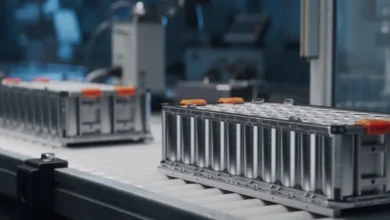
Shakti Pumps (India) has invested ₹12 crore in its wholly owned subsidiary, Shakti EV Mobility Private Limited, by subscribing to 1.20 crore equity shares of ₹10 each, paid in cash. The company says its cumulative investment in the subsidiary now stands at ₹92 crore. Shakti EV Mobility makes electric motors for two-wheelers, three-wheelers, four-wheelers and special-purpose vehicles, along with EV chargers and controllers. The transaction is small for a listed company, but it adds to a steady funding pattern behind an EV business that remains small beside the parent’s solar pumping activity.
Reconciling the Funding Trail
The filings we reviewed show a sequence of tranches. A ₹4 crore subscription in February 2025 took the total to ₹39 crore. A ₹10 crore tranche in April 2026 raised it to ₹65 crore, and a ₹5 crore subscription in July 2026 brought it to ₹70 crore. Those figures come from exchange-filing summaries reported by EV Reporter, Free Press Journal, Angel One and Autocar Professional. Adding ₹12 crore to ₹70 crore gives ₹82 crore, not ₹92 crore. Either a further tranche of about ₹10 crore was made that the sources we reviewed do not report, or the cumulative figure in the latest disclosure is calculated on a different basis. We could not resolve the gap, and readers should check the exchange filing directly.
Other reports conflict further. One summary gives a cumulative total of ₹55 crore after the July tranche, and another gives ₹80 crore. Several reports also disagree on balance-sheet and revenue figures for earlier years. We have relied only on figures that are consistent across the sources we checked.
What the Capital Is Buying
Revenue is the clearest measure of return so far. Autocar Professional, citing the July 2026 filing, reports turnover of ₹24.25 crore in FY2026, up from ₹3.73 crore in FY2025. Angel One reports the same two numbers. That is a rise of roughly six and a half times on a small base. Against ₹92 crore of cumulative investment, FY26 turnover is about a quarter of capital put in. Our analysis is that this is not a sign of failure for a manufacturer still building capacity, but it does mean the subsidiary has not yet shown it can earn a sustained return on the funds committed to it. The company has not disclosed the subsidiary’s profitability, order book or capacity utilisation in the reports we reviewed.
The disclosure also states that the investment is not a related-party transaction, because the subsidiary is wholly owned. That is a technical point, but it confirms that the capital is moving within the group and that the parent controls the pace of funding. A phased framework of ₹114.3 crore over five years has been reported by one publication, which we could not confirm against an exchange filing. If accurate, roughly ₹22 crore of that envelope would remain after the current ₹92 crore, suggesting the parent expects continued funding.
The subsidiary was incorporated on 16 December 2021. Its funding has therefore run for about four years and has accelerated in the last eighteen months, which is consistent with a business moving from development towards production. The filings do not show how much of the capital has gone into fixed assets, how much into working capital, or how much remains unspent.
A Small Arm Beside a Larger Solar Business
The parent remains primarily a solar company. Shakti Pumps, founded in 1982 and listed since 1995, is best known for solar irrigation pumps. Recent order announcements include a 6,580-pump contract from the Maharashtra utility MSEDCL, worth ₹155.24 crore under a state solar pumping scheme, reported in May 2026, and a ₹71.25 crore PM-KUSUM order from MPUVNL. Those single contracts are several times the EV subsidiary’s FY26 turnover. Our analysis is that the EV arm is funded from a parent whose cash flows depend heavily on government-scheme solar orders, which bring their own payment timing and execution risk.
The EV business also faces a crowded field. Motor and controller supply for electric two-wheelers, three-wheelers and cars is contested by established component makers, and by vehicle makers that increasingly design or source these parts in-house. A subsidiary with ₹24 crore of turnover must win qualified supply contracts with large vehicle manufacturers, a process that usually involves validation, quality audits and volume commitments. None of the filings we reviewed names an OEM customer, so the commercial pipeline remains unverified.
Policy may help. Government schemes that favour localised EV components, including state-level calls for auto component makers to localise EV supply chains, could widen the market for domestic motors and controllers. That benefit is conditional on the subsidiary winning contracts, and the policy environment is not in itself a source of revenue.
The question for investors and the industry is whether ₹92 crore of capital will buy a supply position with vehicle makers, or whether the EV arm remains a secondary bet funded from a solar business. Revenue growth from a low base will not answer that on its own. Named customers, order volumes and margins, reported alongside each capital infusion, would show whether the subsidiary is building a business or steadily drawing on the parent’s balance sheet.