Olectra Deploys 35 Electric Buses in Maharashtra City

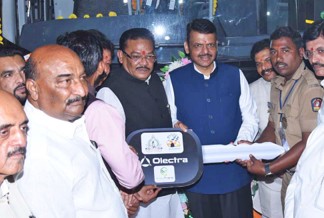
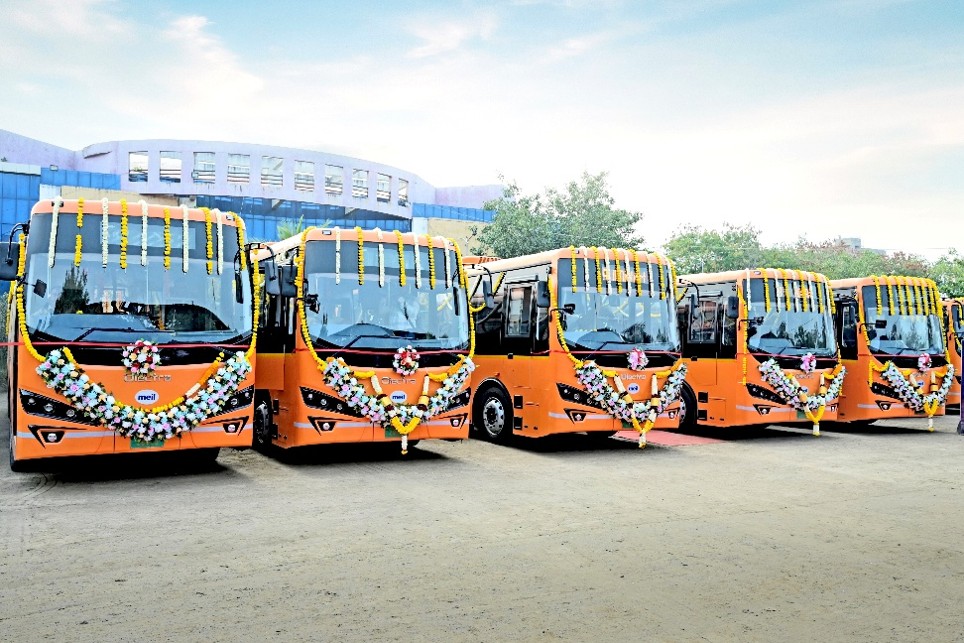
Olectra Greentech has introduced 35 air-conditioned electric buses in Chhatrapati Sambhajinagar, Maharashtra, expanding its presence in the state’s public transport network. Inaugurated by Chief Minister Devendra Fadnavis, the 9-metre buses feature blade battery technology, regenerative braking and integrated passenger information systems. Evey Trans will operate the fleet across city routes.
Olectra Greentech Limited has introduced 35 air-conditioned electric buses in Chhatrapati Sambhajinagar, marking an expansion of electric public transport services in Maharashtra. The buses were formally inaugurated by Maharashtra Chief Minister Devendra Fadnavis on November 1, 2026, at a ceremony held at the Divisional Sports Complex in the city. Passenger services were scheduled to commence on November 2 across various urban routes.
The deployment is intended to support the Chhatrapati Sambhajinagar Municipal Corporation’s efforts to modernise its public transport network. The buses will be operated by Evey Trans, with the fleet expected to provide commuters with air-conditioned public transport and an alternative to conventional fuel-powered city buses.
The introduction comes as Indian cities continue to expand electric bus operations as part of efforts to reduce local vehicular emissions and improve public transport services. For Chhatrapati Sambhajinagar, the deployment adds a new electric fleet to its urban mobility network, while extending Olectra’s operational presence in Maharashtra.
35 Electric Buses Inaugurated by Maharashtra Chief Minister
The inauguration ceremony took place on November 1, with Chief Minister Devendra Fadnavis formally introducing the 35 buses at the Divisional Sports Complex. The vehicles have been deployed to support the municipal corporation’s public transport modernisation efforts and are intended to operate across different routes within the city.
Evey Trans will manage the operation of the buses. The company’s role as fleet operator places it at the centre of the deployment, with the vehicles supplied by Olectra Greentech and intended for public passenger services under the city’s transport network.
The November 2 commencement date announced by Olectra follows the inauguration ceremony by one day. However, the company has not specified the individual routes, service frequency, passenger fares or daily operating schedules in its announcement. These details will be important for understanding how the additional fleet will improve connectivity and accessibility for residents.
Blade Battery Technology and Safety Features
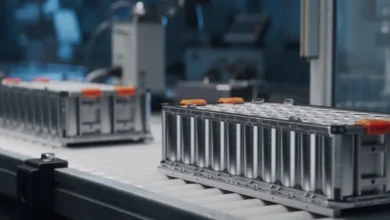
The newly introduced buses measure 9 metres in length and use blade battery technology. Their construction is based on a monocoque design, while the suspension system includes air suspension at both the front and rear. These features are intended to support vehicle stability and passenger comfort during urban operations.
The braking system combines an Anti-lock Braking System (ABS), regenerative braking and disc brakes at both ends. ABS helps prevent wheel lock-up during hard braking, supporting steering control, while regenerative braking recovers part of the vehicle’s kinetic energy during deceleration and feeds it back into the battery system. The front and rear disc brakes provide the conventional friction-based braking capability required to slow and stop the vehicle.
Olectra Electric Bus – Key Specifications
- Number of buses: 35
- Bus length: 9 metres
- Battery technology: Blade battery technology
- Body construction: Monocoque
- Suspension: Front and rear air suspension
- Braking: ABS, regenerative braking and front and rear disc brakes
- Climate control: Air-conditioned passenger cabin
For passenger safety and convenience, the buses are equipped with CCTV cameras and air curtains at both passenger doors. The air curtains are designed to help limit the entry of outside air when the doors open, supporting cabin comfort during frequent stops.
The onboard passenger information system includes digital destination boards integrated with a passenger announcement system. Additional equipment includes a vehicle location tracking system, USB charging ports and a digital instrument cluster. Together, these systems are intended to improve passenger information, vehicle monitoring and convenience during daily operations.
Olectra Expands Its Electric Bus Operations Across India
The Chhatrapati Sambhajinagar deployment adds to Olectra’s wider electric commercial vehicle operations across India. According to the company’s press release, Olectra has more than 4,500 electric buses operating across over 55 cities, with its fleet having covered more than 750 million green kilometres.
These figures are company-reported operational milestones. They indicate the scale of the manufacturer’s existing deployment base, although the number of vehicles operating, their utilisation levels and the distance covered by individual fleets can vary across cities and contracts.
In his statement accompanying the announcement, Olectra Managing Director Mahesh Babu highlighted the company’s focus on expanding access to electric public transport while improving passenger experience. He also acknowledged the support of the Maharashtra Government and the Chhatrapati Sambhajinagar Municipal Corporation in introducing the fleet.
The company’s broader operations cover electric buses and electric tippers, with applications across urban and intercity transport. Its latest deployment in Maharashtra adds another municipal operation to this network. The company also states in its press release that its order book exceeds 7,950 vehicles, although this represents a reported order position and should not be interpreted as vehicles already delivered or operating.
Operational Performance Will Determine the Impact
The introduction of electric buses is only one part of the transition towards cleaner urban public transport. The actual impact of the new fleet will depend on how consistently the vehicles operate, the routes they serve, charging infrastructure availability, maintenance arrangements and the ability of the operator to maintain scheduled services.
Battery capacity, certified driving range, charging time and the location or capacity of the supporting charging facilities have not been disclosed for this particular deployment. These are important operational parameters, especially for city buses that need to complete multiple trips throughout the day while maintaining predictable service schedules.
Fleet utilisation will also be an important measure of performance. The number of buses introduced provides an indication of deployment scale, but passenger ridership, kilometres operated, vehicle availability and charging downtime will offer a clearer picture of how effectively the investment supports urban mobility.
For the Chhatrapati Sambhajinagar Municipal Corporation, the addition of 35 air-conditioned electric buses creates an opportunity to expand cleaner public transport options. For Olectra and Evey Trans, the deployment adds another operating location where vehicle reliability, passenger experience and service consistency will shape the longer-term performance of the fleet.
As electric bus adoption expands across Indian cities, the focus will increasingly shift from announcing new deployments to demonstrating sustained operational performance. Whether the new fleet delivers improved connectivity, dependable services and measurable reductions in local tailpipe emissions will ultimately determine its contribution to Chhatrapati Sambhajinagar’s public transport network.