Amara Raja Energy & Mobility reported an 18.5% year-on-year increase in consolidated revenue to ₹4,108.71 crore in Q2 FY27. However, consolidated net profit declined 44.9% to ₹152.48 crore, highlighting the gap between business expansion and profitability. The company has also approved a ₹2,320 crore investment in battery pack manufacturing and lithium iron phosphate (LFP) cell production in Telangana.
Amara Raja Energy & Mobility Ltd reported consolidated revenue from operations of ₹4,108.71 crore for the quarter ended September 30, 2026, compared with ₹3,467.02 crore in the corresponding quarter of the previous financial year. The results, approved by the company’s board on November 2, 2026, reflect continued growth across its automotive battery operations and emerging energy businesses.
Despite the increase in revenue, the company’s consolidated net profit after tax fell to ₹152.48 crore from ₹276.49 crore in Q2 FY26. Profit before tax declined to ₹208.52 crore from ₹364.82 crore in the year-ago quarter. Total expenses increased to ₹3,922.81 crore from ₹3,252.04 crore, indicating that the growth in operating revenue did not translate into higher profitability during the reporting period.
The company’s performance presents two parallel developments: continued demand for its established lead-acid battery products and an expanding New Energy business, alongside the financial pressures associated with its changing business mix and investment in emerging battery technologies.
Revenue Growth Across Automotive and Industrial Businesses
According to the company’s results and management commentary, domestic revenue growth exceeded 10% during the quarter. The automotive original equipment manufacturer (OEM) and aftermarket businesses recorded double-digit growth, supported by demand across two-wheeler and four-wheeler applications. The Home Energy business also contributed to domestic performance, while the industrial UPS business recorded growth of more than 7%, as reported by the company.
The consolidated segment results show that lead-acid batteries and allied products generated revenue of ₹3,876.25 crore in Q2 FY27, compared with ₹3,297.01 crore in the corresponding quarter last year. However, the segment’s result declined to ₹240.02 crore from ₹393.92 crore. This indicates that revenue expansion in the company’s largest business was accompanied by lower segment profitability.
International demand also remained strong, according to management. However, geopolitical disruptions affecting shipping temporarily restricted the company’s ability to fulfil certain export orders. Such supply-chain and logistics constraints remain relevant for battery manufacturers operating across multiple international markets, particularly when they depend on timely movement of raw materials and finished products.
Amara Raja’s established lead-acid battery operations continue to provide a substantial share of its revenue. Its presence across automotive aftermarket, OEM, industrial UPS and telecom applications gives the business exposure to multiple demand segments. At the same time, maintaining margins amid input-cost movements, competition and changing customer requirements will remain important for sustaining financial performance.
New Energy Business Expands as Battery Investments Accelerate
The New Energy business recorded quarterly revenue of ₹232.46 crore, compared with ₹170.01 crore in Q2 FY26, representing year-on-year growth of approximately 36.7%. For the first half of FY27, revenue from the segment reached ₹441.76 crore against ₹291.30 crore in the corresponding period last year.
Stationary applications, particularly telecom battery packs, supported volume growth during the quarter. Management also indicated that the company expects to maintain its position in the telecom battery market as the sector transitions towards lithium-based technologies.
However, the segment continues to report operating losses. Its segment result was negative ₹41.55 crore in Q2 FY27, compared with a loss of ₹48.72 crore in the corresponding quarter of the previous year. Although the loss narrowed year-on-year, it widened from ₹22.05 crore in Q1 FY27. This makes the pace of capacity utilisation, customer qualification and commercial scale-up important indicators to monitor as the business expands.
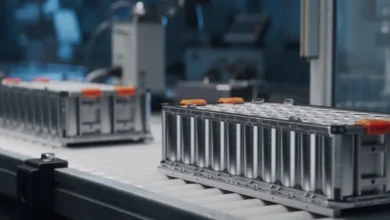
A significant development during the quarter was the approval of a capital expenditure programme worth ₹2,320 crore by Amara Raja Advanced Cell Technologies Limited, the company’s wholly owned subsidiary. The investment covers an expansion of battery pack manufacturing capacity from 4 GWh to 9 GWh and the establishment of an LFP cell manufacturing plant at the Amara Raja Giga Corridor in Telangana.
According to the company’s November 2 regulatory filing, the facilities are expected to be established within the next 30 months. The investment will be financed through a combination of equity and debt. The proposed expansion is part of the company’s broader strategy to develop an integrated manufacturing ecosystem for energy storage and mobility technologies in India.
Profitability and Execution Remain Key Challenges
For the six months ended September 30, 2026, consolidated revenue from operations increased 21.2% to ₹8,323.25 crore from ₹6,868.10 crore in H1 FY26. However, consolidated net profit declined 22.2% to ₹343.42 crore from ₹441.29 crore. Profit before tax also decreased to ₹463.15 crore from ₹593.74 crore.
The half-year performance reinforces the difference between revenue growth and earnings growth. While the company continues to expand its customer base and increase business volumes, the decline in consolidated profit suggests that operating costs, segment profitability and the economics of its growing New Energy operations warrant close attention.
The proposed manufacturing expansion also introduces execution considerations. Establishing new cell and pack manufacturing facilities requires significant capital, technology development, equipment installation, customer validation and the ability to achieve competitive production costs. The company’s ability to translate its planned capacity into sustained commercial output will be a key factor in determining the returns from this investment.
Competition in India’s battery and energy storage industry is also intensifying, with domestic and international manufacturers investing in lithium-ion cell production, battery packs and energy storage systems. LFP technology is increasingly relevant to stationary storage and electric mobility applications, but commercial success will depend on manufacturing scale, product quality, cost competitiveness and customer adoption.
Amara Raja’s Q2 FY27 performance therefore reflects a business in transition. Its lead-acid operations continue to provide a significant revenue base, while its New Energy segment is expanding from a smaller base and requires further progress towards profitability.
The central question for the coming quarters is whether the company’s investments in LFP cells and battery pack capacity can develop into commercially sustainable operations without placing prolonged pressure on consolidated earnings. Revenue growth remains encouraging, but execution, margins and the financial returns from its new manufacturing facilities will ultimately determine the strength of its transition.