Tsuyo and LvKON’s Electric Drivetrain Pact Tests India’s CV Localisation

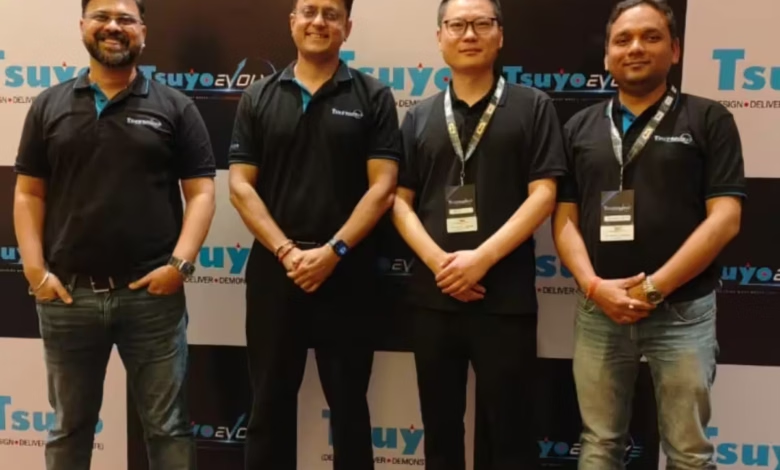
Tsuyo Manufacturing has deepened its technical collaboration with China’s LvKON to develop electric drive systems for commercial vehicles. The partnership is less about a new alliance than about a shift in what the two companies intend to build in India, and the financial terms and timeline remain undisclosed.
Indian electric powertrain maker Tsuyo Manufacturing has entered a technical collaboration with Suzhou LvKON Transmission Technology, a Chinese drivetrain specialist, to develop electric drive systems for commercial vehicles, according to ETAuto’s report published on 23 October 2026. The collaboration covers product engineering, design validation, manufacturing processes, testing infrastructure and after-sales support. The companies aim to develop electric motors, transmissions, integrated drive systems and electronic controls for India’s electric commercial vehicle market. Neither company disclosed financial terms or a commissioning date for Tsuyo’s planned greenfield facility.
From Product Catalogue to Joint Engineering
The relationship is not new. Tsuyo and LvKON signed a formal memorandum of understanding on 20 September 2023. Under that agreement, they planned to launch battery-electric products in 2024, including direct-drive motors, transmission electric drives and continuous electric drives, aimed at heavy-duty commercial and off-road vehicles. ETAuto describes the latest arrangement as building on five years of engagement, which implies contact predating the 2023 MoU. We could not verify that earlier history from public sources.
The change is in scope. The 2023 arrangement was a supply and product-introduction plan. The new collaboration joins engineering, validation, manufacturing and lifecycle support in a single programme, and it sits alongside a proposed facility of approximately 24 acres. The planned plant is envisioned as an integrated platform for drivetrain engineering, manufacturing, testing and product validation. Our analysis is that the company is moving from importing a catalogue of designs towards localising the full development cycle, which is where most of the value and most of the risk in electric drivetrains sit.
Tsuyo’s own product focus has also narrowed. Mobility Outlook reported that Tsuyo agreed to stop selling its L3 motors and controllers directly, with Greaves Cotton taking over those transactions. Tsuyo said it would continue supplying L5 and N1 and N2 categories. Read alongside the LvKON tie-up, the pattern is a company concentrating on commercial and heavier categories, where a technology partner’s experience in drive motors and transmissions is most relevant.
What Each Partner Brings, and What Remains Unverified
Tsuyo was established in 2020 and makes mid-drive electric motors with in-house design. According to company statements reported by ETAuto, it has sold more than 200,000 motors, works with more than 50 OEMs and operates two plants in Greater Noida, Uttar Pradesh, with products ranging from 0.5 kW to 400 kW. EV Reporter reports that Tsuyo supplies Mahindra, Volvo Eicher and Sonalika, and that it was selected by the Ministry of Electronics and Information Technology for an ICE-to-EV retrofit project for commercial vehicles. A ₹40 crore pre-Series A round led by Avaana Capital is funding a third plant for high-wattage motors up to 250 kW, with a vehicle testing track and end-of-line validation. We have not verified the sales, OEM count or plant claims against independent records, and the ₹40 crore round is reported without a date.
LvKON, founded in 2011 in Suzhou, describes itself as a specialist in electric drive assemblies, control strategy, special gearboxes, high-torque-density drive motors and controllers for new-energy commercial vehicles. Its chief executive told Mobility Outlook in 2023 that the company held more than 35% of China’s commercial vehicle market and 55% of heavy-duty mining dump trucks and off-road vehicles. A listed Chinese parent, Mingteng International, reported in 2024 that LvKON held 19.1% of heavy-duty truck motors and 26.4% of medium-duty truck motors. These are domestic Chinese figures, measured in different segments, and they do not indicate performance in Indian duty cycles.
That last point matters. Indian commercial vehicles face stop-start urban routes, high ambient temperatures, overloading and very different charging and maintenance practices from the Chinese mining and highway applications where LvKON has its strongest record. The collaboration’s own language acknowledges the issue: LvKON’s India sales director says the company’s technical team can respond to local requirements through customised design and production. Customisation is the right answer, but it is also where the cost, validation time and performance uncertainty of any imported platform are concentrated.
The Localisation Test
The partnership will be judged less by its announcement than by a set of verifiable milestones. The first is whether the facility is commissioned, and on what timeline; neither company has said. The second is local content: how much of the motor, transmission and control electronics is made in India, and how much is imported from China. The third is intellectual property. The release does not state whether LvKON is licensing designs, co-developing platforms, or transferring know-how that Tsuyo can adapt independently. Those terms determine whether Tsuyo owns its next generation of products or depends on a foreign partner’s roadmap.
Competitive pressure is also a constraint. Electric truck drivetrains are being developed by component specialists, by vehicle makers with in-house programmes and by foreign suppliers entering the Indian market. Tsuyo’s supply relationships with Mahindra and Volvo Eicher suggest it can compete for OEM business, but winning volume will depend on price, validation speed and after-sales support rather than on the breadth of a technology agreement.
The question for the industry is whether India’s electric truck drivetrains will be designed and validated here, with foreign technology as an input, or licensed from China and assembled locally. The answer will show up in commissioned capacity, disclosed local content and the first named OEM programmes built on the new platforms. Until those are reported, the partnership is an important signal about intent, but it is not yet evidence of a localised supply base.