The Future in Motion: India’s Electrified Mobility Vision for 2035


India’s journey towards electrified mobility by 2035 will be shaped by far more than the shift from conventional engines to electric powertrains. From resilient supply chains and battery chemistry diversification to software-defined vehicles, circularity, smart charging and workforce readiness, the ecosystem is evolving rapidly. In this insightful perspective, Vinay Pandey, Director – Global Strategic Sourcing Head, SPIRO, examines the forces that will shape India’s electric mobility ambitions and its potential to emerge as a global hub for the Global South.
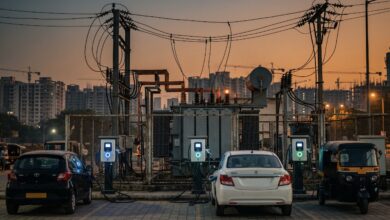
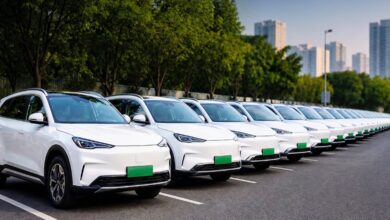
India’s mobility transition hinges on resilient supply chains, not ambition alone. As electrification accelerates across 2, 3 and 4-wheelers, sourcing strategies must de-risk cell and mineral dependencies; lithium, cobalt, and rare earths remain geopolitically fraught, reinforcing the case for localisation under the PLI scheme and the emerging battery Gigafactory push. That localisation, however, will only hold if domestic capacity is protected from underpriced imports. The government’s shift in focus from passenger vehicles to commercial vehicles is a welcome move. Commercial fleets and last-mile logistics operators need cost-parity sourcing above all, while passenger EVs must simultaneously chase range and affordability. Evolving policies such as FAME, PM E-DRIVE, and the semiconductor missions must stay aligned with global trade shifts, China-plus-one strategies and should remain consistent and stable, must be reinforced to remain effective. Equally important, electrification must not be pursued merely to satisfy CAFE norms. Companies need to demonstrate genuine investment in ecosystem development and capability building for the nation and for customers’ evolving aspirations. Meanwhile, drones and autonomous personal mobility are signalling the next frontier, poised to reshape component ecosystems altogether. The government’s renewed focus on charging backend infrastructure through subsidies is a step in the right direction, as customers increasingly weigh trust, total cost of ownership, and charging access in their purchase decisions. The new highway policy mandating EV charging infra is a well-planned intervention. Ultimately, India’s 2035 vision will demand as much sourcing agility as engineering innovation to serve its own aspirations and the Global South’s needs.
Chemistry Diversification: Beyond Lithium-Ion
The next decade will not be defined by a single battery chemistry but by a portfolio approach. Sodium-ion cells, which sidestep lithium and cobalt entirely, are moving from pilot lines to commercial-scale production and are especially well suited to price-sensitive two- and three-wheelers where energy density matters less than cost and cycle life. Lithium iron phosphate continues to gain share in commercial vehicles for its safety and longevity, while solid-state and semi-solid-state cells, still some years from mass affordability, promise the step-change in range and charging speed that long-haul trucking and premium passenger EVs will eventually need. A multi-chemistry strategy, rather than a single national bet, is the more resilient path forward.
Software-Defined Vehicles and the New Value Stack
As hardware differentiation narrows, competitive advantage is migrating to software: over-the-air updates, battery-management intelligence, predictive maintenance, and in-cabin experience. Indian suppliers that once competed purely on manufacturing cost will increasingly need to compete on code, sensors, and semiconductors, positioning the domestic semiconductor mission and chip-design ecosystem as being just as strategically important as cell manufacturing. Vehicles are becoming platforms that generate and monetise data over their lifetime, not one-time hardware sales, and component suppliers who can offer embedded intelligence alongside their parts will command a growing share of vehicle value.
Vehicle-to-Grid and the Battery as a Grid Asset
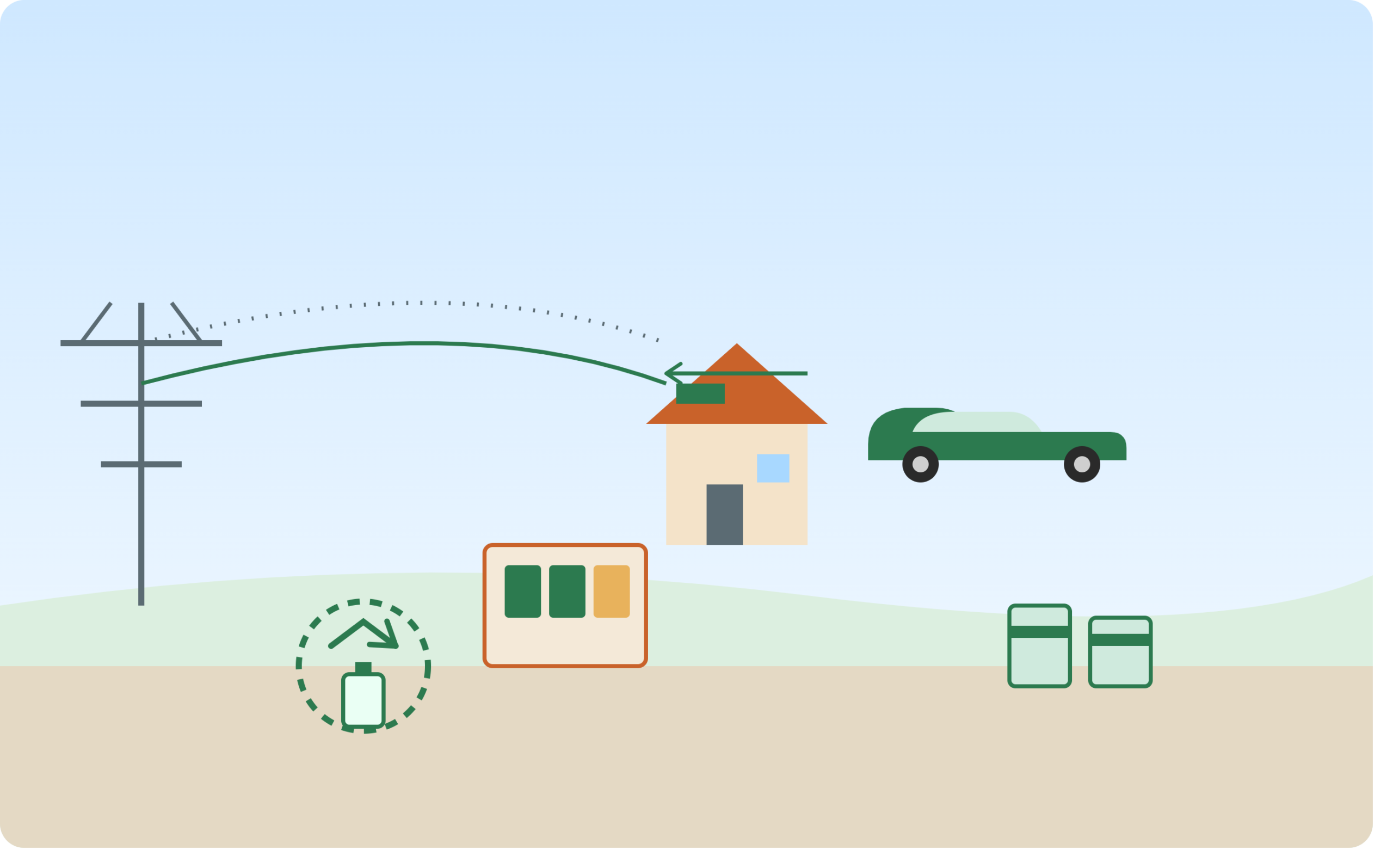
As EV penetration rises, parked vehicles represent a distributed energy resource that utilities are only beginning to tap. Vehicle-to-grid and vehicle-to-home technologies could let EV fleets, particularly commercial and fleet-operated vehicles with predictable duty cycles, discharge power back into the grid during peak demand and recharge during off-peak, low-cost hours. For a grid under increasing strain from renewable intermittency, this turns millions of batteries into a flexible, distributed storage network and gives fleet operators a second revenue stream beyond transportation itself. Realising this will require interoperable charging standards, smart-meter rollout, and tariff structures that reward bidirectional flow, all of which deserve a place in the policy roadmap alongside FAME and PM E-DRIVE.
Circularity: Recycling and Second-Life Batteries
Localisation of cell manufacturing solves only half the mineral dependency problem; the other half is what happens when batteries retire. A domestic recycling industry capable of recovering lithium, nickel, cobalt, and copper at scale would reduce reliance on imported virgin material even as the vehicle base grows, and second-life applications, repurposing retired EV batteries for stationary storage in telecom towers, microgrids, or renewable-energy firming, can extend asset value before recycling becomes necessary. Building this circular loop now, while the fleet is still young, is far cheaper than retrofitting it once end-of-life volumes surge in the 2030s.
Financing Innovation: Battery-as-a-Service and TCO Parity
Upfront cost remains the single biggest barrier to EV adoption across two-wheelers, three-wheelers, and commercial fleets. Battery-as-a-service and swapping models, which decouple the battery from the vehicle purchase, are already gaining traction in the two- and three-wheeler segments and are a credible path to near-term price parity with internal combustion vehicles. Standardised, interoperable battery-swap architecture, if it can be agreed upon across manufacturers, would let the same battery stock serve multiple vehicle brands, improving asset utilisation and giving fleet operators confidence to scale without long charging downtimes. Financing structures that price in resale value, warranty-backed battery health, and total cost of ownership rather than sticker price will increasingly shape purchase decisions.
Micro-Mobility, Autonomy, and the Urban Logistics Shift
Beyond passenger cars, electric micro-mobility, e-cycles, e-scooters, and autonomous delivery robots is emerging as a serious layer of urban transport, particularly for last-mile logistics where quick-commerce and e-commerce delivery volumes are growing fastest. Autonomous personal mobility devices and low-speed delivery bots will increasingly share road and pavement space with traditional vehicles, and component ecosystems built for these smaller, lighter platforms, compact motors, lightweight battery packs, low-cost sensors and controllers, will draw increasing investment as urban logistics networks scale to meet delivery-time expectations.
Skilling and the Human Capital Question
None of this transition succeeds without a workforce equipped for it. Electrified powertrains, battery chemistry, power electronics, and embedded software require fundamentally different skills than traditional internal-combustion manufacturing, and India’s engineering education and vocational training pipelines will need to be re-tooled in parallel with factory capacity. Public-private skilling partnerships, embedded within the PLI and Gigafactory push, deserve as much policy attention as capital incentives, since a shortage of trained technicians and engineers could become as binding a constraint as mineral supply.
India as an Export Hub for the Global South
As China-plus-one strategies mature and global automakers diversify supply chains, India is well positioned to become an export base for affordable EVs and components, not just for domestic consumption. Two- and three-wheelers are categories where Indian manufacturers already lead on cost engineering, and demand in Southeast Asia, Africa, and Latin America mirrors India’s own price-sensitive, infrastructure-constrained context far more closely than that of mature Western markets. Positioning India’s 2035 mobility vision explicitly around Global South export potential, rather than domestic volume alone, would multiply the return on today’s localisation investments.
The Road Ahead
Taken together, these threads, chemistry diversification, software value creation, grid integration, circularity, innovative financing, micro-mobility, workforce readiness, and export ambition, point to a mobility transition that is broader than passenger-vehicle electrification alone. India’s 2035 vision will be defined less by any single breakthrough technology and more by how well policy, capital, and industry sequence these parallel shifts. Sourcing agility, engineering innovation, and now digital and workforce capability together will determine whether India’s electrified mobility story becomes a model the rest of the Global South can follow.
Note to Readers: The views expressed in this article are those of the author and are presented for informational purposes only. They do not necessarily represent the views of Mobility Electrified.