PARIVARTAN Scheme and Blue Energy Motors: Battery Swapping Must Reach the NCR

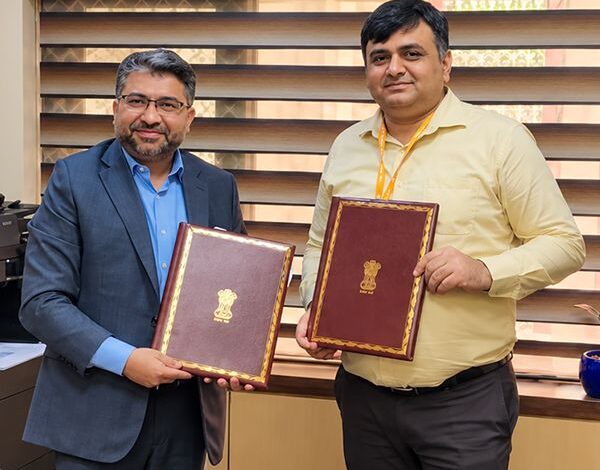
Blue Energy Motors has signed an MoU with the road ministry to replace commercial vehicles with electric trucks across Delhi-NCR under the PARIVARTAN scheme. The signing matters less than the operating model behind it, which depends on a battery-swapping network the company has yet to show in the region.
Blue Energy Motors has signed a memorandum of understanding with the Ministry of Road Transport and Highways to take part in the PARIVARTAN scheme, with the stated aim of replacing commercial vehicles with electric trucks in the Delhi-National Capital Region. The company, which describes itself as a Pune-headquartered maker of electric and LNG truck platforms, says its vehicles are accumulating operational distance on freight routes. The announcement follows the MoU reported by Autocar Professional on 22 October 2026. The new material is limited, so the more useful question is what the company is offering NCR fleets and what that offer depends on.
What Was Already Public, and What the NCR Adds
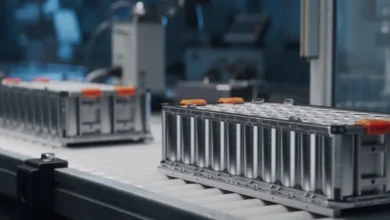
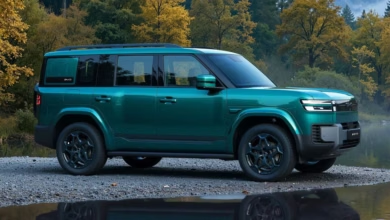
Blue Energy’s battery-swapping electric heavy truck was launched on 17 October 2025, alongside what was billed as India’s first electric freight corridor on the Mumbai–Pune route, according to EPC World and The Machine Maker. The company says the truck offers unlimited range through swapping, the highest payload in its class and what it calls Advanced Mobility Intelligence. Those are company claims, and the trade reports repeat them without independent test data. The company also reports a Maharashtra memorandum for a plant with 30,000 trucks a year of capacity, backed by ₹3,500 crore of investment, and memoranda for more than 10,000 electric trucks. Memoranda are not orders, and none of the sources says how many of those 10,000 are firm.
The NCR is a different proposition. The Mumbai–Pune route is a defined point-to-point freight corridor. The NCR covers several states and a dense mesh of short and medium routes, many of which change from day to day. PARIVARTAN covers that region, but the Blue Energy release does not say where its swapping stations would be, how many it plans, or whether any are operating in the NCR. Our analysis is that the Maharashtra corridor shows the company can deploy swapping on one fixed route. It does not show that a swapping network can serve a region where routes are less predictable.
Energy-as-a-Service Moves the Risk, Not Only the Price
The company markets an energy-as-a-service model for its heavy trucks, which trade reports describe as separating the vehicle from its battery and supplying energy on a commercial basis. The attraction is a lower upfront price, which combines with the scheme’s incentives. The cost is that the operator takes on a dependency. Its running costs will depend on the provider’s swap pricing, on the availability of charged batteries at the time of need, and on the provider’s financial strength over the contract period.
Downtime is the central operational question. Swapping is faster than charging, but it is only fast when a charged battery is waiting. During peak demand, such as festival periods or month-end freight surges, queues at a limited number of stations would erode the advantage the company is selling. Trade reports say Blue Energy plans nationwide swapping stations over three to five years. That is a timeline, not an installed network, and the sources do not say how stations in the NCR will be funded or who will own the batteries.
Our analysis is that the scheme addresses the vehicle purchase, while the energy-as-a-service contract transfers the ongoing risk to the provider. That is a reasonable allocation if the provider can deliver, but it makes the provider’s station build-out the critical path for any NCR fleet that signs up. Operators should ask for swap-station locations within their routes, guaranteed battery availability, and the price per swap or per kilometre before treating the scheme’s discount as the total saving.
A Company With Two Fuels to Sell
Blue Energy is not an electric-only business. Its release describes electric and LNG truck platforms, and its established volume has come from LNG trucks, according to trade reports. That gives it an option to offer either fuel to a replacing operator. It also means the electric line must compete with a gas product that may already be cheaper to run on some routes. Whether LNG trucks qualify under the PARIVARTAN scheme depends on the eligibility rules, which summaries describe as BS-VI or electric. We have not confirmed how gas-powered vehicles are treated.
The competitive field is also crowded. Eleven manufacturers have reported agreements under the scheme, according to the ministry as reported by ThePrint, and the release does not say how Blue Energy’s electric offer compares on price with those rivals’ diesel and electric models. For a company whose electric trucks are still ramping, the test will be whether NCR operators buy an electric truck that depends on swapping, when the alternatives require nothing beyond refuelling.
The question for the industry is whether PARIVARTAN can finance electric trucks that cannot yet be refuelled in the region they serve. The first signals will be the locations of swap stations inside the NCR, the number of electric trucks registered there after delivery, and a named operator running them on regular routes. Until those appear, the MoU is a commitment to build a network, and the network is what fleets will actually buy.