Blue Energy Motors Joins PARIVARTAN Scheme: Can Electric Trucks Win?

Blue Energy Motors has joined the central PARIVARTAN scheme to replace old, polluting trucks across Delhi-NCR, offering electric heavy-duty models to fleet operators. Whether the offer wins buyers depends on price, infrastructure and the company’s own mix of fuels.
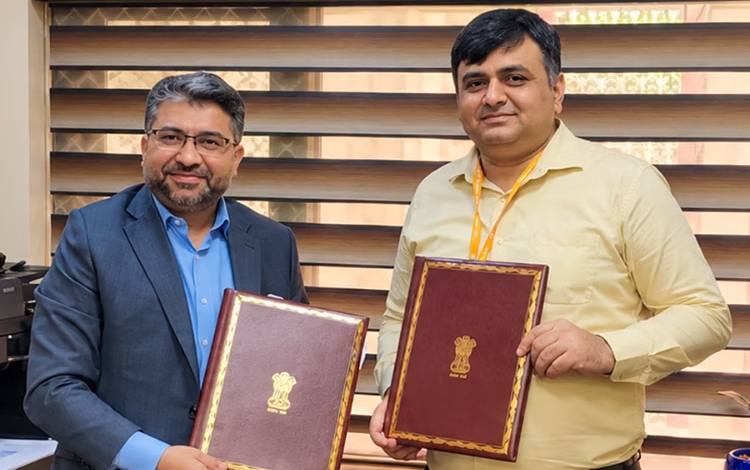
Blue Energy Motors has signed a memorandum of understanding with the Ministry of Road Transport and Highways to take part in the PARIVARTAN scheme, the central programme for replacing old commercial vehicles across Delhi-NCR. The company says it will offer electric heavy-duty trucks to logistics operators retiring older, high-emission vehicles. On its own, the announcement adds one manufacturer to a growing list of participants. Its significance lies in what the scheme now asks fleet operators to decide, and in whether an electric truck can win that decision on price.
How the PARIVARTAN Scheme Works and Where It Stalls
The scheme’s operational guidelines were approved by the Ministry of Housing and Urban Affairs in July 2026, according to a PTI report at the time. The programme covers old, polluting trucks and buses replaced with BS-VI compliant or electric vehicles, and the road ministry implements it through the National Capital Region Planning Board. Summaries of the guidelines describe a minimum 8% discount from manufacturers, a 5% interest subvention on vehicle loans, and a 10-year motor vehicle tax concession and registration fee waiver notified by Delhi, Haryana, Rajasthan and Uttar Pradesh. The total outlay is ₹9,585 crore. We have not read the full guidelines, so these terms should be confirmed against the official text.
The timing is pointed. Trade reports set a target of more than 25,000 old trucks and buses replaced by October 2026, the month of this announcement. The reports we reviewed do not say how many replacements have been completed, so the scheme’s delivery remains unmeasured.
The mechanics add friction. Eligibility depends on retiring an older vehicle through an integrated digital platform that summaries say connects to VAHAN, V-Scrap, DigiELV and the Public Financial Management System. For a small fleet operator, documentation, scrappage and loan timelines may slow a purchase, particularly if the new truck must be financed before the old one is retired. The summaries we reviewed do not explain how such timing is handled.
The Incentive Narrows the Price Gap but Does Not Close It
Electric heavy-duty trucks cost more upfront than diesel equivalents, and that premium is the main obstacle for fleet buyers. The scheme’s discount and interest subvention address the purchase price, while the tax concession and fee waiver reduce running costs over a decade. Our analysis is that these measures change the arithmetic for a fleet operator without settling it. Whether an 8% discount covers the premium depends on each truck’s price, and the Autocar report gives no price, range or payload for Blue Energy’s electric model.
The company has a second lever. It says its electric trucks are supported by a battery-as-a-service model that reduces upfront capital costs, and that battery swapping limits downtime. Trade reports describe its electric truck as India’s first with battery-swapping capability. We could not verify those claims against independent testing or fleet data. Combining a manufacturer discount with a battery-leasing model could lower the entry cost further, though the sources we reviewed do not say whether the two can be stacked under the scheme’s rules.
Infrastructure is the other constraint. Electric heavy trucks need depot charging or swapping stations along their routes, and the Autocar report does not say where Blue Energy’s swapping network operates or whether it covers the NCR. For operators on fixed regional routes, the question is practical: whether a truck can be charged or swapped within its duty cycle without adding idle time.
An Electric Entry Into an LNG-Led Business
Electric trucks are a newer line for Blue Energy Motors. Founded in 2020 by Anirudh Bhuwalka, a former managing director of Asia Motor Works, the company built its business on LNG-powered heavy trucks. Trade reports say it has more than 1,400 heavy-duty trucks operating and over 100 million kilometres covered. These are company figures that we could not audit. Its electric plans include a ₹3,500 crore manufacturing facility in Maharashtra, previously announced by the company.
That mix matters for the scheme. As summarised, the guidelines cover BS-VI compliant or electric vehicles. Trade reports say Blue Energy’s LNG trucks use engines from Iveco’s FPT Industrial that are BS-VI compliant. If that is right, LNG trucks may qualify, and the company could offer both fuels under the scheme. Whether gas-powered vehicles are treated as BS-VI for eligibility purposes is a question the summaries do not answer. Electric trucks are where the scheme’s support is clearest, but the company’s current volume comes from gas.
The field is also crowded. Eleven manufacturers, which the ministry says account for more than 95% of the commercial vehicle market, have signed agreements to provide the scheme’s discounts. The Autocar report does not say whether Blue Energy’s electric trucks will be priced against those rivals’ offers. For a company whose electric range is still ramping up, pricing against established diesel and gas models will be the test that matters most.
The industry should watch three things. The first is whether Blue Energy’s electric models carry prices and specifications that fleet operators can compare directly with diesel and LNG alternatives. The second is how many electric trucks are registered in the NCR once deliveries begin, which VAHAN records will show. An MoU, an order, a delivery and a registration are different events, and only registrations reveal uptake. The third is whether the scheme tilts fleet buyers towards electric trucks or simply makes cleaner diesel and gas trucks cheaper to replace. The answer will determine whether PARIVARTAN changes the mix of trucks on NCR roads or only speeds up their renewal.