JLR v BYD: The Hague Ruling Decides Evidence, Not Copying

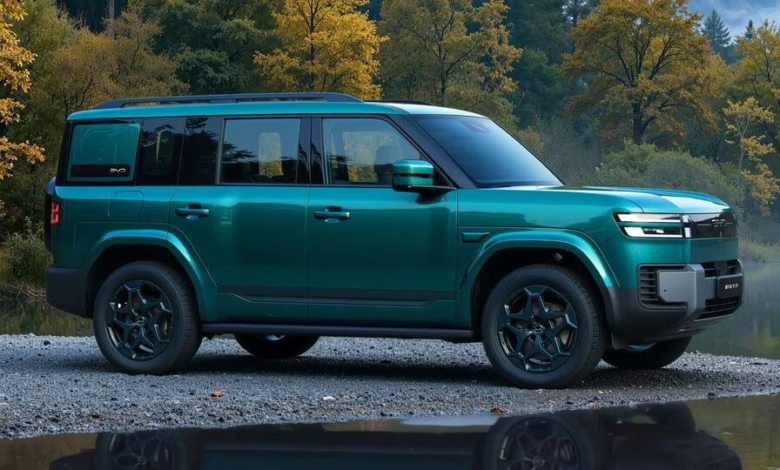
Jaguar Land Rover has taken legal action against BYD, alleging the Chinese carmaker dismantled a Defender to reverse-engineer technology for its seven-seat Ti7. The preliminary ruling due on 11 November is procedural, not a verdict on copying.
Jaguar Land Rover has launched proceedings in the Netherlands against BYD, alleging that the Chinese manufacturer stripped down a Land Rover Defender to reverse-engineer technology for use in the Ti7, a seven-seat plug-in hybrid SUV. Court-appointed bailiffs raided BYD’s offices in Schiedam and Hoofddorp in August 2026 and seized digital records, according to reports in The Times, The Guardian and The Sunday Times. A preliminary hearing in The Hague is scheduled for 11 November. BYD has called the seizure a “fishing expedition”, and both companies have declined to comment on the case. Those reports are the basis for everything below, because no court has yet tested the allegations.
The Ruling Decides Evidence, Not Infringement
The headlines suggest a verdict on copying, but the 11 November hearing is narrower. Its main questions are whether JLR may use the records seized in August and whether the case can proceed. Our reading of the reporting is that the court will not determine whether the Ti7 infringes any right. That determination would come later, after evidence has been examined. Reports on the earlier October hearing, citing The Telegraph, described lawyers for both companies disputing how the seized material could be used, which supports that reading.
The distinction matters. Seizure in Dutch proceedings is designed to preserve evidence before it can be destroyed, and that is what JLR says it was seeking. A ruling that lets JLR use the files would give it a basis to test its claim. A ruling that restricts them would weaken it, but would not clear BYD. In either case, the substance of the claim remains unresolved.
From Styling to Engineering
The dispute has changed shape over time. The first public comparisons concentrated on the Ti7’s resemblance to the Defender’s silhouette and proportions, which some commentators called a “Chinese Defender clone”. JLR’s legal case, as reported, goes further. It alleges that BYD acquired and dismantled a production Defender to study its engineering, and that elements of that work reached the Ti7. The reports do not identify which technology, patents, designs or other rights are at issue.
That shift has consequences. Styling is a matter of visual design, and courts have been reluctant to protect a generic body shape. One outlet reports that a High Court decision found the classic boxy shape not distinctive enough for exclusive protection. We could not verify that ruling against a court document, and it should not be relied on without confirmation. Engineering claims are harder to prove. They require evidence of what was copied, how it was used, and whether the resulting design was independently developed, and that evidence sits in documents and parts that have not yet been examined in open court.
JLR has a precedent. In 2019 it won a case against Jiangling Motor Corporation over a vehicle that copied the Range Rover Evoque, after a three-year court battle, according to Motor1 and EVwire. That win was on design grounds. The Ti7 case extends the question to engineering, and a result in JLR’s favour on that basis would be a more significant precedent for Chinese manufacturers selling in Europe.
What It Means for the Ti7’s UK Launch
The commercial stakes are clear. The Ti7 has been on sale in China since September 2025, as the Fangchengbao Ti7. BYD is taking UK orders for January 2027 deliveries, with prices starting at £47,995, according to Motor1. The seven-seat Defender 110 starts at £68,465, a difference of about £20,000. That gap explains why the comparison matters to buyers, and why JLR may see the Ti7 as a pricing threat to its most important model.
The Two Vehicles, as Reported
- BYD Ti7: seven-seat plug-in hybrid SUV, on sale in China since September 2025, UK deliveries planned for January 2027, from £47,995
- Land Rover Defender 110 (seven-seat): from £68,465, per Autocar Professional
- Price difference: about £20,000 at list prices (our arithmetic)
- Powertrains: different, according to Auto Express and Motor1, which do not specify the engineering differences
The price gap also limits what a ruling can change. A court order would not alter the Ti7’s price or specification. It could, however, affect how BYD markets the vehicle in Europe, or require design or engineering changes if an infringement is later found. Neither outcome is imminent. Any eventual judgment would be a long way off from the January launch.
The case also carries reputational risk for both sides. For JLR, a claim that proves weak would undermine its position against future copycats. For BYD, a seizure of its European records and a public dispute over its engineering practices are a cost in their own right, whatever the outcome. Both companies have declined to comment, which leaves the public record thin.
The question for the industry is whether engineering-level claims of this kind can be tested quickly enough to matter for launch decisions. A preliminary ruling on evidence is only the first step. The decisive questions, what was copied and whether the Ti7 relies on it, will take much longer to answer, and the January launch will arrive before they do.