Zelio E-Mobility Hisar Plant Adds 72,000 Units, but Capacity Utilisation Remains the Key Test

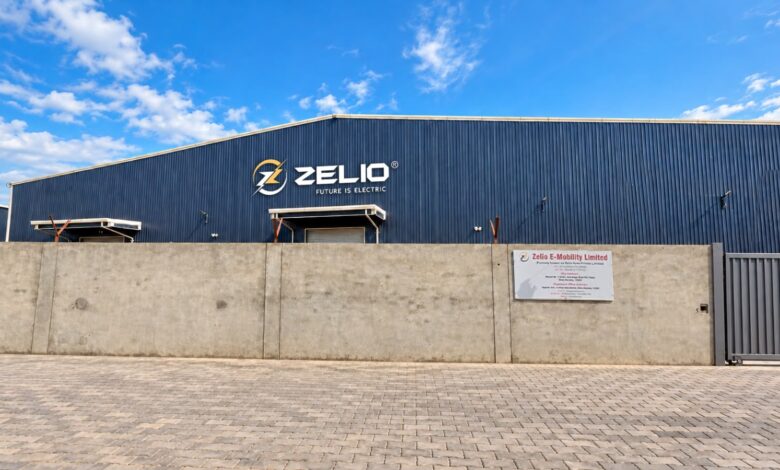
Zelio E-Mobility has expanded its installed manufacturing capacity to approximately 3.12 lakh units annually with a new facility in Hisar. However, existing capacity utilisation and the ability to absorb additional production will determine the commercial value of the expansion.
Zelio E-Mobility has started commercial production at its Patan facility in Hisar, Haryana, adding 72,000 units to its annual installed capacity and taking the company’s stated total to approximately 3.12 lakh vehicles. The expansion is notable not only for its scale: a regulatory disclosure puts utilisation of the company’s existing manufacturing base at about 40% at the end of FY2025–26. The gap between installed capacity and actual output is therefore central to assessing what the new plant can deliver.
The facility, which began commercial operations on 28 October 2026, adds capacity for 48,000 electric two-wheelers and 24,000 electric three-wheelers a year. Zelio says it has committed more than ₹20 crore to the project, with part of the investment funded from its October 2025 initial public offering (IPO) proceeds and the balance, if required, from internal accruals. The company announced the development on 3 November.
For a smaller EV manufacturer, the challenge is to expand production and distribution without allowing fixed costs, inventory or working-capital needs to outrun demand. The plant may improve that equation, but added capacity does not prove the new lines will operate at high utilisation.
Zelio’s installed capacity rises 30%, but utilisation remains the test
The new 72,000-unit addition represents a 30% increase over Zelio’s previously stated installed capacity of 2.4 lakh units a year. The company’s plant table lists 1.2 lakh units at Ladwa in Haryana, 60,000 at Cuttack in Odisha and 60,000 at Coimbatore in Tamil Nadu. Patan adds a further 48,000 two-wheelers and 24,000 three-wheelers, taking the stated network total to 3.12 lakh units annually.
There is an important caveat in the regulatory disclosure. Its annexure says existing capacity was around 2.4 lakh units, but separately states production capacity stood at 1.8 lakh units on 31 March 2026, with utilisation at approximately 40%. It does not explain the difference between the 2.4-lakh installed-capacity figure and the 1.8-lakh figure used alongside utilisation. The 40% rate should therefore be attributed to the company and not presented as a directly comparable ratio against the full 2.4-lakh network.
Installed capacity is the output a facility is designed to produce under specified conditions; it is not a measure of vehicles manufactured, dispatched, registered or sold. Nor does commercial production mean the new plant has reached rated output. Zelio says production will be scaled to dealer demand, product mix and supply-chain readiness. Its filing identifies 28 October as the commencement date and Q3 FY2026–27 as the period for the capacity addition.
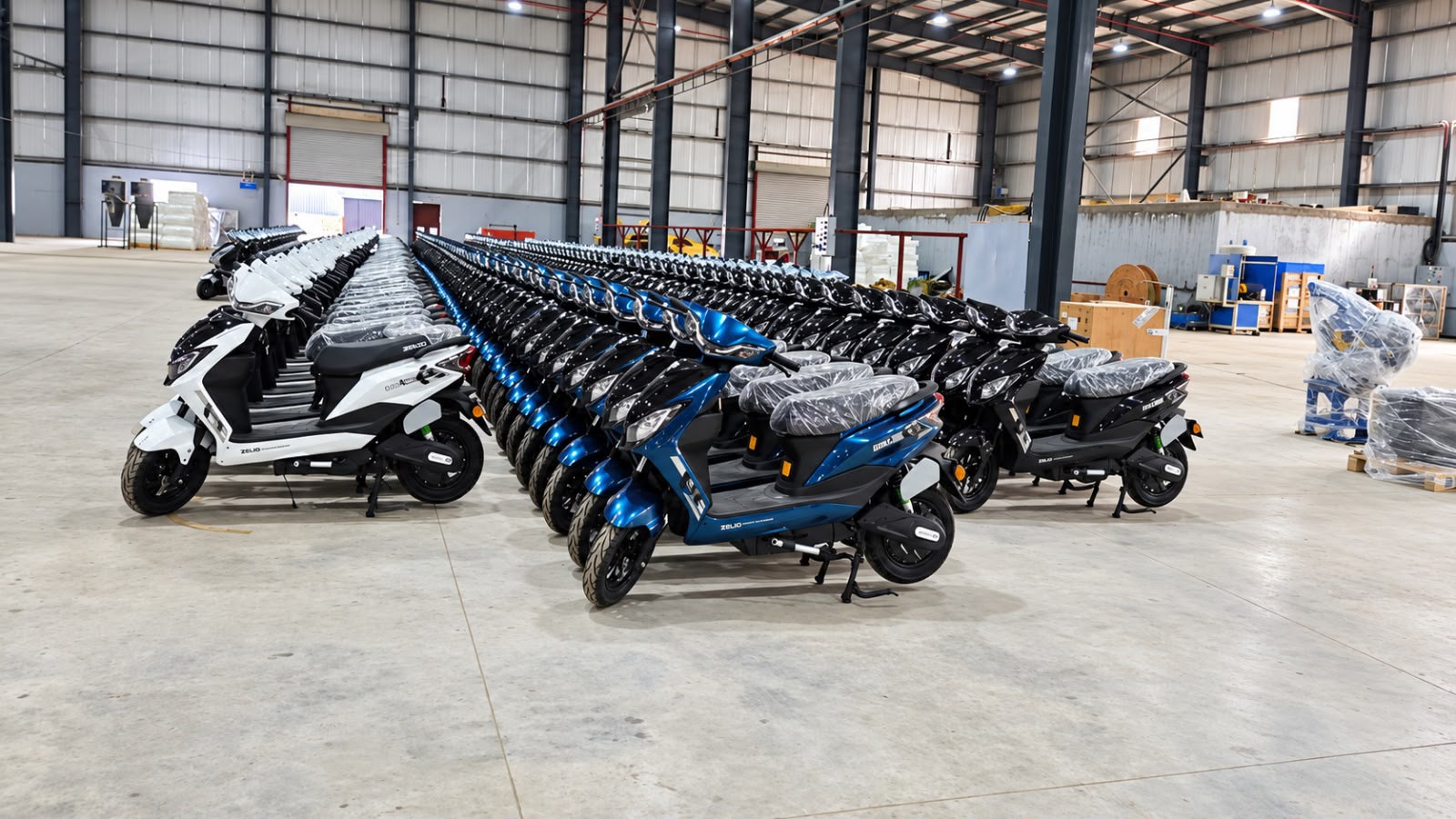
The plant spans six acres and has a reported built-up area of 2,61,360 sq. ft. It has begun producing Zelio electric scooters and Tanga electric three-wheelers. The two product categories give the facility a mixed production role, although the company has not disclosed a detailed line-wise ramp-up schedule or monthly output target.
Backward integration is the more consequential part of the investment
Zelio’s announcement places emphasis on in-house fabrication, painting and assembly. These operations indicate a move to bring more manufacturing stages within the company’s own facilities rather than relying entirely on outside vendors for those processes. In principle, greater process control can improve production consistency, reduce dependence on external suppliers and make it easier to coordinate quality checks and replenishment.
The filing identifies backward integration and regional supply efficiency as key rationales. It says the major portion of the investment has been used for backward integration, subject to board finalisation and approval. Zelio has not provided a detailed expenditure breakdown, so the extent of localisation, components covered and expected savings cannot yet be independently assessed.
For an EV manufacturer, assembly volume is only one part of the operating model. Sourcing, component quality, fabrication, warranty costs and dealer replenishment also affect margins and customer experience. If Patan reduces logistics friction in northern markets while improving process control, it could support more predictable operations. These remain expected benefits, not demonstrated results.
The company’s distribution plans add another layer to the capacity decision. Zelio says it has more than 400 dealers across over 25 states and is targeting more than 550 dealerships by FY2027. A wider network can expand access in Tier-2 and Tier-3 markets, but it also requires dealer inventory, spare-parts availability, service capability and consistent after-sales support. The plant’s commercial value will depend on whether the retail network can absorb additional production without pushing unsold stock into the channel.
Revenue growth provides momentum, not proof of demand absorption
Zelio reported FY2025–26 revenue of ₹313.68 crore, up 81.8% from ₹172.19 crore in FY2024–25, according to ET Auto. Net profit rose 75.4% to ₹28.39 crore and EBITDA was ₹38.01 crore. The figures indicate revenue growth alongside profitability, but do not establish demand for the plant’s full output.
Revenue and vehicle volumes are not interchangeable. Zelio makes two- and three-wheelers, and the plant announcement provides no product-wise revenue bridge. Changes in product mix or average selling price can affect revenue without an equivalent change in units. Dealer count, likewise, is a distribution measure, not retail sales to end customers.
The IPO proceeds provide part of the funding base. Zelio was listed on the BSE SME platform in October 2025 and raised ₹78.34 crore through its public issue, according to the company. The ₹20-crore-plus plant investment is one element of a broader growth programme. The key financial indicators to watch are utilisation, working-capital intensity, cash conversion and returns on the additional assets.
The near-term execution test is straightforward: can Zelio translate its expanded manufacturing footprint into higher dispatches and retail sales while preserving profitability and service quality? The Patan plant gives the company more room to grow and potentially tighter control over selected production processes. But with utilisation disclosed at around 40%—and an unresolved capacity denominator in the filing—the next evidence that matters is sustained output and demand absorption, not another increase in nameplate capacity.