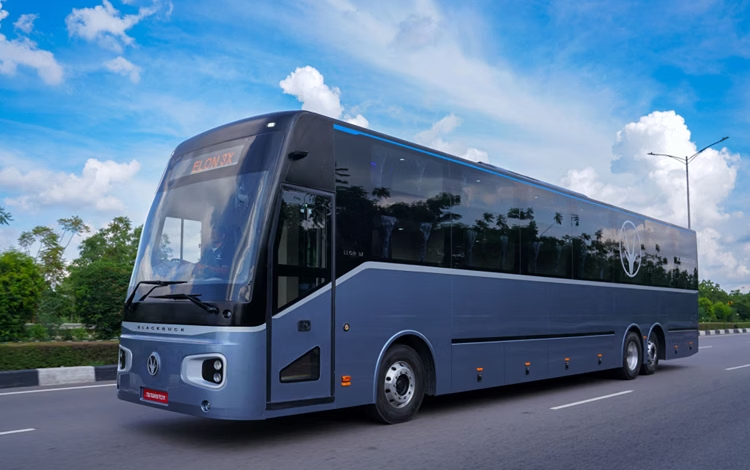
Blackbuck Electric Vehicles has unveiled the ELON 3X, a 15-metre multi-axle electric sleeper coach developed for long-distance intercity transportation. The vehicle features 42 sleeper berths, more than 9 cubic metres of dedicated luggage space and two battery configurations of 425 kWh and 565 kWh.
Built on the company’s Born-Electric Skateboard Architecture, the ELON 3X has been developed specifically for electric mobility rather than adapted from a conventional diesel-powered bus platform. Reservations are now open, while commercial production is targeted to begin in mid-2027.
The unveiling places Blackbuck EV in a segment where electrification involves a different set of challenges from urban bus operations. Intercity sleeper coaches need to cover longer distances, carry passengers and luggage, maintain operating schedules and provide a comfortable journey. Meeting these requirements will require more than a large battery and a purpose-built vehicle platform.
A purpose-built platform for long-distance travel
The ELON 3X is based on Blackbuck EV’s Born-Electric Skateboard Architecture, which the company says has been developed in-house in India. The platform integrates the vehicle’s structural design, electric propulsion, energy storage and electrical systems into a unified architecture.
This approach is intended to avoid some of the compromises associated with converting conventional internal-combustion-engine platforms into electric vehicles. A purpose-built electric architecture can allow manufacturers to consider battery packaging, weight distribution, drivetrain integration and passenger accommodation from the beginning of vehicle development.
The coach uses a three-axle configuration, with the company positioning it to support higher passenger and luggage capacity while addressing ride comfort and highway stability. Its 42 sleeper berths are complemented by provisions for a driver and co-driver, as well as more than 9 cubic metres of dedicated luggage space.
For intercity operators, luggage capacity is an important part of the vehicle’s commercial proposition. Sleeper coaches frequently serve passengers travelling between cities over extended distances, often carrying substantial luggage. The ability to accommodate this alongside passenger berths could make the vehicle more suitable for established intercity operating models.
Two battery options, but range remains undisclosed
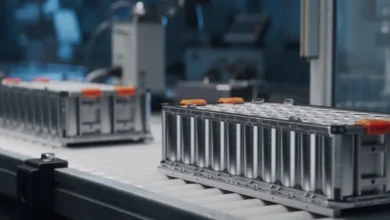
The ELON 3X will be available with battery configurations of 425 kWh and 565 kWh. The two options suggest that Blackbuck EV is looking to address different operating requirements rather than offering a single configuration for every route.
Blackbuck EV ELON 3X: Key specifications
Vehicle type: Electric sleeper coach
Length: 15 metres
Axle configuration: Three axles
Passenger accommodation: 42 sleeper berths
Luggage capacity: More than 9 cubic metres
Battery options: 425 kWh and 565 kWh
Reservations: Open
Targeted commercial production: Mid-2027
A larger battery could potentially support longer routes or reduce the frequency of charging stops, but that outcome cannot be assessed from battery capacity alone. The vehicle’s driving range will also depend on its total weight, passenger and luggage load, road conditions, terrain, driving speed, air-conditioning requirements and overall energy efficiency.
Blackbuck EV has not disclosed the ELON 3X’s claimed range, charging power, charging time or energy consumption. These figures will be central to evaluating the vehicle’s suitability for different intercity routes. Without them, operators cannot yet make a meaningful comparison between the two battery configurations or estimate how frequently the coach would need to recharge.
Suspension and safety systems focus on passenger comfort
Long-distance sleeper coaches must balance passenger comfort with vehicle stability, particularly when operating at highway speeds and across varying road conditions. The ELON 3X features independent suspension, active tag-axle steering and Electronically Controlled Air Suspension (ECAS).
The active tag-axle steering system is intended to support manoeuvrability, while the suspension configuration is designed to improve ride comfort and highway handling. These features could be relevant for a 15-metre coach that needs to operate on both highways and the access roads connecting cities and passenger terminals.
The vehicle’s listed safety equipment includes an Electronic Braking System (EBS), Anti-lock Braking System (ABS), Electronic Stability Control (ESC) and disc brakes on all wheels. Together, these systems are intended to support braking performance and vehicle control.
Blackbuck EV says the ELON 3X has undergone four years of engineering and product development, including two years of real-world road testing. The programme covered handling, stability, ride comfort, system integration and durability. The company also says the vehicle has been engineered with reference to European automotive standards and international design practices, with collaborations involving international automotive suppliers.
However, the announcement does not identify specific certification results or homologation details. These will be important to establish as the vehicle moves towards commercial production.
The commercial test begins with fleet economics
Blackbuck EV is positioning the ELON 3X around passenger comfort, operator economics and energy efficiency. Founder and CEO R K Raju said the company developed the coach around a purpose-built electric platform, with these priorities guiding its engineering.
For operators, however, the decision to adopt an electric sleeper coach will depend on the economics of running it over long distances. Purchase price, financing costs, electricity tariffs, charging infrastructure, vehicle availability, maintenance and battery life will all influence the total cost of ownership.
Route characteristics will also matter. A coach operating on a predictable intercity route with access to suitable charging facilities at terminals may have a different business case from one covering longer distances with limited charging options. Charging time is particularly important because every hour spent charging can affect vehicle utilisation, scheduling and the number of trips an operator can complete.
The two battery options could give fleet operators some flexibility, but that advantage will only become clear once Blackbuck EV discloses range, charging performance and pricing for each configuration. Operators will also need clarity on battery warranty, service support and the availability of charging infrastructure along their intended routes.
With reservations open and commercial production targeted for mid-2027, the ELON 3X is still some distance from demonstrating its performance in regular fleet operations. Its purpose-built architecture and passenger-focused configuration provide a starting point, but the commercial case will depend on measurable operating performance.
The bigger question is whether electric sleeper coaches can move beyond limited deployments and become a practical option for mainstream intercity transport. Blackbuck EV has presented its engineering proposition. The next step is to show operators that the vehicle can deliver the range, charging turnaround, reliability and economics that long-distance bus services demand.