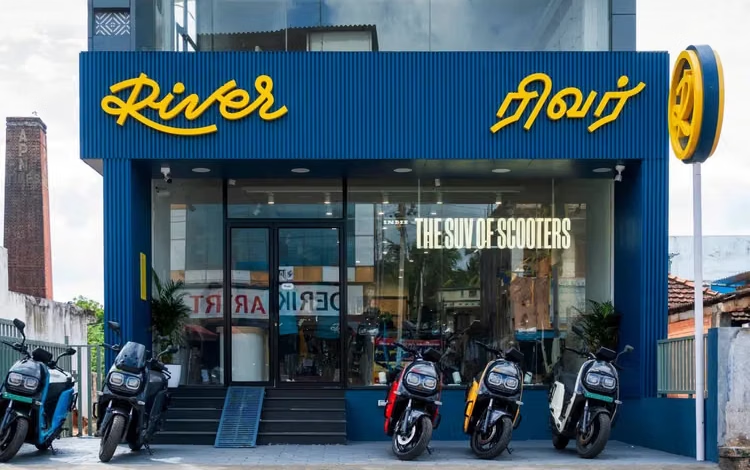
River Mobility has crossed the 100-showroom mark in India within three years of starting operations, expanding its retail network to 65 cities across 12 states. The electric two-wheeler manufacturer reached the milestone after opening 10 outlets simultaneously in Lucknow, Agra, Udaipur, Ajmer, Chennai, Puducherry, Navi Mumbai, Pune, Visakhapatnam and Delhi.
The expansion marks a significant step in River’s effort to take its electric scooters beyond its existing markets. The company plans to increase its network to 150 operational stores by the end of 2026 and more than 200 locations nationwide by March 2027, using capital from its $120 million Series C funding round to support its growth.
For River, however, the next phase involves more than opening showrooms. The company will need to ensure that its service infrastructure, parts availability and customer support develop alongside its retail presence as it reaches more electric two-wheeler buyers.
River Mobility Expands Across 65 Cities
The latest openings extend River’s presence across several important regional markets. The new locations span northern cities such as Lucknow, Agra and Delhi; Rajasthan markets including Udaipur and Ajmer; and southern locations such as Chennai, Puducherry and Visakhapatnam. The company has also added outlets in Navi Mumbai and Pune.
Opening 10 stores at once gives River a faster route into multiple markets than a gradual, city-by-city rollout. It also increases the number of locations where prospective customers can explore the company’s products, arrange test rides and access sales support.
For an electric two-wheeler brand, physical retail can play an important role in building confidence among buyers who are still evaluating electric mobility. Customers may want to understand real-world range, charging requirements, battery warranty, maintenance costs and the availability of service before making a purchase. A local showroom gives the company an opportunity to address these questions directly.
River’s expansion is particularly relevant because the company has built its identity around the River Indie, its utility-focused electric scooter. Wider distribution can make the product accessible to more customers, but it also raises expectations that the ownership experience will remain consistent across locations.
$120 Million Funding Supports the Expansion
River has said that its retail expansion is supported by capital from its $120 million Series C funding round. Announced in August 2026, the funding is intended to support the company’s next phase of growth, including manufacturing capacity, new product development and expansion of its business.
The funding gives River additional financial resources to pursue a broader national presence. Yet retail expansion is only one part of the investment challenge facing an electric two-wheeler manufacturer. As distribution grows, the company must also ensure that production and supply-chain capabilities can support demand without compromising delivery timelines or product quality.
These requirements are connected. Opening more outlets can increase product visibility and improve customer access, but the commercial benefit depends on whether the company can deliver vehicles reliably and maintain them throughout their useful lives. Retail growth that outpaces production or after-sales capacity could create customer frustration rather than strengthen the brand.
River’s planned expansion therefore needs to be assessed as part of a broader scaling effort. Its ability to convert funding into a functioning retail, manufacturing and service ecosystem will matter more than the showroom count alone.
Can River Reach 200 Stores by March 2027?
River’s near-term targets are ambitious. After crossing 100 showrooms, it plans to reach 150 operational stores by December 2026 and expand beyond 200 locations by March 2027.
That would require the company to add at least another 50 stores to reach its end-of-year target, followed by more openings during the first quarter of 2027. The pace of expansion will depend on how quickly River can identify suitable locations, establish dealer operations and ensure that each outlet meets its commercial and service requirements.
Store numbers alone, however, cannot establish whether the network is performing well. A larger footprint can improve geographic reach, but the quality of individual outlets, local demand, sales conversion and the cost of operating each location will determine whether the expansion is commercially sustainable.
River will also need to maintain consistency as its network becomes more geographically dispersed. Customers in newer markets should be able to expect a comparable standard of product information, delivery support, warranty handling and maintenance. This becomes increasingly important as a company moves from a concentrated presence in familiar markets to a wider national network.
The targets are forward-looking plans rather than completed milestones. Their significance will ultimately depend on how many stores become operational within the stated timelines and how effectively they support sales and ownership requirements.
After-Sales Support Will Be the Next Test
For electric two-wheeler manufacturers, the showroom is often the first point of contact, but the service network shapes the longer-term customer relationship. Buyers need access to routine maintenance, diagnostics, replacement parts and warranty support. If these services are difficult to access, the convenience offered by a nearby showroom may not be enough to sustain customer confidence.
This challenge becomes more complex when a brand expands into several cities at the same time. Service technicians must be trained, parts need to be available where vehicles are sold, and support processes must work across locations. The company also needs to monitor customer feedback and resolve problems consistently as the number of owners increases.
River’s stated commitment to a seamless ownership experience will therefore need to be reflected in measurable outcomes. Service turnaround times, customer satisfaction, parts availability and the ease of obtaining warranty support would offer a clearer picture of its progress than retail expansion alone.
The company has established a broader retail footprint in a relatively short period. Its next task is to make that footprint productive and dependable for customers. This will become particularly important as River works towards its 150-store and 200-plus-store targets while continuing to develop its manufacturing and product capabilities.
Crossing 100 showrooms is a meaningful distribution milestone for River Mobility. The more consequential test will be whether the company can turn that reach into sustained sales, reliable after-sales support and a consistent ownership experience across India. As the network grows, the question is no longer simply how quickly River can open stores, but how effectively it can support every customer those stores bring in.