LANXESS and Hindustan Colas Private Limited (HINCOL) will evaluate polymer modified bitumen and warm mix asphalt technologies in India, targeting improvements in pavement performance, production efficiency and environmental impact.
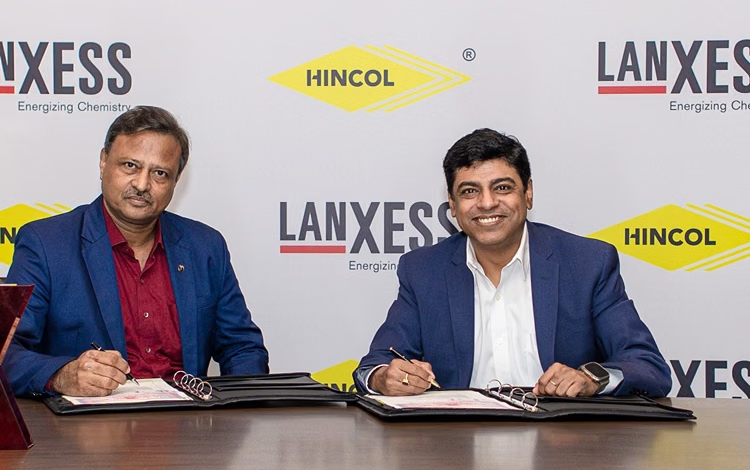
Specialty chemicals company LANXESS and Hindustan Colas Private Limited (HINCOL) have signed a memorandum of understanding (MoU) to explore advanced road construction technologies for the Indian infrastructure market. The agreement establishes a framework for joint technical assessments, commercial-scale trials and market development in bitumen and asphalt modification.
The collaboration will focus on two technologies from LANXESS: Addipave CR 36, a cross-linking technology for polymer modified bitumen (PMB), and Addipave WM 23, an additive for warm mix asphalt. Both will be evaluated for their potential to improve road construction processes and support more efficient paving operations.
The announcement is significant because it moves the discussion beyond road-building volumes to the materials and processes used to construct pavements. While the MoU does not commit either company to a commercial rollout, its proposed trials could help establish whether the technologies offer practical benefits under Indian operating conditions.
LANXESS and HINCOL to evaluate polymer modified bitumen
Under the agreement, the companies will conduct laboratory and commercial-scale evaluations of Addipave CR 36. The technology is designed for polymer modified bitumen applications, in which polymers are incorporated into bitumen to modify the binder’s properties for road construction.
According to the companies, the trials will assess whether the cross-linking technology can improve PMB production efficiency, product consistency and quality, operational safety, and the performance of modified bitumen formulations. These are intended benefits, not independently established outcomes from the newly announced collaboration.
LANXESS will supply the product, technical expertise and trial support. HINCOL will contribute testing facilities, operational assistance and performance assessments under local conditions. This division of responsibilities should allow the partners to examine both the material’s technical behaviour and its suitability for practical use.
For road contractors and infrastructure developers, consistent binder quality and predictable production processes are important considerations. Variations in materials and processing can complicate quality control, while the suitability of a formulation depends on the requirements of a particular project and its operating environment.
The Indian trials will therefore need to establish more than whether the additive works under laboratory conditions. Commercial-scale assessments will be important in determining whether any improvements remain consistent during production and whether they translate into measurable benefits for road construction.
Warm mix asphalt brings energy and emissions into focus
The second component of the MoU is the evaluation and promotion of Addipave WM 23, LANXESS’ warm mix asphalt additive technology. Warm mix asphalt technologies are designed to enable production and paving at lower temperatures than conventional hot mix asphalt, subject to the formulation and process used.
LANXESS identifies Addipave WM 23 as an additive that enables asphalt mix densification at temperatures 20–40°C below conventional hot mix processes. This is a product-level claim from the manufacturer; it should not be interpreted as a guaranteed temperature reduction for every Indian plant, mix design or paving project.
Through joint trials and market development initiatives, LANXESS and HINCOL aim to assess the technology’s potential to reduce asphalt production and paving temperatures while maintaining road performance standards.
Lower operating temperatures can offer a route to reducing the energy needed to heat materials. They may also reduce emissions associated with asphalt production and improve working conditions by lowering exposure to heat and fumes around paving operations. The extent of these benefits will depend on plant efficiency, fuel sources, mix design, site conditions and the temperature reduction actually achieved.
For India, the practical question is whether lower-temperature processes can deliver these benefits without compromising compaction, durability or the required performance of the finished pavement. The MoU does not disclose quantified energy savings, emissions reductions, cost benefits or results from completed Indian trials.
Local trials will determine commercial relevance
The agreement brings together LANXESS’ expertise in specialty additives and formulation technologies with HINCOL’s experience in bitumen, modified bitumen products and road construction solutions. The companies intend to use this complementary expertise to evaluate technologies against local requirements and explore opportunities for broader adoption.
Vince Patram, Global Head of Marketing for LANXESS’ Lubricant Additives business unit, said the collaboration would help the company expand its asphalt applications in India by drawing on HINCOL’s local market insight.
Neelanjan Banerjee, Senior Vice President and Global Head of the Lubricant Additives business unit at LANXESS, said the partnership would assess how the technologies could contribute to operational efficiency, quality and environmental performance. HINCOL CEO and Director Debashis Chakraverty also highlighted the potential to improve pavement performance and sustainability.
These statements describe the partners’ objectives rather than confirmed results. The announcement does not specify a trial timetable, participating road projects, investment commitments, commercial launch dates or a target for market adoption. Those details will matter in assessing how quickly the collaboration could move from evaluation to deployment.
The companies will also need to demonstrate that any material or process improvements are commercially viable. Adoption will depend on technical validation, compatibility with existing production processes, contractor requirements and the economics of using the additives at scale. Performance under Indian conditions will be central to that assessment.
What will count as success for the partnership?
The MoU creates an opportunity to test whether advanced additives can help improve the efficiency and environmental performance of road construction in India. However, the agreement itself does not establish that the technologies will extend pavement life, reduce total project costs or deliver a specific reduction in emissions.
Those outcomes will require evidence from laboratory and commercial-scale trials, ideally supported by comparable performance data on production temperatures, energy use, material consistency, paving quality and longer-term pavement behaviour.
For the infrastructure sector, the most meaningful measure will be whether the technologies deliver repeatable benefits without creating trade-offs in road quality, safety or cost. If the trials demonstrate that balance, the partnership could provide a practical route for introducing lower-temperature asphalt processes and modified bitumen technologies to more Indian projects. Until then, the key development is the commitment to evaluate the solutions—not a confirmed change in how India’s roads are being built.
Source: The New Indian Express, “Innovative technologies to enhance energy efficiency in India’s road infrastructure” (27 October 2026). Product specifications are attributed to LANXESS.