India’s electric vehicle transition needs more than manufacturing capacity and charging infrastructure. It also needs a workforce that can build, maintain and repair EVs—and a plan to develop those skills before the demand arrives.
Germany and Australia are showing considerable interest in Indian electric vehicle technicians and linemen, according to Vinkesh Gulati, chairperson of the Automotive Skills Development Council (ASDC). But India’s own shortage of trained workers is so significant that meeting overseas demand cannot be considered in isolation from domestic requirements.
Speaking at the Autocar Professional EV Conclave, Gulati pointed to a gap that extends well beyond vehicle manufacturers and authorised service networks. Independent repair workshops, often the first place an owner might approach when a vehicle breaks down, are a particularly important part of the challenge.
The issue reveals a less visible constraint on India’s EV ambitions. Vehicle sales, production capacity and charging infrastructure are tangible measures of progress. Workforce readiness is less visible, but without it, the industry may struggle to maintain vehicles, support customers and scale new technologies consistently.
The EV Skills Gap Extends Beyond Authorised Service Centres
Most EVs currently on Indian roads are still under warranty, Gulati noted. That may direct many owners towards authorised service networks for repairs. But as the market expands and vehicles operate across more locations, independent workshops are likely to remain an important source of assistance, especially when a vehicle breaks down away from a dealership.
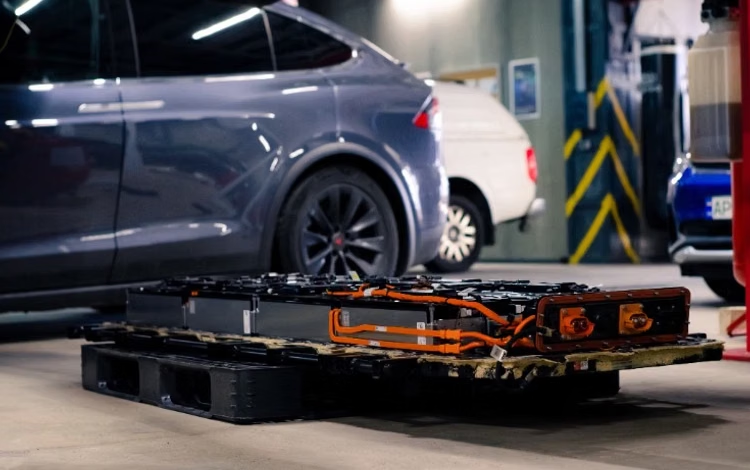
These workshops cannot simply transfer all their existing internal-combustion-engine expertise to electric vehicles. EV diagnosis and repair can involve high-voltage systems, battery management, power electronics, electric motors and software-based diagnostics. Technicians need appropriate training, equipment and safety procedures to work on these systems.
The problem is not necessarily that independent mechanics lack experience. Many have built their livelihoods around years of servicing conventional vehicles and adapting to changes in automotive technology. The challenge is giving them a practical route to acquire new competencies without leaving a large part of the existing repair ecosystem behind.
Gulati said ASDC is working with component manufacturers and vehicle makers to retrain aftermarket workers. The effort includes people who have already had to adapt to earlier regulatory transitions, such as the move from BS4 to BS6 emission standards.
That history matters. India has previously asked its automotive workforce to learn new technologies and comply with new standards. Electrification, however, changes more than a component or emissions requirement: it alters the vehicle’s powertrain, service procedures and the skills needed to diagnose faults. Training therefore needs to be practical, continuous and accessible to workers beyond large authorised networks.
Training Cannot Begin After the Product Is Ready
Gulati’s wider criticism concerns the timing of workforce planning. Companies may invest heavily in developing and testing a product before considering the people and capabilities required to manufacture, operate and maintain it at scale. By the time the product reaches the market, the skills gap can become a bottleneck.
This sequencing problem applies across the electrification ecosystem. A new vehicle platform may require different assembly competencies. A battery or power-electronics line may need specialised production and quality-control skills. A growing EV fleet creates demand for technicians who can diagnose and repair it. In each case, the workforce requirement should be part of the original plan, not a separate exercise undertaken after launch.
The same logic applies to manufacturing investments. Gulati criticised approaches in which companies and state governments focus first on land allocation and tax incentives, while local workforce development receives less attention.
His proposed alternative is to begin training while a factory is still being built and to identify potential workers in nearby villages. This could help employers develop a local talent pipeline before production starts, while giving communities around new industrial sites a clearer route into formal employment.
Such a model would require coordination between manufacturers, state governments, training institutions and local communities. The required skills would need to be mapped against the facility’s production plan, and training would have to lead to relevant jobs rather than simply generating enrolments or certificates.
Why HR Needs a Place in Strategic Decisions
Gulati also argued that human resources teams need to be included earlier in strategic planning. His criticism was direct: workforce requirements cannot be treated as a secondary operational issue if they determine whether a product or factory can function at its intended scale.
Bringing HR into investment and product discussions could help companies identify skill requirements earlier, estimate the time needed to train workers and plan apprenticeships or partnerships with training providers. It could also help manufacturers assess whether the local labour market can support a proposed facility, rather than assuming that workers with the necessary skills will be available when needed.
This does not mean that HR teams alone can solve the skills shortage. Industry must define the competencies it needs, training providers must deliver relevant practical instruction, and public institutions may need to support access, certification and retraining. The central change is to make workforce development a shared responsibility built into project planning.
ASDC has previously warned that EV skilling is often treated as an afterthought by manufacturers and policymakers. In its 2026 annual-conclave discussions, the council also called for stronger, dedicated support for automotive skills development, reflecting a broader concern that technology changes are outpacing the way the industry prepares its workforce.
Can India Serve Global Demand Without Weakening Its Own Supply?
Interest from Germany and Australia could create opportunities for Indian technicians to access international employment and gain experience in markets where EV service capabilities are developing. But Gulati’s remarks highlight a tension: India is still building the skilled workforce required to support its own expanding EV market.
The answer is not to discourage workers from pursuing overseas opportunities. Rather, India needs to increase the scale and quality of training so that domestic employers, independent workshops and overseas markets are not all competing for an inadequately replenished pool of talent.
That requires better visibility into the number and type of workers needed, stronger training pipelines and more emphasis on practical skills. It also means measuring success by whether trained workers can find relevant employment and perform the required jobs, not just by the number of people who complete a course.
For EV manufacturers, the implications are immediate. A vehicle is not fully supported by the market simply because it has been sold or delivered. Customers also need access to competent service personnel throughout the vehicle’s operating life. Gaps in repair capability can increase downtime, raise service costs and weaken confidence in electric mobility.
India’s EV transition is therefore not only a technology or infrastructure challenge. It is also a workforce-planning challenge that begins long before a vehicle reaches a customer or a factory starts production. If training is built into product development, investment decisions and local industrial planning, the country can strengthen its domestic capabilities while preparing workers for global opportunities.
The question is no longer whether India can train EV technicians. It is whether the industry will plan early enough—and at sufficient scale—to ensure that trained people are available where the transition needs them.
Sources: Vinkesh Gulati’s remarks as provided from the Autocar Professional EV Conclave; Autocar Professional’s reporting on EV skilling challenges and ASDC’s 2026 proposals. The specific overseas-interest comments and the workshop observations should be attributed to Gulati.