Volkswagen Group has selected NXP Semiconductors’ S32K5 microcontrollers as a common building block for its future software-defined vehicle architecture. With the first vehicle using the new architecture planned for 2027, the partnership highlights how semiconductor selection is becoming central to vehicle design, electronics integration and long-term software strategy.
Volkswagen Group and NXP Semiconductors have agreed to a strategic partnership that will place NXP’s S32K5 family of microcontrollers at the centre of the automaker’s future zonal vehicle architecture. Announced on 26 October 2026 ahead of the International Suppliers Fair in Wolfsburg, the agreement is intended to support software-defined vehicles (SDVs) across Volkswagen’s brands and vehicle segments.
The first vehicle featuring the architecture is planned for 2027. The technology is being developed by RV Tech, the joint venture between Volkswagen Group and Rivian, and is intended for vehicles from both companies.
The significance extends beyond another automotive chip supply agreement. Volkswagen is seeking to establish a common electronic foundation that can be deployed across multiple vehicle programmes, reducing the complexity of managing different hardware configurations while creating more flexibility for software development.
For the automotive semiconductor industry, the announcement illustrates a broader change in the relationship between automakers and chip suppliers. Semiconductor companies are increasingly being selected not simply to supply individual components, but to support the underlying architecture on which future vehicle functions will operate.
Why Volkswagen Is Moving Towards Zonal Architecture
Modern vehicles contain numerous electronic control units (ECUs) responsible for functions ranging from lighting and climate control to chassis systems, safety and infotainment. As vehicles become more connected and software-intensive, managing these functions through separate controllers can increase hardware complexity, development effort and parts-management requirements.
Zonal architecture addresses this problem by organising electronic functions according to their physical location within a vehicle. Instead of requiring a separate controller for every function, a zonal controller can manage multiple systems within a particular area and communicate with central computing platforms.
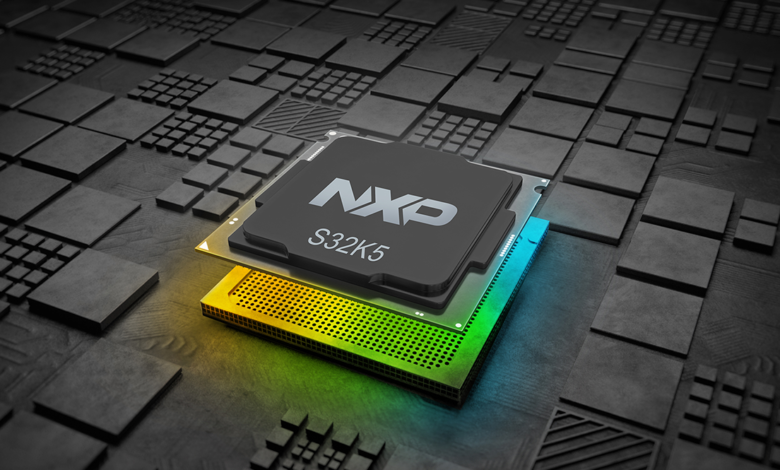
NXP’s S32K5 microcontrollers are intended to serve as core processors within these zonal controllers. They connect sensors and actuators, process information from specific vehicle zones and manage functions associated with the body, lighting, comfort, chassis and safety systems.
This does not mean that one microcontroller will replace every chip in a vehicle. High-performance processors will continue to provide the central computing power needed for demanding applications, including advanced infotainment and AI-enabled functions. The microcontrollers and central processors perform different roles within the broader electronic architecture.
The proposed arrangement can reduce the number of separate controllers and simplify hardware integration. However, the extent of those benefits will depend on how individual vehicle platforms implement the architecture and how successfully functions are consolidated without compromising safety or reliability.
NXP’s Role Extends Beyond Component Supply
The selection of NXP’s S32K5 family gives the semiconductor supplier a defined role in the development of Volkswagen’s next-generation electronic platform. Rather than treating microcontrollers as interchangeable components selected separately for individual vehicle programmes, the agreement establishes a common technology building block for the planned architecture.
According to NXP, the S32K5 family is designed to support real-time processing, secure over-the-air (OTA) updates and the consolidation of vehicle functions. These capabilities are relevant to SDVs, where manufacturers want to introduce software improvements and additional functionality without redesigning the underlying hardware for every update.
The commercial significance lies in the potential for a common platform to be used across multiple models and brands. Standardising key technologies can give Volkswagen greater purchasing leverage and simplify engineering and component management. For NXP, adoption across a broad vehicle portfolio could provide a longer-term role in the customer’s product roadmap.
Volkswagen’s procurement leadership has described the partnership as part of a wider effort to define technology requirements earlier, use the Group’s scale across brands and improve long-term planning certainty. These are stated strategic objectives, rather than evidence that the partnership has already delivered lower costs or improved margins.
The distinction matters. Selecting a technology partner establishes a direction for future development, but the commercial outcome depends on production volumes, programme execution, component availability and the ability to maintain consistent performance across different vehicle platforms.
RV Tech Connects Volkswagen’s Semiconductor Strategy With Rivian
The partnership is also linked to Volkswagen’s joint venture with Rivian. RV Tech is developing the zonal and software architecture intended to underpin future vehicles from both companies, while strategic technology partners such as NXP provide key hardware components.
This arrangement separates the development of a shared technological foundation from the customer-facing identity of individual vehicles. Volkswagen and Rivian can use common underlying architecture while continuing to develop brand-specific features, interfaces and driving experiences.
The approach could help both companies avoid duplicating some elements of electronic architecture development. It also illustrates why semiconductor decisions increasingly need to be coordinated with software engineering, systems integration and vehicle-platform planning.
For suppliers, this creates an opportunity to engage earlier in the development process. A component selected as part of a common architecture may become relevant to multiple vehicle programmes, although the actual scope of adoption will depend on production plans and technical requirements.
There are also execution challenges. Integrating common hardware across different vehicle segments requires careful management of safety requirements, software compatibility, cybersecurity and product lifecycles. Shared architecture does not eliminate the need for vehicle-specific validation, and the announcement does not disclose the exact models, production volumes or commercial terms covered by the NXP agreement.
The Larger Semiconductor Strategy and the Test Ahead
Volkswagen has framed the agreement as part of a broader semiconductor strategy built around direct, long-term relationships with technology suppliers. The objective is to strengthen supply resilience, coordinate technology development and harmonise selected components across brands and regions.
This reflects the growing importance of semiconductors to automotive product differentiation. Chips now support not only conventional electronic controls but also the computing, connectivity and real-time processing required by increasingly software-intensive vehicles.
For semiconductor suppliers, this creates opportunities beyond supplying more chips per vehicle. The ability to support a customer’s architecture over multiple product generations can strengthen the relationship between chip design, software development and automotive systems engineering.
However, standardisation also introduces dependencies. A common component can simplify development and purchasing, but it makes supplier continuity, product longevity and the management of component changes particularly important. Automotive manufacturers must ensure that selected technologies remain suitable throughout vehicle development and production cycles.
The first vehicle using Volkswagen’s new zonal architecture is planned for 2027. That milestone will provide an early indication of how the jointly developed platform moves from architectural plans to production implementation. Broader deployment across brands and vehicle segments will take further execution and validation.
The central question is therefore not simply whether Volkswagen has chosen NXP. It is whether a shared semiconductor and software architecture can reduce development complexity while allowing different brands to innovate at the pace customers expect. The answer will determine whether this partnership becomes a repeatable model for automotive electronics development or remains a technology commitment whose benefits take longer to realise.
Sources: Volkswagen Group and NXP Semiconductors, official partnership announcements dated 26 October 2026. Architecture details and the planned 2027 vehicle introduction are attributed to the companies. Analysis and interpretation are by Mobility Electrified.