The Grid Is the Real Vehicle: Why Storage Will Decide India’s EV Charging

As electric mobility enters its next phase, the converssation must move beyond vehicles and chargers to the infrastructure that quietly determines whether electrification can scale. In this compelling perspective, Dr. Rashi Gupta, Managing Director, Vision Mechatronics, argues that energy storage, not simply charging infrastructure, will be central to India’s electrified future. She explores second-life batteries, India-specific engineering and the need for policymakers, manufacturers and investors to measure charging reliability alongside installed capacity.
Key takeaways
- India’s charging infrastructure targets are at risk because chargers are being built faster than the grid can support them.
- Charging capacity and storage capacity should be reported as a single number.
- Battery packs retired from vehicles can still deliver capacity and cycle life as grid storage.
- Batteries and management systems need engineering built for Indian climates and grid conditions.
- Policymakers should measure reliable charging capacity delivered, not simply the number of chargers installed.
India is going to miss its charging infrastructure targets, and not because we build too few chargers. We will miss them because we are building chargers the grid cannot feed. That is the argument, and I would rather make it in the opening line of an inaugural edition than bury it politely on page three.
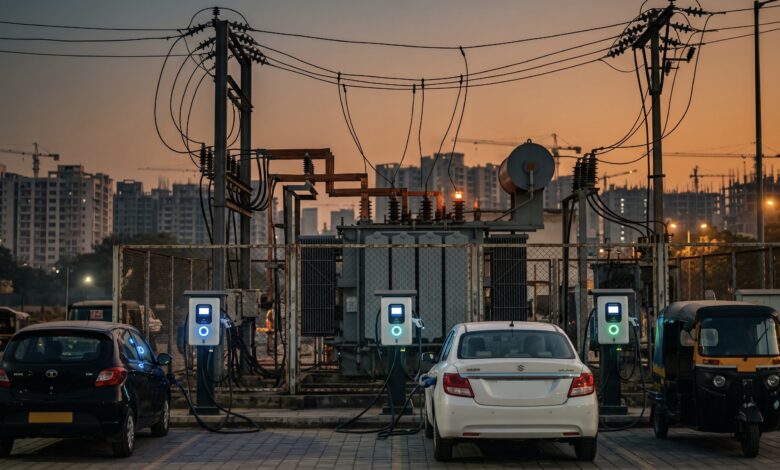
Every conversation about electric mobility ends at the vehicle. Almost none start at the transformer three kilometres away that decides whether the vehicle charges at all. We spent ten years perfecting the object at the end of the cable, range, drivetrain efficiency, cell density, cabin software, and it was the right decade to spend that way. But the constraint moved while we were busy. It is no longer in the car. It sits in a substation sized in 1998 for a colony’s lighting and air conditioning, now expected to absorb a row of vehicles, each drawing what a small building draws.
A fast charger installed without storage behind it does not solve the grid problem. It moves the problem to the DISCOM and calls it progress.
What We Are Actually Counting
Our incentive architecture counts chargers beautifully. It has shown very little interest in what stands behind them, and those are not remotely the same asset. A charger is a point of sale. Storage is what makes the point of sale survivable when four hundred people plug in between seven and nine in the evening.
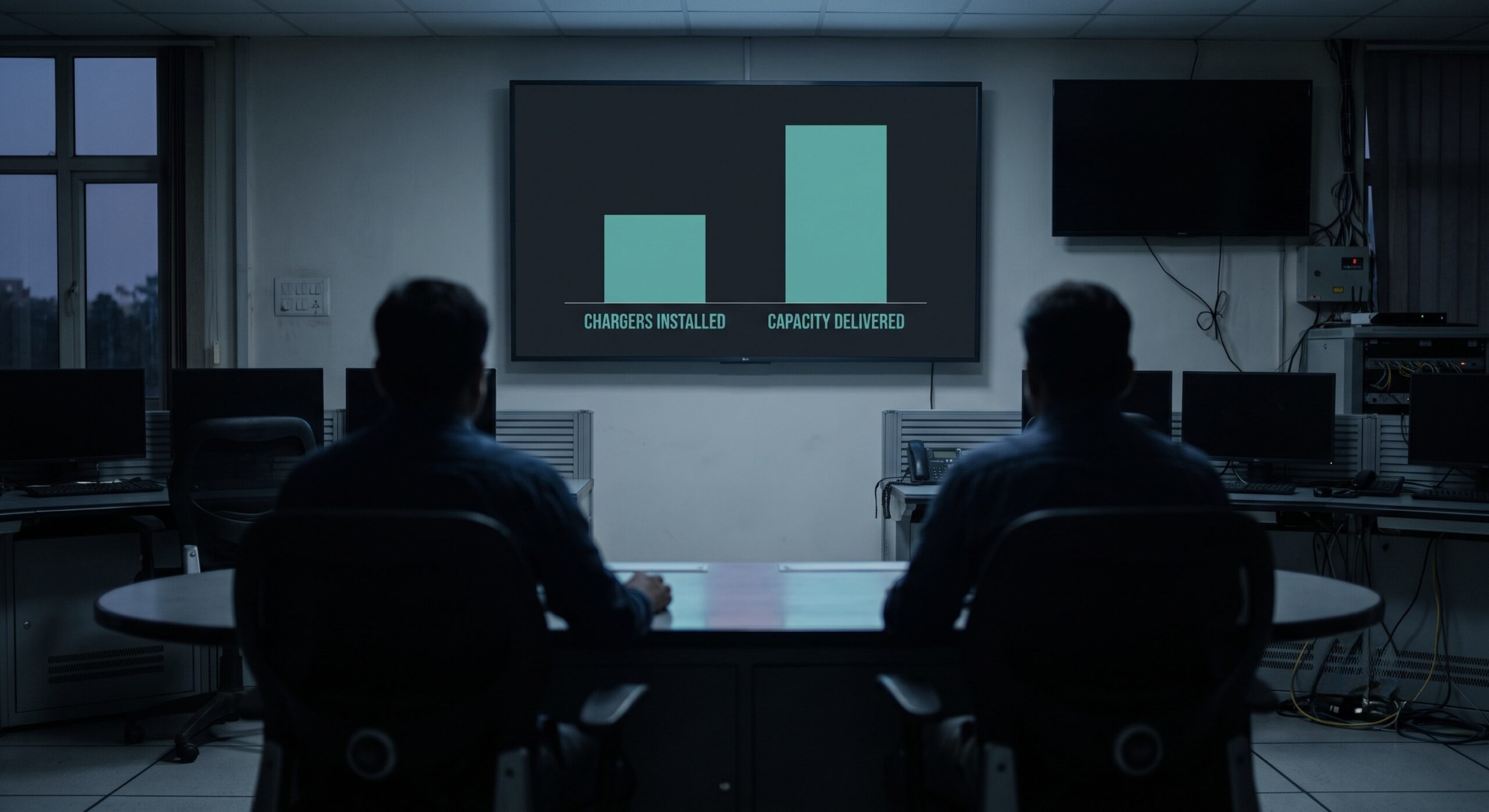
Nobody needs to be penalised to correct this. We need one change in how we keep score: report charging capacity and storage capacity as a single number. Two hundred chargers with no buffer is not two hundred chargers. It is a stress test scheduled for a Tuesday evening in 2029, and the DISCOM will fail it in public while the mobility sector explains that its part worked fine.
We have been building the vehicle. The grid was the vehicle all along.
The Pack That Lives Twice
The material to fix this already exists. We are throwing it away.
A battery pack leaves a factory, runs a delivery fleet for eight years, and comes out with sixty to seventy per cent of its capacity intact. In a vehicle, that is a failure. The drivetrain needs power density the pack can no longer deliver, so the operator replaces it, and the pack goes into storage, an informal market, or a recycler, years before its chemistry is finished.
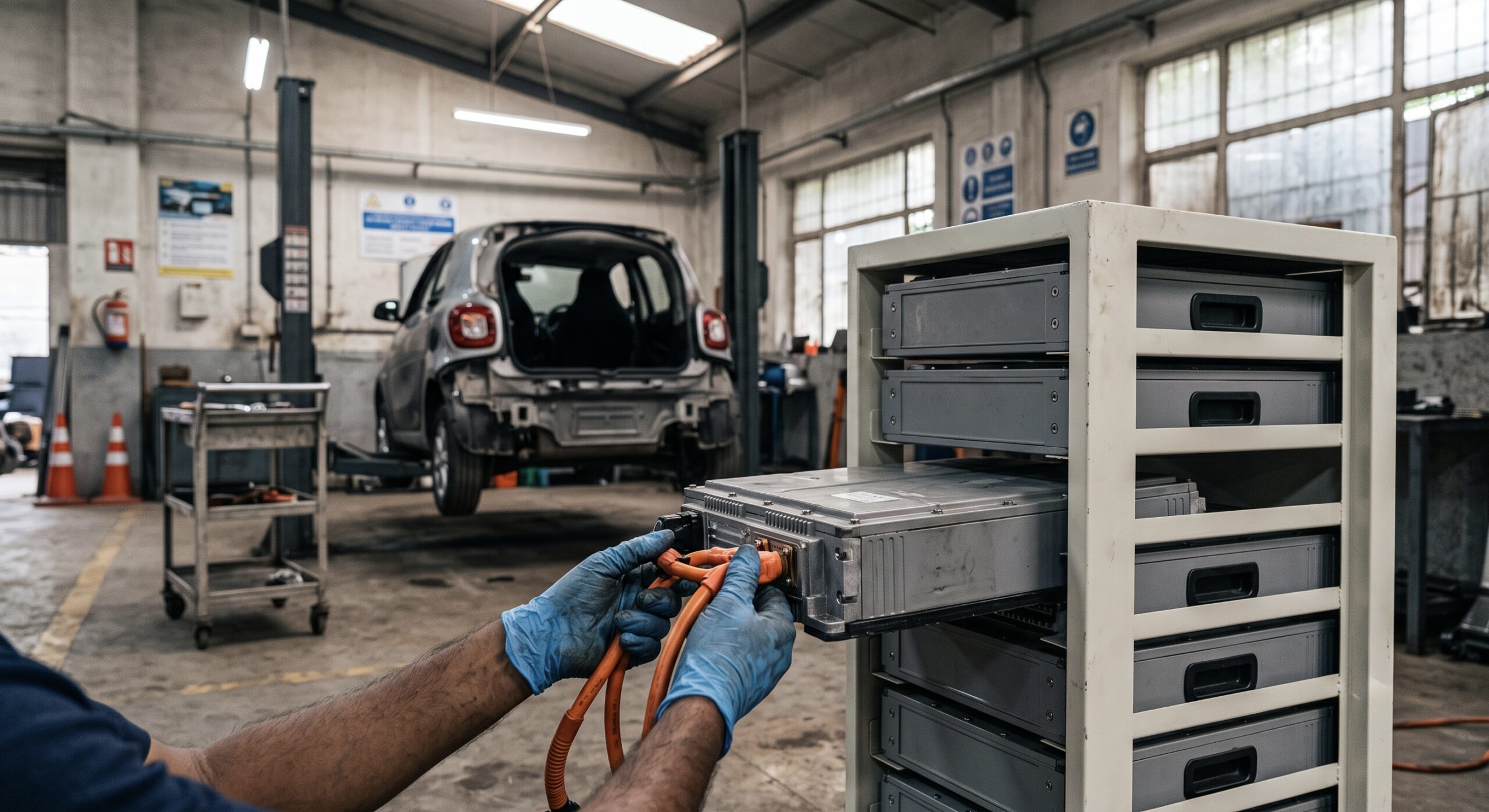
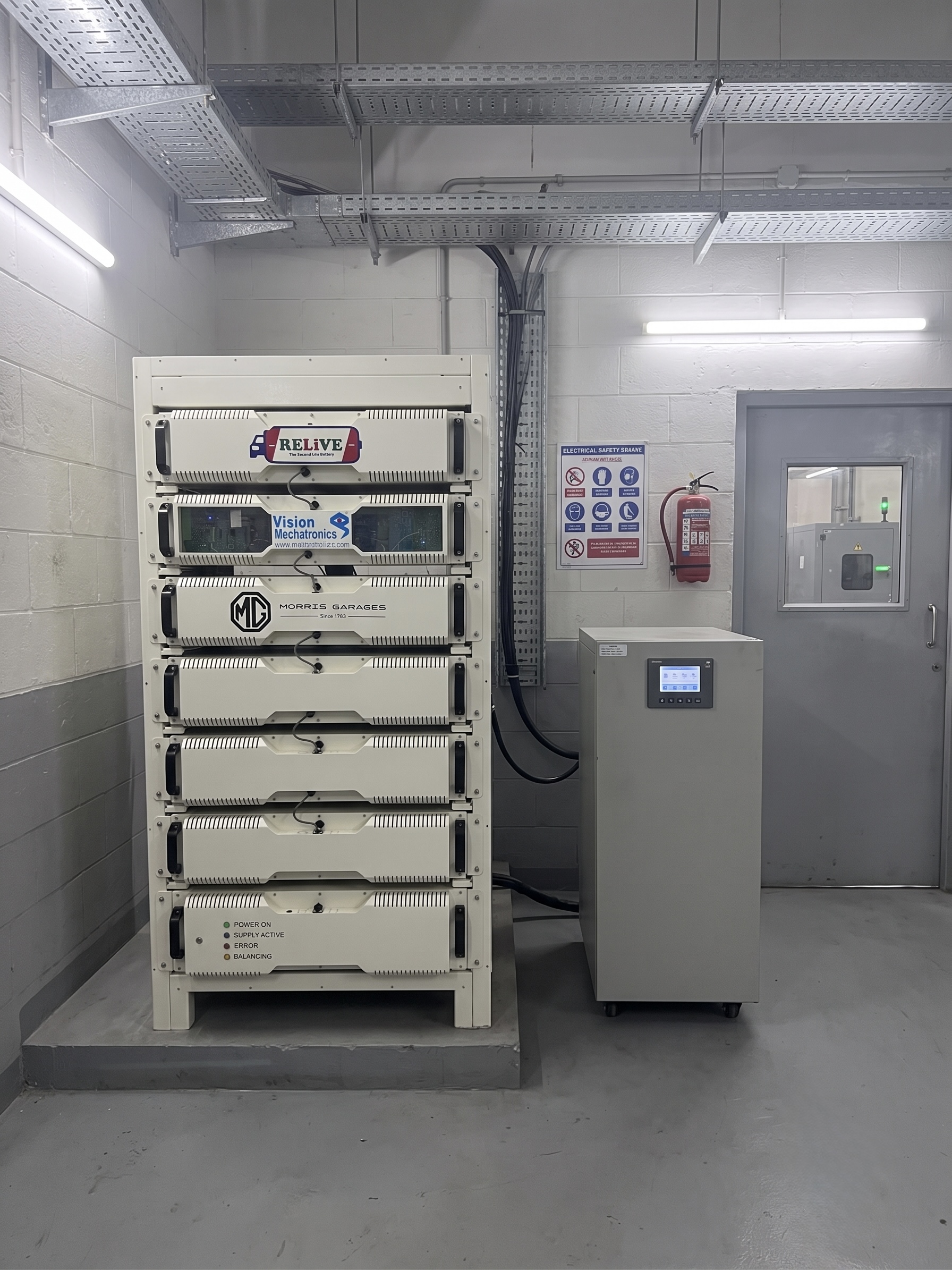
Put that same pack behind a charging station and it performs. It absorbs grid power slowly through the afternoon and releases it fast at eight in the evening. That duty cycle asks for capacity and cycle life, both of which it still has, and asks nothing of the power density it lost. A pack that failed as a drivetrain component works for another decade as grid infrastructure.
We are treating fifteen-year assets as eight-year assets and calling the difference a cost of doing business. It is not a cost. It is the buffer layer the charging network needs, sitting in warehouses across the country while we plan to import the buffer layer instead.
Why Imported Architecture Will Not Carry Us
Imported architectures are designed for climates, duty cycles and grid behaviour that do not resemble ours. A pack engineered for a temperate European ambient does not behave the same way through an Indian summer. A management system tuned for a stable grid does not behave the same way on one that dips repeatedly through a working day. Thermal design assumptions that hold at 25°C stop holding at 45°C, and the penalty arrives as accelerated degradation nobody budgeted for.
Building for Indian conditions is an engineering requirement. It decides whether a storage asset lasts twelve years or four, and that single variable decides whether second-life economics work at all.
What the Decade Asks, by Who You Are
Manufacturers design for the second life now, at the drawing stage. A pack that cannot be safely opened, tested, rebalanced and redeployed will be scrapped early, and every one of those is value you engineered and then discarded.
Developers and investors need to stop underwriting the charger and start underwriting what it is attached to. A charger competes on price within eighteen months of installation. The storage asset behind it arbitrages, buffers, stabilises and earns across several revenue streams, for longer, with less competition.
Policymakers have to measure the system, not the units. Chargers installed is a vanity metric. Reliable charging capacity delivered without grid stress is the real one, and the first state that reports it will look considerably better than the states that keep announcing installation counts.
What This Decade Needs
None of this needs new technology. The packs exist. The engineering exists. What is missing is the decision to treat storage as part of the charging network instead of an accessory to it.
Make that one decision and this decade works. Skip it, and we will spend the next ten years explaining why a charging network we paid for cannot be used at the hour people want to use it.
Note to Readers: The views expressed in this article are those of the author and are presented for informational purposes only. They do not necessarily represent the views of Mobility Electrified.