Urban Mining: India’s Strategic Answer to Critical Mineral Dependence

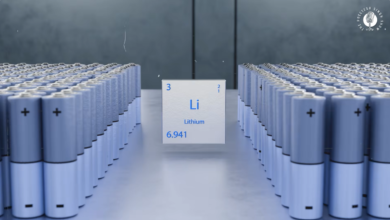
India’s electric mobility transition is often discussed in the language of vehicles: how many two-wheelers, how many buses, how many charging points? But the harder question sits several layers upstream. Every electric vehicle on an Indian road depends on lithium, cobalt, nickel, graphite and rare earth elements and today, almost none of them are mined here. That is the structural vulnerability at the centre of our energy transition. We have set ambitious cell manufacturing targets and are building gigafactory capacity at pace. What we have not yet built, at comparable speed, is a secure and domestic supply of the materials those factories will consume. Import dependence for these minerals remains close to total, concentrated in a small number of geographies, and exposed to price volatility and export policy decisions taken far outside India. There is a way to reduce that exposure without waiting a decade for new mines to come online. It is already operating, at industrial scale, in India. It is called urban mining.
Mining above the ground
Urban mining is the recovery of high-purity metals from what society has already extracted, manufactured, used and discarded: end-of-life lithium-ion batteries, electronic waste, production scrap from cell and pack manufacturing lines, and obsolete infrastructure. The ore body is not underground. It is in warehouses, service centres, plants and homes across the country. The economics are compelling because the concentrations are extraordinary. A tonne of spent lithium-ion battery material carries a metal content that conventional ore grades cannot approach. Recovery from that feedstock avoids the exploration risk, the land acquisition timelines, the water intensity and the tailings burden of primary mining. It also happens closer to demand: the recycler and the cell manufacturer can sit in the same industrial corridor.
Why this matters now, not later
There is a timing argument the industry needs to internalise. The volume of end-of-life EV batteries in India is still modest, because our vehicle fleet is young. The batteries sold in the last three years will not arrive for recycling in bulk for several more years. But two other streams are available today and are frequently underestimated. The first is manufacturing scrap. Every cell and pack line generates rejects, offcuts and off-specification material, a meaningful share of throughput, particularly during ramp-up and yield stabilisation. As India’s cell capacity scales, this stream scales with it, immediately and predictably. It is chemically clean, well-characterised feedstock, and it is the fastest route to establishing genuine closed-loop material flows between recyclers and manufacturers.
The second is the existing pool of consumer electronics and two- and three-wheeler batteries, along with telecom and energy storage installations reaching the end of life. This is a large, geographically dispersed and critically still largely informally handled stream. Building the collection architecture, the processing capacity, the analytical capability and the commercial relationships to handle these volumes takes years. If we wait for the EV wave to arrive before building that infrastructure, we will meet the wave unprepared, and the material will find its way to the lowest-cost, lowest-recovery, highest-emission handler available.
The three conditions for scale
If urban mining is to become a genuine pillar of India’s mineral security rather than a supporting narrative, three things need to move together.
- Formalisation with teeth. Extended Producer Responsibility for both e-waste and batteries has created the regulatory scaffolding. What determines outcomes is enforcement quality and traceability. A compliance certificate that does not correspond to material actually processed to standard is worse than no certificate, because it creates the appearance of circularity while the material leaks into unsafe channels. Producers have a direct interest here: an audit-ready, verifiable chain of custody is what protects their brand, their Scope 3 reporting and their regulatory position.
- Recycled content as a design decision. Recycled material should enter the procurement specification, not the CSR report. When an OEM or cell manufacturer commits to a recycled-content percentage and contracts for it, the recycler can invest against visible demand capacity, technology and quality systems. Where such offtake commitments do not exist, the entire chain remains sub-scale, and everyone pays a higher cost of capital for it.
- Technology and traceability. The difference between recovering material and recovering material to specification is process control: automated and AI-assisted sorting and characterisation, tight hydrometallurgical control, continuous analytical verification, and digital documentation of every batch. This is where Indian recyclers can build durable competitive advantage rather than competing on labour cost. It is also, increasingly, what international buyers and regulators will require before they accept our material.
A different kind of resource base
India will continue to pursue overseas mineral assets and domestic exploration, and it should. But there is something worth recognising about the resource base we already hold.
Every battery imported, every device sold, and every pack assembled adds to a stock of critical minerals sitting inside our borders. That stock grows with every year of the transition. It does not deplete when we use it, because recovered material can be recovered again. It is, in the fullest sense, the only mineral endowment we can expand through our own industrial activity.
Treating that stock as waste is a policy and commercial choice. So is treating it as a strategic reserve. For an industry defining itself this decade, the second choice is the one that ages well. India does not have to accept permanent mineral dependence as the price of electrification. But the infrastructure that changes that outcome has to be built now while the volumes are still manageable and while we still have the time to get it right.

Note to Readers: The views expressed in this article are those of the author and are presented for informational purposes only. They do not necessarily represent the views of Mobility Electrified.