India’s Battery Manufacturing Push: From Imported Tech to Local Capability

Establishing gigafactories is only the beginning of India’s battery manufacturing story. The real test lies in transforming imported technology into indigenous capability aligning cell chemistries with market demand, building a competitive materials ecosystem, managing the initial cost gap and developing multidisciplinary talent. In this insightful article, Preetesh Singh, Host, The Preetesh Singh Show (TPSS), examines what it will take for India to move beyond capacity announcements and build a globally competitive battery ecosystem.
India’s battery story has reached a decisive transition point. For years, the debate centred on whether the country should manufacture lithium-ion cells at all. That question is now largely settled. Investment plans are taking shape, electric mobility is expanding and grid-scale energy storage is emerging as a second major source of demand. The more important question is what kind of battery manufacturing ecosystem India should build. Announcing gigawatt-hours of capacity is relatively straightforward. Creating a durable technology base, qualifying products with demanding customers, localising critical materials and reaching competitive scale are much harder tasks. The next phase must therefore move the conversation from capacity alone to capability.
Global Technology Should Be the Entry Point, Not the Destination
India does not need to recreate every battery technology from first principles before it begins manufacturing. That approach would consume enormous capital and time while the global technology frontier continues to move. A more practical route is to bring mature technology into the country, industrialise it locally and build the ability to understand, adapt and improve it. Adaptation is not a minor engineering exercise. Indian vehicles operate across extreme temperatures, dusty roads, variable charging conditions, dense traffic and highly price-sensitive markets. Two-wheelers, three-wheelers, buses, passenger vehicles and stationary storage systems also require very different combinations of energy density, cycle life, safety, charging speed and cost. A cell designed for a premium electric sport utility vehicle cannot automatically be treated as the best answer for an urban delivery three-wheeler or a grid-storage project. The initial transfer of global know-how should therefore be followed by application-led innovation in India. The long-term objective is to improve four outcomes simultaneously: lower weight, faster charging, longer life and better value for the user. India can also create differentiated expertise in material efficiency, thermal management, recycling and chemistries that reduce exposure to scarce or geopolitically sensitive inputs.
The Strategic Choice of Chemistry and Form Factor
A battery plant is not a completely flexible asset. Once equipment is installed, changing the chemistry, cell format or process can require fresh investment and lengthy requalification. Manufacturers must therefore make careful choices among chemistries such as lithium iron phosphate and nickel-manganese-cobalt, as well as cylindrical, prismatic and pouch formats. These decisions are complicated by a market that is still evolving. In the near term, electric two-wheelers and three-wheelers may provide broad-based cell demand. A successful passenger-vehicle programme, however, can create a much larger requirement in a single step. Stationary storage demand is different again: it arrives in project-sized blocks and may prioritise cycle life, safety and cost over compact size.
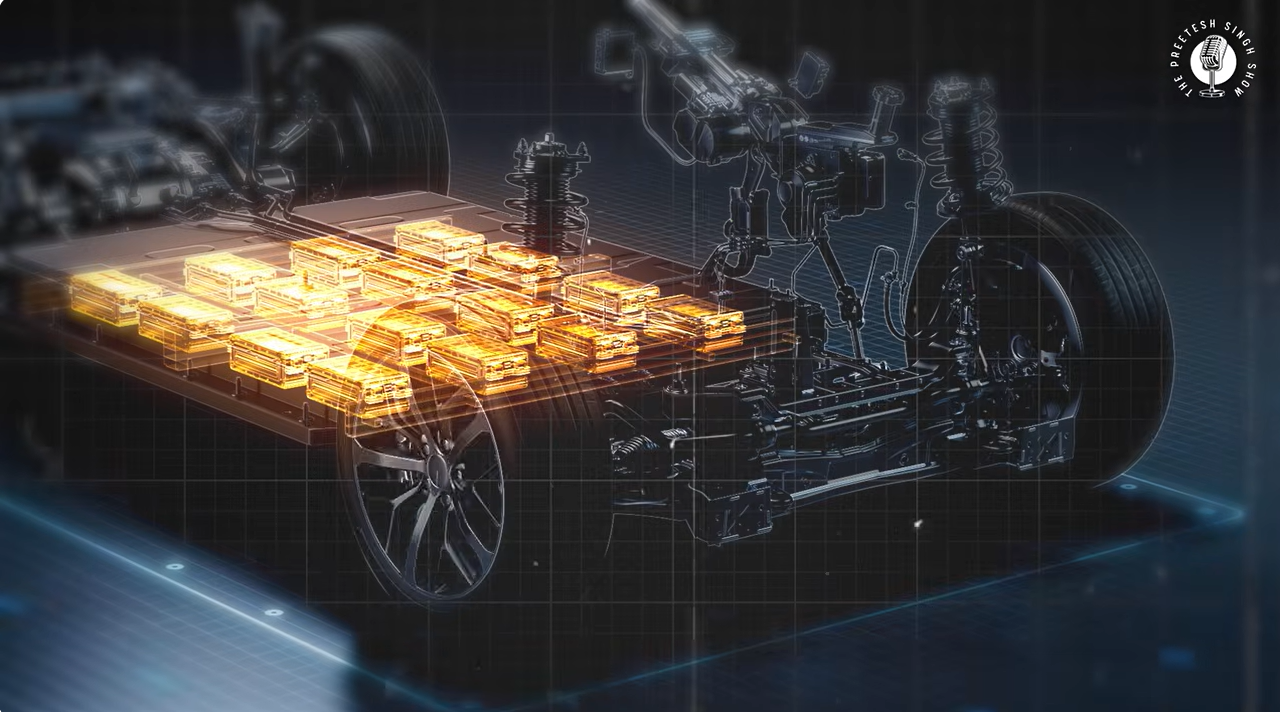
This uncertainty makes pilot-scale customer-qualification facilities especially important. Such facilities bridge the gap between a laboratory cell and a gigafactory product. They allow multiple chemistries and formats to be made under industrial process controls, tested by customers and refined before high-volume equipment is committed. In a sector where qualification can take years, this bridge can reduce both development time and capital risk.
Why Locally Made Cells May Not Be Cheaper Initially
Local manufacturing is often assumed to deliver an immediate cost advantage. That expectation may be unrealistic during the first phase of India’s cell-manufacturing journey. Established overseas producers benefit from scale, integrated supply chains, mature yields and depreciated assets. Global overcapacity, inventory pressure and industry consolidation can also push market prices below what a simple cost model would suggest. As a result, an Indian cell may initially cost more than an imported equivalent. This does not invalidate the case for localisation, but it changes the argument. Domestic cells create value through supply security, shorter logistics, application-specific design, traceability, faster technical support and the gradual development of local intellectual property. These benefits must be weighed against the early price premium.
Vehicle and storage-system manufacturers also have a role. If procurement decisions are based only on the lowest short-term import price, new domestic suppliers will struggle to complete qualification and reach efficient utilisation. Long-term purchase commitments, co-development programmes and phased sourcing can give local manufacturers the learning curve they need without forcing customers to abandon global benchmarks.
Policy Must Connect Manufacturing with Market Demand
India’s policy architecture has attempted to remain technology and application-agnostic. The intent is sound: public policy should not lock the country into a chemistry that may become obsolete or favour one vehicle segment indefinitely. Yet neutrality on paper can still create misalignment in practice. Production incentives may reward high energy density and long cycle life, while demand incentives support two-wheelers, three-wheelers or buses whose ideal cells occupy a different performance and cost range. When demand-side and supply-side programmes are designed independently, the country can end up encouraging advanced cells that do not closely match the applications receiving market support.
The answer is not to prescribe one chemistry. It is to build a coherent technology-demand map and update it regularly. Policy should recognise the needs of mobility and stationary storage, allow market-relevant performance combinations and measure success through qualified output, utilisation and domestic value addition not merely announced capacity. Support mechanisms must also address the actual financial bottlenecks. Output-linked incentives become valuable once production begins, but investors face heavy capital expenditure, interest and depreciation well before utilisation reaches a healthy level. Carefully designed capital support, interest relief, accelerated depreciation or phased tariffs can help bridge the early gap. Such measures should be transparent and time-bound, with protection reducing as the domestic industry becomes naturally competitive.
Supply-Chain Security Begins with Processing
India does not possess every mineral required for advanced batteries, but mineral ownership is only one part of the value chain. A significant share of strategic control lies in refining, purification and conversion into battery-grade materials. This is where the country can act more decisively. The opportunity extends across battery-grade copper and aluminium foils, electrolyte formulations, separators, anode materials, cathode active materials and recycling. India already has capabilities in chemicals, metallurgy and large-scale process industries. The challenge is to translate these strengths into consistent battery-grade quality at globally competitive cost.
Localisation will not happen at the same speed across all components. Some anode materials and supporting inputs may be developed sooner, while cathode localisation will depend more heavily on which chemistries achieve scale in India. The right strategy is therefore selective rather than symbolic: identify areas where existing industrial capability provides an advantage, secure diversified global partnerships for the rest and keep investing in recycling and material efficiency. China’s achievements should be treated as a benchmark to learn from, not merely as a dependence to criticise. A resilient Indian ecosystem will combine international cooperation with domestic processing capability and a broader supplier base.
Talent Could Become the Hidden Constraint
Gigafactories need more than electrochemists. Battery development and manufacturing bring together chemistry, mechanical and electrical engineering, electronics, software, data science, thermal management, quality systems, automation and large-project operations. India has deep engineering talent, but experienced professionals who have designed cells or operated high-volume cell plants remain limited. There is no overnight solution. The country must attract experienced professionals back from established battery markets, develop specialised postgraduate programmes with industry participation, strengthen laboratory-to-industry projects and create rigorous in-house training pathways. Returning experts can become anchors around whom larger teams are built, while academic partnerships can create a steady pipeline of multidisciplinary talent. This is also a compelling career opportunity. Advanced batteries remain a rapidly evolving field in which young engineers can work on problems ranging from computational modelling and artificial intelligence to factory automation, materials science and recycling. Building awareness of that breadth will be essential to compete with more familiar career paths in information technology, finance and consulting.

The Future Will Be Multi-Chemistry
Lithium-ion technology is unlikely to disappear, but it will not be the single answer to every application. Lithium iron phosphate and nickel-based chemistries will continue to evolve. Sodium-ion may gain ground in stationary or cost-sensitive uses where lower energy density is acceptable. Lithium-sulphur, lithium-metal and solid-state approaches may address specialised requirements such as high-energy aviation or premium mobility if technical and commercial barriers are overcome. For India, this argues against betting the entire ecosystem on one winner. Research, pilot lines and manufacturing plans should retain enough flexibility to respond as applications and technologies mature. The goal is not to chase every new chemistry, but to develop the scientific and industrial capability to evaluate them quickly and invest selectively.
What Success Should Look Like by 2030
One plausible industry scenario places India’s combined cell demand for mobility and energy storage at roughly 100–120 GWh by 2030, with domestic plants capable of addressing around 75–80 GWh. The precise numbers will continue to change as vehicle adoption and storage tenders evolve and some low-volume or specialised cells will still be imported.
The more meaningful test is whether Indian plants are producing qualified cells at healthy utilisation, whether material localisation is deepening and whether domestic technology teams are improving products after the initial transfer of know-how. A factory that exists only as announced capacity contributes little to energy security. India’s pathway can be described in four stages: absorb mature global technology, industrialise and adapt it locally, deepen the materials and talent ecosystem and then innovate from a position of manufacturing strength. If these stages are aligned, the country need not remain a permanent technology follower.
The battery race will not be won by the largest announcement or the highest tariff wall. It will be won by the ecosystem that can consistently turn science into qualified products, factories into competitive output and policy support into lasting industrial capability. That is the opportunity now before India.