Dr. Uday Narang on Energy Independence and India’s EV Future

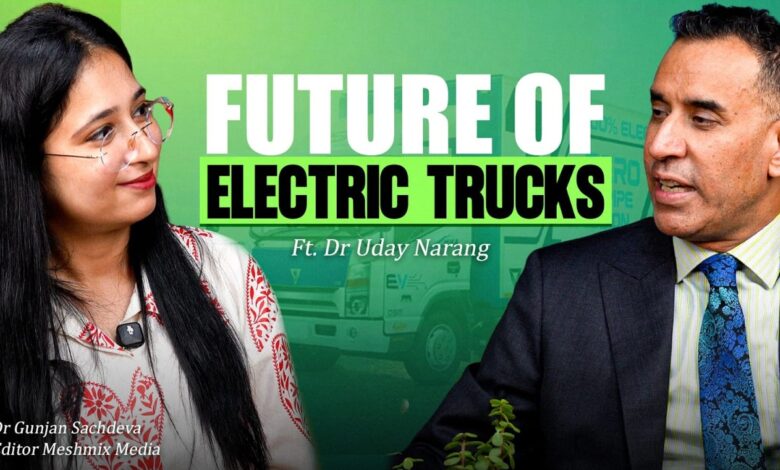
As electric mobility moves from experimentation to mass adoption, the next challenge is building an ecosystem that works beyond India’s metros. Dr Uday Narang, Founder and Chairman, Omega Seiki Mobility (OSM), shares his vision for expanding from electric three-wheelers into trucks, buses and two-wheelers, while highlighting charging infrastructure, financing and total cost of ownership as critical enablers. He also outlines why Tier-III and Tier-IV markets could shape India’s next EV growth wave and why staying the course matters.
It’s always a privilege to sit down with someone who has spent nearly a decade building in India’s electric mobility space and Dr. Uday Narang, Founder and Chairman of Omega Seiki Mobility (OSM), brings a perspective shaped by both global energy markets and grassroots manufacturing. Our conversation moved across crude oil economics, the rupee, India’s R&D priorities and OSM’s own product roadmap, but the thread running through all of it was his conviction that India’s energy independence and its electric mobility journey are, in his words, “not just important; they are our survival.”
We spoke with Dr. Narang about OSM’s journey from a three-wheeler cargo start-up to a soon-to-be-listed EV player with ambitions across trucks, buses and personal mobility.
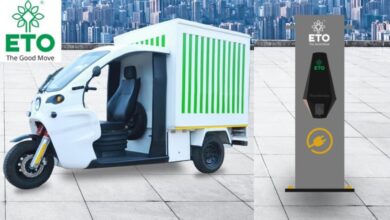
Founded in 2018 and headquartered in New Delhi, Omega Seiki Mobility is one of India’s earliest movers in electric commercial mobility and one of the few Indian OEMs to have built out a portfolio spanning two-wheelers, three-wheelers and four-wheelers from a relatively early stage. Operating under the Anglian Omega Group, OSM built its initial reputation on electric cargo three-wheelers before expanding into one-ton and heavier electric trucks and more recently personal electric scooters. Nearly eight years into its journey, the company has put close to 28,000 electric vehicles on Indian roads, set up manufacturing facilities across the Delhi NCR and Pune belt and pushed into international markets, including West Africa and the Middle East. OSM is now preparing to take the company public, a step Dr. Narang describes as the beginning of “OSM 2.0”, a more capitalised, more ambitious phase of the business focused on heavier trucks, electric buses and a broader consumer footprint. Before he was building electric trucks in Delhi, Dr. Uday Narang was building a career on trading floors in New York, Europe and Switzerland. Born in New Delhi and educated at Stony Brook University, New York, where he earned degrees in economics and management, Narang spent roughly three decades in commodity, energy and power trading, eventually rising to lead oil, gas and power trading portfolios for major American trading firms before moving to Europe to head a large energy trading corporation.
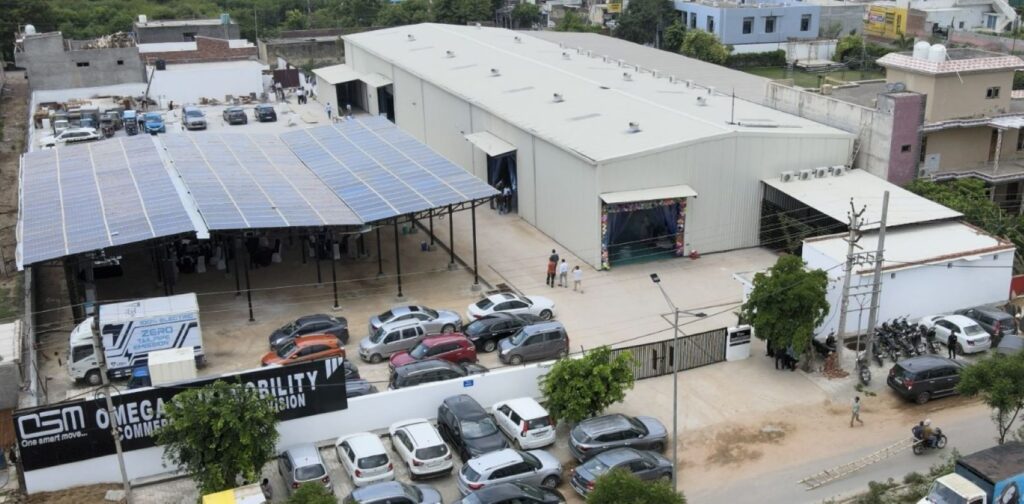
That grounding in global energy markets is, by his own account, central to how he thinks about EVs not as a climate story alone, but as an economic and strategic imperative for a country that imports the vast majority of its oil. In 2018, he channelled that conviction into Omega Seiki Mobility, with the goal of building what he has called a “Tesla of the East” for cargo and commercial vehicles and eventually, a pan-Asian mobility brand.
From “Mission Impossible” to OSM 2.0
When the conversation turns to what is new at Omega Seiki Mobility, Dr. Uday Narang does not begin with a single vehicle or launch. Instead, he describes a company that, in his view, has spent the last eight to nine years laying the groundwork for a much larger phase of growth. OSM, he says, has now put around 28,000 vehicles on the road, with its portfolio extending across two-wheelers and three-wheelers. The company has its one-ton electric truck and is working towards larger truck platforms. At the same time, it is looking beyond India, with projects in West Africa and the Middle East. The latter, he notes, has experienced a slowdown because of the ongoing geopolitical situation. But the most significant development, according to Narang, is perhaps not another product.
It is the company’s stated intention to enter the financial markets. After years of building the business, OSM is now preparing for what Narang calls “OSM 2.0”, a phase in which greater access to capital could support faster expansion, new products and a larger national and international footprint. The ambition, he explains, is not simply to grow volumes. OSM wants to build a business around green energy and sustainability while remaining commercially viable. For Narang, that balance is critical. “Build a green and sustainable energy business, but also build a profitable one,” is how he describes the objective.
He looks back at the company’s journey with a phrase that captures both its difficulty and his determination: “mission impossible.” The next phase, he suggests, is where the outcome of that long journey will begin to become visible.
Energy Independence: Beyond the EV Debate
The conversation then moves away from OSM and towards a subject that appears to sit at the centre of Narang’s thinking about electric mobility: India’s dependence on imported energy. His argument is that the EV transition should not be viewed only through the lens of emissions. It is equally about economic resilience. Narang points to the volatility of crude oil prices and the effect that sustained periods of high oil prices can have on an import-dependent economy. In his assessment, a few months of crude prices moving through the $80–90 range and towards $120 can place significant pressure on the economy and the currency.
For a country importing roughly 90% of its oil, he argues, energy independence cannot be treated as a distant aspiration. It has to become a strategic priority. And that is why he does not see EVs as the only answer. He places electric vehicles alongside E20, hydrogen and other alternative energy sources, arguing that India needs to develop multiple pathways towards reducing its dependence on imported energy. For Narang, therefore, the clean-energy transition is about more than creating a greener transport system. It is about economic security. “Clean energy isn’t just a nice-to-have,” he argues. “It’s important for our survival.” That is perhaps the strongest thread running through his argument: India’s electric-mobility journey is, in his view, inseparable from the country’s larger energy strategy.
Atmanirbhar Bharat: From Slogan to Results
That same argument leads naturally to the question of Atmanirbhar Bharat. Narang’s response is deliberately blunt. He believes the idea has value but says the emphasis now needs to shift from rhetoric to measurable outcomes. For him, self-reliance cannot mean simply producing more vehicles domestically. It has to involve building the technologies that underpin those vehicles and developing the research capabilities needed to compete globally. He is particularly critical of what he sees as inadequate attention to long-term R&D. India, he argues, needs to spend more on research and build capabilities in artificial intelligence, quantum technology, robotics and space technology. His concern extends beyond the automotive sector. The country, he says, cannot build its future merely around gig-economy activity and consumer-facing start-ups. Those businesses have their place, but they cannot substitute for deep technology, advanced research and industrial capability.
For Narang, the question is ultimately about what kind of economy India wants to become. The weakening rupee, in his analysis, cannot be separated from the country’s dependence on imported energy. If energy dependence remains high and alternative technologies are not developed at sufficient scale, he believes the pressure on the currency and wider economy will continue. His prescription is consequently long-term rather than immediate.
Invest in R&D, invest in technology, build indigenous capabilities and stop measuring national progress only through short-term indicators.
The R&D Race: Bigger Trucks, Better Efficiency
That philosophy is also reflected in OSM’s own R&D priorities. Narang says the company is working on electric trucks with greater range, higher efficiency and greater load-carrying capability. The one-ton truck is already part of the company’s portfolio, but the ambition is to move into larger truck platforms. There is another technological area that interests him: magnetless motors. OSM is working with other companies on R&D in this area, with the stated objective of reducing dependence on China for certain critical materials and components. The broader philosophy is to make electric vehicles faster to develop, more efficient and more affordable. Narang describes the desired approach using an unusual comparison.
He wants OSM to become something like the “Zara” of electric vehicles, capable of bringing new products and designs to market faster while keeping costs under control. The reason is commercial as much as technological. A new EV may attract attention because of its specifications, but for widespread adoption, Narang believes the more important equation is total cost of ownership. The cheaper an electric vehicle becomes to operate over its lifetime, the stronger its proposition against conventional alternatives. The final objective, he says, is to develop the kind of R&D capability that allows India to genuinely “make in India, for the world.”
What Is Coming Next? Trucks First
Among OSM’s upcoming programmes, Narang appears particularly enthusiastic about the company’s next generation of electric trucks. He recalls spending seven to eight hours at the plant with the head of OSM’s commercial-vehicle R&D division, discussing the work underway. The details remain closely guarded. Narang is unwilling to reveal the specifications of the upcoming products, joking that his PR team would object if he disclosed too much.
But he does reveal the broad direction. There are larger and longer-range electric trucks under development, with the possibility of a showcase in the coming months. Alongside the truck programme, another project is quietly progressing: e-Boost, which Narang describes as a nine-metre electric bus programme. It is an indication of how far OSM’s product ambitions have moved from the company’s original last-mile three-wheeler focus. The company is increasingly looking towards heavier commercial applications where the economics of electrification will depend not only on purchase price but also on payload, range, uptime, charging and operating costs.
From Cargo to the Everyday Indian
The expansion is not happening only at the heavier end of the market. OSM has also moved into personal mobility with the OSM Vextra electric scooter, marking a shift from its established commercial-cargo positioning towards the everyday consumer.
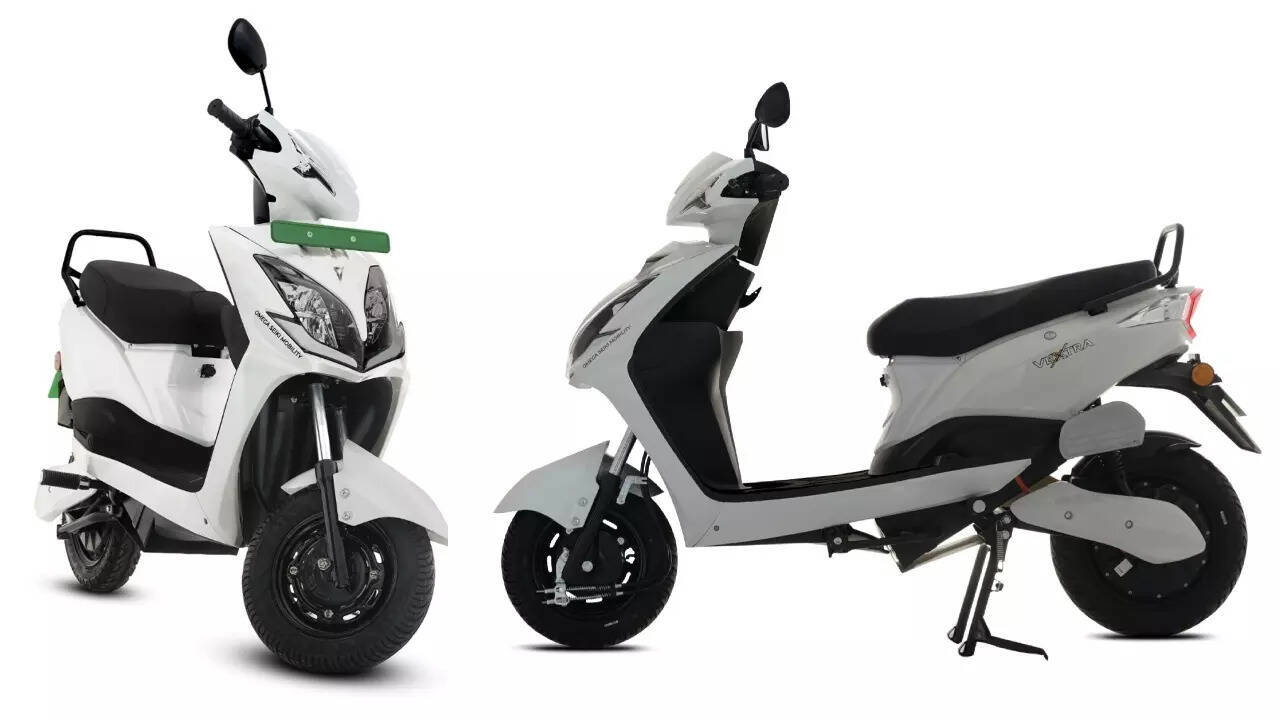
For Narang, the timing is linked to what he sees as a changing total-cost-of-ownership equation. He believes the economics now increasingly support electric two-wheelers, three-wheelers and smaller commercial vehicles replacing their ICE, diesel and CNG counterparts. The Vextra is therefore not being positioned as an isolated experiment. It is part of a wider portfolio strategy. Narang says additional two-wheelers are under development, including a new design intended primarily for women. He sees this as an important category in its own right rather than simply another variant of an existing product. The larger picture is a portfolio that stretches from two-wheelers and three-wheelers to N1 trucks and eventually larger electric commercial vehicles.
His personal position on the two-wheeler market is particularly clear: he believes every two-wheeler in India should eventually be electric. Whether the market follows that trajectory will depend on affordability, charging, financing, product reliability and consumer behaviour. But the direction of OSM’s product strategy is clear: the company no longer sees itself only as a commercial three-wheeler manufacturer.
The Next Three to Five Years
Looking three to five years ahead, Narang expects OSM to have a stronger presence in larger electric trucks while also developing a position in electric buses. He specifically points to opportunities in school transportation and industrial mobility. The objective is to identify segments where electric powertrains can make economic sense rather than pursuing electrification simply for the sake of having an EV in a particular category. There is also a distinctly personal dimension to the way Narang describes this ambition.
He talks about building a cleaner and greener India where the total-cost-of-ownership equation genuinely works. His reference to Martin Luther King Jr. reflects the way he frames that aspiration not simply as a business opportunity, but as a longer-term national ambition. He says it is something he is prepared to continue pursuing for the rest of his life.
The Biggest Barrier Is No Longer the Vehicle
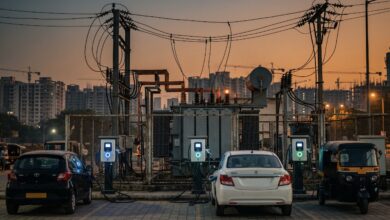
For much of the early EV industry, the barriers were relatively obvious: limited product availability, range anxiety, battery technology and supply-chain constraints. Narang believes the nature of the challenge has now changed. Today, he sees charging infrastructure and financing as the two most important structural barriers, with charging being the larger of the two. And he stresses that the charging question cannot be viewed through the experience of India’s largest cities alone. The real test, he argues, will come in Tier-II, Tier-III and Tier-IV cities and towns.
If electric mobility is to become a mass-market phenomenon, charging infrastructure has to move with the vehicles into these markets. This is where he draws a comparison with China. He acknowledges that he is not particularly enthusiastic about China but says its EV strategy deserves recognition because the country built the ecosystem at scale. The lesson, in his view, is straightforward: infrastructure needs to be created before the market reaches its full potential. India therefore has an opportunity to build its own ecosystem around its own requirements. For Narang, charging is not a supporting issue. It is central to the transition.
Financing: The Other Half of the Equation
If charging represents the infrastructure challenge, financing represents the financial one. Electric vehicles can make sense operationally, particularly for commercial users, but the upfront purchase price and financing terms remain critical to adoption. Narang believes the financing environment can improve as manufacturers become more confident about their products and offer longer-term warranties. For lenders, a vehicle backed by a credible warranty and predictable operating economics is easier to finance. For the customer, the equation becomes more straightforward as well. The vehicle has to work. It has to remain productive. And its lifetime economics need to justify the initial investment. That is why Narang keeps returning to total cost of ownership. For commercial EVs, the question is ultimately not whether the vehicle is electric. The question is whether it makes better business sense.
Consumer Trust Is Changing
Narang does not believe consumer trust remains the same obstacle it once was. In two-wheelers, three-wheelers and one-ton trucks, he argues, the market is already demonstrating growing acceptance. He points to the increasing share of electric three-wheelers and the continued expansion of electric two-wheelers as evidence that consumers are becoming more comfortable with the technology. He also refers to government participation in the sector, including the India-Japan Fund’s investment in Ather, as an indication of the broader institutional interest in India’s EV industry. The implication is that the debate has moved on. The industry no longer has to spend all its energy explaining why electric mobility exists. It now has to demonstrate that the products can deliver reliably and economically at scale. That is a considerably different stage of the market.
The Forrest Gump Analogy
At one point, Narang reaches for an unlikely reference to explain where he thinks the EV industry stands today. It comes from Forrest Gump. He recalls the film’s shrimp-boat story: Forrest enters the shrimping business, struggles initially and then a storm arrives. While other boats return to shore, he remains at sea. When the storm passes, his persistence pays off. For Narang, the analogy is about the companies that remained committed to electric mobility through the difficult years. The past seven or eight years, he says, have tested businesses working across EVs, batteries, motors and supply chains. Those who stayed through that period now face a market that looks very different. His conclusion is that the opportunity has reached a more decisive stage.
For two-wheelers, three-wheelers and one-ton trucks, he believes the conditions are increasingly favourable, particularly with oil prices remaining elevated. After years of operating in difficult conditions, he describes OSM as a boat that has weathered the storm. And now, he says, the wind is behind its sails.
OSM’s Next Horizon: Products, Capital and the Last Mile
When asked what excites him most about OSM’s future, Narang returns to two subjects: electric trucks and the company’s potential listing. His background in Wall Street and international financial markets gives the second subject particular significance. After spending roughly three decades working in the US, Europe and Switzerland, he sees an opportunity to bring that financial-market experience into the next stage of OSM’s development. The company is working on product facelifts, new models, battery technologies and additional two-wheelers, while also looking to expand its presence across Indian states.
But interestingly, his strongest enthusiasm is not reserved for India’s largest markets. It is for Tier-III and Tier-IV India. That is where he believes a significant part of the next EV growth story could emerge. The implication is important for the industry. India’s EV market cannot remain concentrated in a handful of metropolitan centres if electrification is eventually to become mainstream. The next phase will require products that are affordable, serviceable and financeable in smaller cities and towns and infrastructure capable of supporting them.
Staying the Course
As the conversation comes to an end, Narang returns to the metaphor that has appeared several times throughout the discussion: the boat in rough water. His message is less about OSM specifically and more about persistence. If you believe in something, he says, stay with it. There will be difficult periods. There will be uncertainty. There will be setbacks. But the response should be to keep working through them rather than abandoning the objective. For India, he believes that means building not only electric vehicles but also capabilities in space technology, quantum technology, robotics and artificial intelligence. The EV industry, in that sense, is part of a much larger industrial and technological transition.
Narang’s closing message is therefore simple: Believe in yourself. Stay the course. Build.
And, in his words, India owes it to itself to build the technologies and industries that can help make the country stronger.
“Jai Bharat.”
Note to Readers: The views expressed in this interview are those of the interviewee and are presented for informational purposes only. They do not necessarily represent the views of Mobility Electrified.