ETO Motors: Building India’s Connected Electric Mobility Ecosystem

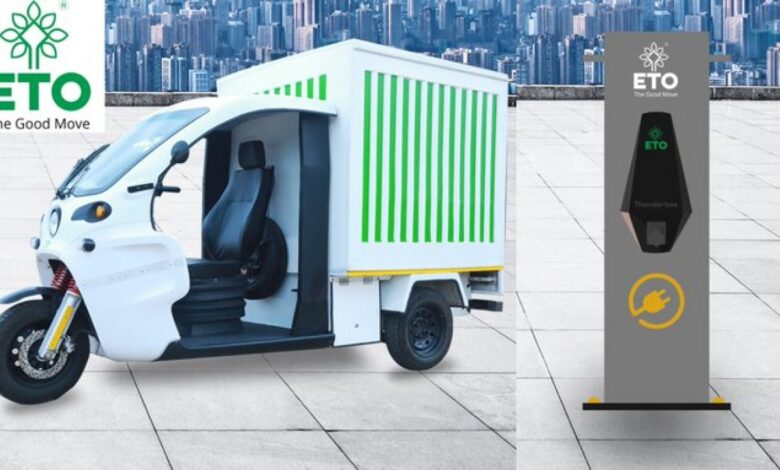
The story of how a 2018 idea grew into an integrated, technology-led electric mobility ecosystem for India
Some companies begin with a spreadsheet. ETO Motors began with a question: what would it actually take for India to move to electric mobility, not on paper, but on its streets, in its traffic, and in the daily lives of the drivers and commuters who depend on it? To understand how a young mobility company from India has, in under a decade, grown from a modest fleet of electric three-wheelers into an ambitious multimodal mobility ecosystem, one has to travel back to 2018, to a moment when electric vehicles in India were still viewed with a mixture of curiosity and scepticism.
At that time, the word “EV” barely featured in everyday conversation on Indian roads. Charging stations were a rarity, battery technology was nascent, and most consumers associated electric vehicles with golf carts rather than genuine mobility solutions. It was into this uncertain, still-forming landscape that ETO Motors was established, founded on the belief that India’s shift to electric mobility could not be engineered by vehicles alone. It would need an entire ecosystem built around them. At the helm of this vision has been Surender Nath, Executive Director of ETO Motors, whose reflections on the company’s journey read less like a corporate retrospective and more like the notes of someone who has spent years solving problems in real time, on real roads, with real drivers and real passengers. Speaking to Mobility Electrified about the company’s origins, philosophy and the road ahead, he offers a candid, first-hand account of what it has taken to build a mobility business in a country as vast, varied and demanding as India.
The Why: A Gap That Needed Filling
Every founding story has a “why”, and ETO Motors’ is rooted in a simple but powerful observation: that swapping an internal combustion engine for an electric motor was never going to be enough. When Nath and his team looked closely at India’s transport landscape in 2018, they did not see a vehicle problem so much as a systems problem. Charging infrastructure was patchy at best. Fleet operators had no reliable way of managing electric assets. Drivers, who form the backbone of India’s mobility economy, had few dependable livelihood opportunities tied to the new technology. And city planners had not yet begun to think about how electric two, three and four-wheelers might slot into the wider public transport network. “ETO was created with the belief that India’s transition to electric mobility would need more than vehicles,” Nath explains. “It would require dependable mobility solutions, charging infrastructure, technology, fleet management and, most importantly, viable livelihood opportunities for drivers.” That last point is worth dwelling on, because it reveals something distinctive about ETO Motors’ founding philosophy. This was never conceived purely as a vehicle manufacturing or leasing business. From day one, the people who would actually drive these vehicles, day after day, on the streets of Indian cities, were placed at the centre of the equation.
It is a philosophy that has, in many ways, defined the company’s trajectory ever since. Rather than positioning itself as another entrant in India’s crowded electric vehicle market, ETO Motors set out to become what Nath describes as an integrated ecosystem player, one that treats vehicles, charging and energy infrastructure, digital technology, fleet operations, driver livelihoods and connectivity with mass transit as interlocking parts of a single, coherent whole.
The Who and the What: Building from the Ground Up
Founded in 2018, ETO Motors began its journey not by chasing scale for its own sake, but by choosing its battles carefully. The company’s earliest efforts were concentrated on high-utilisation segments, principally passenger mobility and first- and last-mile transportation, where the case for electrification was most immediate and most persuasive. These were segments in which vehicles clocked up significant daily mileage, where fuel costs weighed heavily on driver earnings, and where the economic and environmental benefits of switching to electric power could be felt almost as soon as a vehicle hit the road. This was, in hindsight, a shrewd starting point. High-utilisation mobility offered ETO Motors the fastest route to proving that electric vehicles could be commercially viable, not merely environmentally virtuous. It also gave the company something more valuable than early revenue: operating experience. Years spent managing real fleets, in real traffic, with real drivers navigating real earning pressures, taught ETO Motors lessons no amount of market research could have delivered.
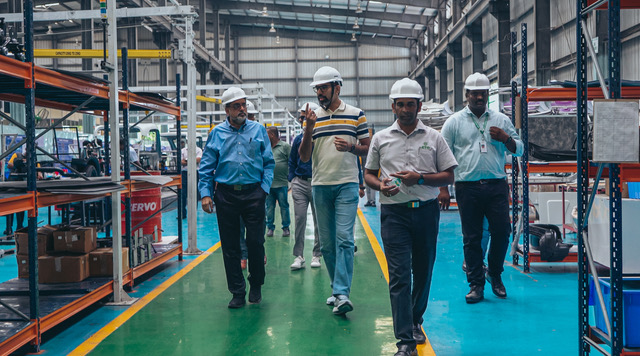
That operating experience, in turn, reshaped the company’s own understanding of what it was building. What began as a focus on individual modes of transport, an electric three-wheeler here, a fleet of e-cars there, gradually broadened into a conviction that the future of mobility was multimodal. As Nath puts it, a commuter’s journey does not begin or end at a Metro or railway station; it starts at home and ends at the final destination. For that journey to work seamlessly, electric autos, e-bikes, e-cars and buses need to function not as isolated offerings but in coordination with Metro, MMTS, rail and other mass-transit systems. This realisation has become something of a guiding principle at ETO Motors, distilled by Nath into a single, memorable formulation: the future is not just electric vehicles, it is connected, integrated, intelligent and inclusive mobility. It is a phrase that captures the arc of the company’s evolution, from a start-up focused on putting electric vehicles on the road, to an organisation increasingly preoccupied with how those vehicles, and the people who depend on them, fit into a much larger, interconnected transport story.
The Where: India’s Cities as a Living Laboratory
If ETO Motors’ philosophy was shaped in boardrooms and strategy sessions, it was tested and refined on the streets of India’s cities. This is where the company’s ecosystem approach has had to prove its worth, in the chaotic, densely populated, endlessly variable conditions of Indian urban mobility, where infrastructure gaps, unpredictable demand and diverse commuter needs make for an unforgiving testing ground.
It is precisely this environment that has made India such fertile, if demanding, terrain for the kind of ecosystem-building ETO Motors has attempted. Unlike markets with mature, well-established public transport networks, Indian cities present both a challenge and an opportunity: a challenge, because the absence of joined-up infrastructure means every layer, vehicles, charging, technology and driver support, has to be built almost from scratch; and an opportunity, because that same blank canvas allows solutions to be designed as integrated from the outset, rather than retrofitted later. Nowhere is this more apparent than in the way ETO Motors has thought about first- and last-mile connectivity. In a country where Metro and suburban rail networks are expanding rapidly but rarely reach every doorstep, the stretch between a transit station and a commuter’s final destination can make or break the appeal of public transport altogether. It is this stretch that ETO Motors’ fleets of electric autos, bikes and cabs have sought to serve, not as a standalone business, but as a connective layer designed to work alongside, rather than in competition with, the wider transit network.
The How: Technology as the Intelligence Layer
If the company’s founding vision provided its compass, technology has increasingly become its engine. Nath is unambiguous about this shift in emphasis. Technology, he argues, is no longer simply an enabling layer that sits on top of mobility; it is fast becoming the intelligence that determines how efficiently an entire mobility ecosystem operates. At ETO Motors, this has translated into a deliberate move away from conventional fleet management and towards what the company describes as a connected mobility ecosystem, one in which vehicles, drivers, routes, charging infrastructure and passenger or logistics demand can all communicate through a common digital architecture. The building blocks of this system are, by now, familiar names in the world of connected transport: the Internet of Things, telematics, artificial intelligence and data analytics. What is less familiar, and rather more interesting, is how ETO Motors has chosen to sequence and combine them.
The company’s vehicles are fitted with IoT and telematics systems that provide visibility into location, utilisation, operational performance and energy parameters, a continuous, real-time picture of how each vehicle in the fleet is being used. On its own, this stream of data would be little more than noise. It is the layer above it, AI and analytics, that gives the information meaning, converting raw numbers into actionable intelligence that supports predictive maintenance, route optimisation and improved uptime. Nath describes these three technologies, IoT, analytics and AI, as interconnected layers rather than standalone tools. “IoT provides real-time data, analytics helps us understand what that data means, and AI helps convert those insights into better operational decisions,” he explains. Instead of waiting for a vehicle to break down, the system can flag abnormal operating patterns early enough to support preventive maintenance. Instead of guessing which vehicle should be deployed where, historical trip, charging and route data can inform those decisions with far greater precision.
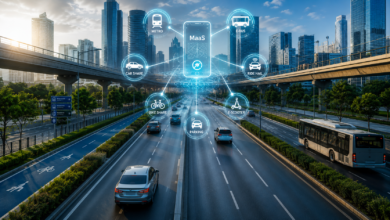
But it is in the idea of multimodal orchestration that ETO Motors’ technological ambitions become most apparent, and most distinctive. A city, Nath points out, may already have Metro rail, suburban rail, buses, e-autos, e-bikes and e-cabs, yet unless these modes are connected intelligently, commuters continue to experience them as separate, disjointed systems. The company’s stated aim is to use technology to bridge that gap, helping to integrate different modes of transport around passenger demand, schedules, routes and first- and last-mile requirements. The same logic, he notes, applies just as strongly to logistics, where vehicles, routes, charging, delivery requirements and asset utilisation all need to function as one connected system rather than a patchwork of separate operations. This, in essence, is ETO Motors’ technological philosophy in a single sentence: not to track vehicles, but to create visibility, predictability and coordination across an entire mobility chain.
The Engine Room: Fleet Management and the Economics of Uptime
For any commercial fleet operator, uptime is not a technical detail; it is the difference between profit and loss. Nath is candid about the fact that connected fleet management sits at the very heart of what ETO Motors is trying to build, precisely because electrification changes not just the vehicle itself, but the entire way a fleet needs to be planned, monitored and operated. At ETO Motors, connected technologies are used to monitor vehicle performance, location, battery health, energy consumption and utilisation, data that feeds directly into decisions around vehicle deployment, charging schedules, route planning and maintenance. The underlying shift here is a familiar one in the world of connected industry: moving from a reactive posture, in which problems are addressed after they occur, to a preventive one, in which operational requirements are anticipated and acted upon in advance. That shift matters more, not less, as fleets grow larger. Managing a handful of electric vehicles through manual, disconnected processes is one thing; managing hundreds or thousands is quite another. As Nath puts it, a connected fleet effectively creates a common operational layer across vehicles, energy and mobility demand, allowing businesses to balance these variables far more efficiently than would otherwise be possible. This becomes especially critical in logistics, where delivery schedules and route commitments have a direct bearing on both revenue and customer service.
It is a theme Nath returns to repeatedly: that the future of electric logistics will not be defined simply by how many EVs are deployed, but by how intelligently they are operated. Connected fleet management, in his words, is the bridge between vehicle electrification and commercially viable, scalable electric logistics, a mechanism that can make fleets more predictable, more productive and more sustainable, while steadily improving the underlying economics of the transition.
Charging: From Infrastructure to Intelligence
No conversation about electric mobility in India can avoid the subject of charging, and ETO Motors, notably, does not merely deploy electric vehicles; it also operates charging infrastructure, giving the company a vantage point on both sides of the equation. That dual perspective has shaped a fairly firm view: that charging infrastructure will be one of the most important enablers of India’s commercial EV transition, and that as commercial EVs move from early adoption towards large-scale deployment, the industry will need to shift its focus from simply adding charging points to building reliable, strategically located and intelligently managed charging networks.
Nath draws a clear distinction between commercial and private EV charging, arguing that the two are fundamentally different propositions. For a private vehicle owner, a charger is a convenience. For a fleet, charging is tightly bound up with vehicle utilisation, route schedules, driver availability and revenue-generating hours; a vehicle left idle for longer than necessary has an immediate and measurable impact on fleet economics. Looking ahead, ETO Motors anticipates greater adoption of fleet-focused charging hubs, particularly at high-demand logistics and mobility corridors, depots and strategic urban locations, supported by technology capable of monitoring energy consumption, managing charging loads, scheduling vehicles and optimising charging around operational needs. Nath is also careful to widen the lens beyond the charger itself, pointing to grid capacity, renewable energy integration, battery intelligence, interoperability and digital payments as components that will increasingly shape the charging ecosystem as commercial fleets scale. The ultimate ambition, as he describes it, is for charging to become almost invisible from an operator’s point of view, with vehicles receiving the right amount of energy, at the right location and at the right time, without ever compromising uptime. Charging, in other words, should not be treated as a bolt-on utility, but woven into the broader operational architecture of the fleet itself.
What Sets ETO Motors Apart
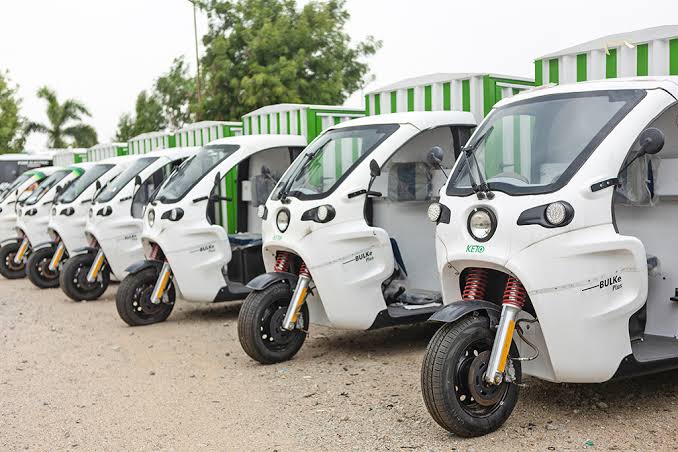
Ask Nath what differentiates ETO Motors from other players in India’s crowded electric mobility market, and the answer circles back, inevitably, to the ecosystem approach that has defined the company since its earliest days. Where many competitors have approached electric mobility primarily as a vehicle business, ETO Motors has consistently framed it as something broader: the complete operational requirements of passenger and cargo mobility, spanning vehicle deployment, charging, fleet management, technology and driver support. In the passenger segment, this has meant designing solutions around high-utilisation, real-world applications, where reliability, safety, affordability and uptime matter more than headline specifications. In cargo and last-mile mobility, the emphasis has been similarly practical: ensuring vehicles can be deployed effectively, monitored in real time, and supported by the right charging and maintenance infrastructure.
Underpinning all of this is what Nath calls an emphasis on connected and intelligent operations, the same combination of IoT, telematics, AI and data analytics that recurs throughout the company’s story, deployed here to give deeper visibility into vehicle performance, battery health, utilisation and routes, and to move fleet management from a reactive exercise to a predictive one. Perhaps the more understated, but ultimately more significant, differentiator is experience. ETO Motors’ exposure spans the full operating lifecycle of an electric vehicle, from the vehicle itself, through charging infrastructure, fleet operations and technology, to the driver ecosystem that keeps everything moving, an understanding that is difficult to replicate without having lived through it. As Nath summarises it, the proposition is not simply about putting an electric vehicle on the road; it is about building a reliable, technology-enabled and commercially viable mobility solution around that vehicle.
The Customer’s Calculus: Beyond the Sticker Price
One of the more revealing parts of any conversation about commercial electric vehicles concerns what actually persuades a fleet operator to make the switch, and here Nath’s answer challenges a common assumption. While upfront vehicle cost, range and charging infrastructure remain relevant considerations, he argues that the real decision-maker for fleet operators today is total cost of ownership, combined with a vehicle’s ability to generate revenue consistently. Uptime, in particular, looms large in this calculation. A vehicle that is cheap to buy but frequently off the road, he notes, can quickly become an expensive liability rather than a productive asset. Range, similarly, needs to be judged against the reality of a vehicle’s duty cycle rather than a headline number on a specification sheet; operators want predictable range that matches their actual routes and daily utilisation. Charging, too, has evolved from being seen purely as infrastructure to being understood as an operational variable in its own right, one that directly shapes utilisation and productivity depending on where and when a vehicle can be charged. Taken together, these factors lead Nath to place total cost of ownership and uptime at the very centre of the fleet operator’s decision. Where reliable performance, efficient energy consumption, manageable maintenance costs and high utilisation come together, he suggests, the economics of an electric vehicle become genuinely compelling across its operating lifecycle. It is a shift in mindset he sees increasingly among fleet operators, from asking what an EV costs, to asking what value that asset can generate over its entire working life, a more mature, and ultimately more sustainable, way of evaluating commercial electric mobility.
The Hard Part: Lessons from Scaling
No founding story would be complete, or credible, without an honest reckoning with its difficulties, and Nath does not shy away from this. Scaling electric mobility in India, he acknowledges, has been an exciting journey, but one that has repeatedly required ETO Motors to solve problems for which no ready-made solutions existed. In the company’s earliest days, one of the most significant challenges was simply building confidence, among customers, drivers and fleet operators alike, in the reliability and commercial viability of electric mobility at a time when the broader ecosystem was still finding its feet. An early lesson learned along the way was that deploying an electric vehicle is only the starting point; the supporting ecosystem around it, encompassing charging, maintenance, technology, financing and driver capability, has to evolve in step with it, not as an afterthought.
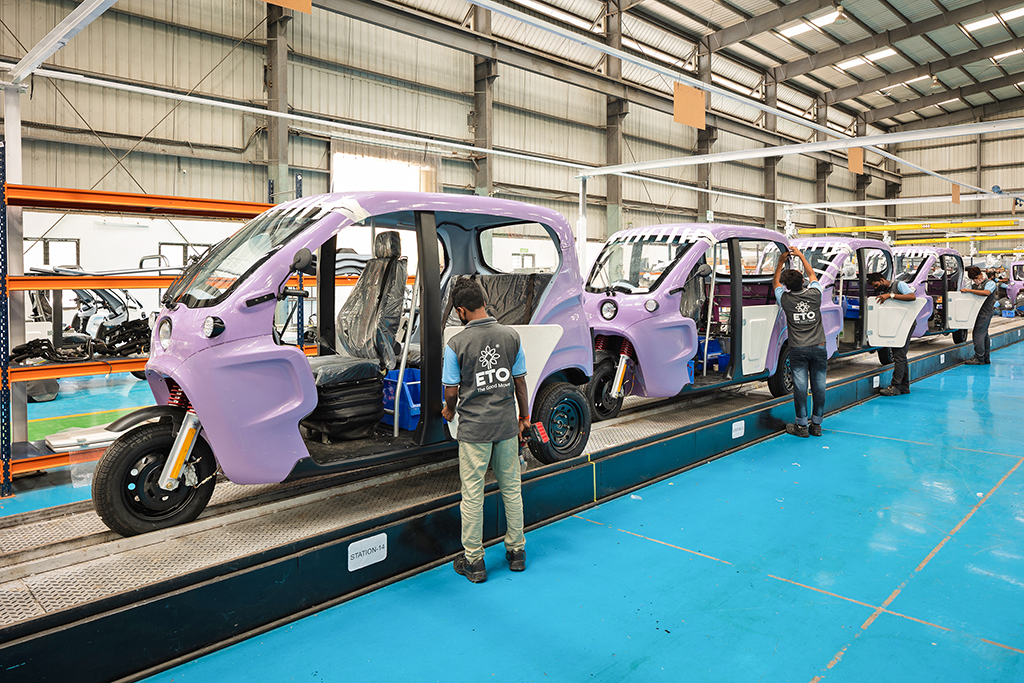
Charging infrastructure and operational planning presented their own difficulties. Commercial EVs run on demanding schedules, which meant charging could never be treated as an afterthought; decisions about where to locate charging infrastructure, how to schedule vehicles, and how to minimise idle time all had to be worked through carefully, often by trial and error. Building the right technology and service ecosystem around the vehicles brought its own complexity, particularly as fleets grew larger and monitoring vehicle performance, battery health, maintenance requirements and utilisation became correspondingly more intricate, reinforcing the importance of connected fleet management, telematics and predictive analytics as the fleet scaled.
And then there is what Nath describes as the human side of the transition, arguably the most demanding challenge of all. Drivers and fleet partners needed to understand how electric vehicles behave differently from conventional ones, and how to maximise both efficiency and earnings within this new paradigm. Building that knowledge and that confidence, he notes candidly, takes time; it cannot be rushed or engineered purely through technology. Layered on top of all this has been the simple fact that the wider EV ecosystem, spanning vehicle technology, batteries, financing, regulation and charging standards, has itself continued to evolve throughout ETO Motors’ journey. Scaling, in this context, has meant a continuous willingness to learn and adapt rather than settling into a fixed playbook. The biggest lesson, as Nath frames it, is that EV adoption was never simply about replacing an internal combustion engine with an electric powertrain; it required building an entire ecosystem around the vehicle.
Technology, Policy and the Road to Affordability
India’s electric mobility sector has, over the past several years, been shaped substantially by government policy, from incentive schemes designed to bring down upfront vehicle costs, to state-level EV policies encouraging fleet electrification, and mounting public investment in charging infrastructure and public transport modernisation. Companies such as ETO Motors have operated within, and been shaped by, this evolving policy landscape, one in which the intent to accelerate electrification has generally run ahead of the infrastructure needed to support it fully. It is precisely this gap, between policy ambition and ecosystem readiness, that has created much of the space in which ETO Motors’ integrated approach has found its purpose. Nath is measured but candid when discussing what more needs to change on the technology front for electric commercial mobility to become both more efficient and more affordable. The next phase of growth, he argues, will depend less on any single breakthrough than on how effectively technology can bring down the total cost of ownership while simultaneously improving reliability and utilisation. The focus, in his view, must move beyond improving the vehicle in isolation towards optimising the entire mobility ecosystem around it.
Battery technology sits high on this list. Higher energy density, faster and smarter charging, longer battery life and more accurate battery-health diagnostics could all significantly improve vehicle utilisation and reduce lifecycle costs, factors that have a direct bearing on uptime and profitability for commercial operators. But batteries alone, Nath is quick to caution, will not transform commercial mobility on their own. Intelligent fleet management is the second pillar. Greater use of AI, IoT and predictive analytics can help operators optimise routes, charging schedules, vehicle deployment and preventive maintenance, while improved visibility into energy consumption and driving patterns can help reduce avoidable operating costs. Charging infrastructure, too, needs to keep advancing, towards solutions that are faster, more reliable and genuinely interoperable, supported by intelligent energy management, and increasingly integrated with route planning and fleet operations rather than functioning as a separate concern. Tying all of this together, in Nath’s view, is the need for stronger digital platforms connecting vehicles, batteries, charging infrastructure, drivers and fleet operators into a single connected ecosystem, one capable of delivering better utilisation and making commercial EVs genuinely predictable to operate. Affordability, he stresses, will not arrive through any one technological breakthrough. It will come from combining better batteries, smarter software, efficient charging and connected operations, so that every kilometre becomes more productive and every asset more efficiently utilised. Reduced to its essentials, commercial EV efficiency depends on optimising the complete system: vehicle, battery, energy, charging, route, driver, technology and utilisation, working together. When these elements align, Nath suggests, the total cost of ownership improves almost as a natural consequence, rather than requiring heroic intervention at any single point.
The Road Ahead: Five Years, and Beyond
Ask any founder about their priorities for the next five years, and the answers often gravitate towards growth targets and market share. Nath’s answer, characteristically, is framed instead around the kind of ecosystem ETO Motors intends to build: scaling a technology-enabled, multimodal and commercially sustainable mobility ecosystem, with particular potential in first- and last-mile passenger mobility, urban logistics, shared transportation, corporate mobility and public transportation.
Electric three-wheelers, unsurprisingly, will continue to play an important role in this plan, given how well suited they are to short-distance, high-utilisation urban mobility, a segment that has been central to ETO Motors’ story from the outset. At the same time, the company sees growing opportunities in e-cars and electric buses, as Indian cities move steadily towards cleaner and more integrated public transportation systems.
Multimodal connectivity, once again, emerges as a major area of focus, echoing the philosophy that has run through the company’s journey since its founding. The future commuter, in Nath’s vision, should not have to think separately about Metro, MMTS, bus, auto, bike or cab; technology should increasingly allow these modes to function as a single, integrated journey. Charging and energy infrastructure will remain another strategic priority, with fleet charging hubs, intelligent charging management, renewable energy integration, battery energy storage systems and complementary off-grid solutions all expected to grow in importance as commercial EV penetration increases. Technology, as ever, is positioned as the connecting layer across all of it, tying together vehicles, routes, drivers, charging and demand into a coherent whole.
Taken together, these priorities point towards a broader ambition: to evolve from being an electric mobility operator into becoming an integrated mobility platform, one capable of orchestrating multiple modes of transportation and energy infrastructure simultaneously, rather than managing them as separate lines of business.
Pushed further, towards 2035, Nath allows himself a longer view of where India’s mobility landscape, and ETO Motors’ place within it, might be headed. By then, he believes, electric mobility will no longer be regarded as an alternative to conventional transport; it will have become an integral part of how people and goods move across Indian cities. In that transition, he sees ETO Motors playing a meaningful role in helping to build the ecosystem required to make electrification scalable and commercially sustainable, contributing not merely by deploying electric vehicles, but by building an integrated ecosystem that brings together passenger and cargo mobility, charging infrastructure, connected fleet management and data-driven operations.
The greatest opportunities, he suggests, will continue to lie in high-utilisation segments such as last-mile connectivity, urban logistics, shared passenger mobility and public transportation, precisely the areas where electrification can deliver the most tangible benefits in operating efficiency, lower emissions and improved urban air quality. Technology, once again, is expected to play a defining role, with the combination of electric vehicles, IoT, AI, telematics and predictive analytics making mobility progressively more intelligent, improving vehicle uptime, energy efficiency, battery management and overall fleet productivity along the way.
Nath paints a vivid picture of what this might look like in practice: a commuter arriving at a Metro or railway station where the platform already understands demand, identifies the appropriate first- or last-mile option, matches available vehicles, optimises routes and ensures those vehicles carry sufficient energy for their next duty cycle, an ecosystem operating almost invisibly in the background.
Crucially, this vision of the future is not framed purely in technological terms. Nath is emphatic that the transition must remain inclusive, creating opportunities for drivers, women entrepreneurs, fleet partners and small businesses, while continuing to provide affordable and dependable transportation to commuters. By 2035, his hope is that ETO Motors will be recognised not merely for the number of electric vehicles it has deployed, but for having helped create an integrated, intelligent, sustainable and inclusive mobility ecosystem, a considerably broader legacy than vehicle numbers alone could ever capture.
He sums up this trajectory in a single, tidy progression, one that reads almost like a mission statement distilled to its essence: from electric vehicles to electric fleets, from electric fleets to connected mobility, and from connected mobility to an integrated multimodal transportation ecosystem.
A Story Still Being Written
As editor of Mobility Electrified, I have had the opportunity to trace the arc of many companies attempting to reshape how India moves, but ETO Motors’ story stands out for the consistency of its underlying logic. From its founding in 2018 through to its present-day ambitions, the company has held fast to a single idea, that electrifying transport is not a matter of swapping engines, but of building an entirely new, interconnected way of moving people and goods.
What emerges from Nath’s account is not a tale of a single breakthrough product, but of patient, deliberate ecosystem-building: choosing the right segments to start with, learning from the realities of running fleets on Indian roads, layering in technology not as a gimmick but as genuine operational intelligence, and gradually widening the aperture from vehicles, to fleets, to connected mobility, to an entire multimodal transportation ecosystem.
It is, in many ways, a distinctly Indian story, shaped by the scale, complexity and improvisational energy of the country’s cities, and by the recognition that any credible path to electrified mobility must also be an inclusive one, mindful of the drivers, entrepreneurs and small businesses whose livelihoods depend on it. Whether ETO Motors succeeds in fully realising its 2035 vision remains, as with any young company, a story still being written. But the philosophy driving it, that the future belongs not simply to electric vehicles, but to connected, integrated, intelligent and inclusive mobility, offers a compelling lens on India’s broader electrified journey.
For Mobility Electrified, ETO Motors is a reminder that in the transition to electric mobility, the vehicle is often the easiest part of the puzzle. It is everything built around it, the charging points, the software, the driver livelihoods, the connections to Metro and rail, that ultimately determines whether that transition succeeds. That, perhaps more than any single statistic or milestone, is the real story of ETO Motors.