Connected, Electric, Intelligent: The Three Pillars of Tomorrow’s Mobility

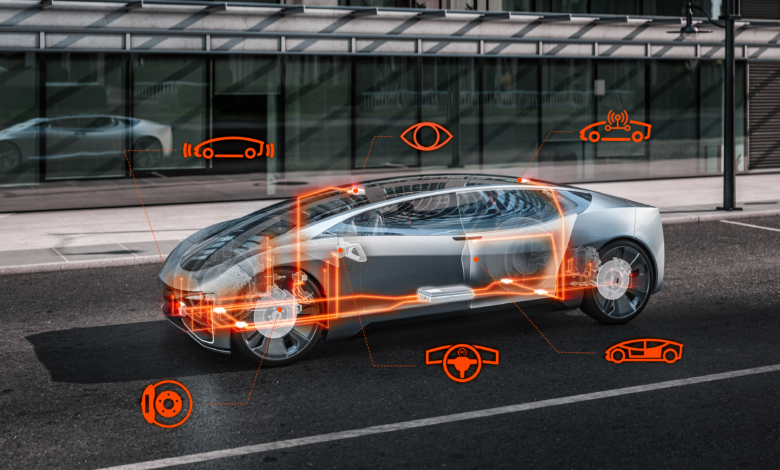
A decade ago, adding new capabilities to a vehicle often meant adding more hardware. A new feature required another electronic control unit, additional wiring and greater mechanical complexity. That engineering philosophy is rapidly giving way to a software-first approach, where vehicles are designed to evolve through computing power, intelligent electronics and continuous software updates. This transition is redefining not only how vehicles are built but also how they perform, adapt and interact with their surroundings.
The shift towards software-defined vehicles has brought together three technologies that were once viewed as independent trends: connectivity, electrification and intelligence. Today, they are deeply interdependent. A connected vehicle generates data that improves battery performance, while artificial intelligence analyses that data to enhance safety and efficiency. Similarly, advanced electric powertrains rely on intelligent control systems and cloud connectivity to optimise performance throughout the vehicle lifecycle. The future of mobility will ultimately depend not on breakthroughs in individual technologies, but on how effectively they converge to create transportation systems that are safer, more sustainable and capable of adapting intelligently to evolving road conditions and user needs.
Connected: The Foundation of Software-Defined Mobility
Connectivity has evolved from being a customer-facing feature to becoming the digital backbone of modern vehicles. Every connected vehicle continuously exchanges data with cloud platforms, infrastructure and mobility ecosystems, enabling remote diagnostics, predictive maintenance, over-the-air software updates and real-time performance monitoring. According to McKinsey, nearly 95% of new vehicles sold globally could be connected by 2030, reflecting the industry’s rapid transition towards software-defined mobility. In this environment, connectivity is no longer about convenience; it is fundamental to how vehicles improve throughout their operational life. Delivering this capability requires a secure digital ecosystem that extends beyond the vehicle itself. End-to-end road-to-cloud platforms allow manufacturers to deploy software enhancements remotely while reducing downtime and extending product lifecycles. Connected infotainment solutions are bringing always-on 4G/LTE connectivity and Android-based digital experiences to two-wheelers, making advanced mobility services accessible beyond passenger cars. In commercial transportation, integrated platforms that combine tachograph data, fleet management and tolling provide operators with real-time operational visibility, while robust cybersecurity frameworks built around prevention, detection and response help safeguard connected fleets against increasingly sophisticated cyber threats.
Electric: Intelligence at the Core of Electrification
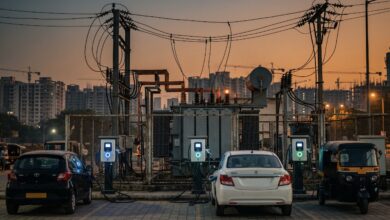
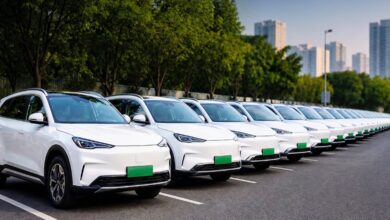
The success of electric mobility depends on much more than battery capacity or charging infrastructure. Behind every efficient electric vehicle lies a sophisticated network of electronics that continuously manages power distribution, battery health, thermal performance and vehicle efficiency. As electrification expands across passenger vehicles, commercial vehicles and two-wheelers, these electronic control systems are becoming central to achieving longer driving range, improved reliability and lower operating costs. The complexity becomes even greater in heavy-duty electric vehicles, where larger battery packs and demanding duty cycles require precise energy management. Technologies such as shunt-based current sensors provide accurate battery monitoring, while thermal management electronic control units help maintain optimal operating temperatures, improving both battery longevity and system efficiency. For electric two-wheelers, integrated 48V Battery Management Systems and Vehicle Control Units enable intelligent charging and efficient power delivery. At the same time, Acoustic Vehicle Alerting Systems are addressing an emerging safety challenge by generating audible warnings that improve pedestrian awareness without compromising the quiet operation that defines electric mobility. Together, these technologies demonstrate that the future of electrification will be driven as much by intelligent electronics as by advances in battery chemistry.
Intelligent: Redefining Safety and the Driving Experience
Intelligence is transforming vehicles from machines that simply respond to driver inputs into systems that can interpret their surroundings and support real-time decision-making. Advances in artificial intelligence, high-performance computing and sensor technologies are enabling vehicles to process enormous volumes of information, improving safety while laying the foundation for increasingly autonomous driving. This shift is also reducing dependence on multiple distributed electronic control units, replacing them with centralised computing architectures capable of managing numerous vehicle functions through software. AI-powered night vision systems illustrate how intelligence is already enhancing road safety by identifying pedestrians, cyclists and potential hazards in low-light conditions that may otherwise go unnoticed. At the same time, central vehicle computers are enabling continuous software upgrades while supporting advanced driver assistance systems and future autonomous capabilities. Intelligent window projection technologies are also redefining how vehicles communicate by displaying charging status, personalised information and contextual alerts directly on glass surfaces. Supporting these advancements are fail-operational braking systems developed for SAE Level 3 and above autonomous vehicles, enabling essential braking capabilities to function even if a primary system encounters a fault.
The Road Ahead: The future of mobility will not be shaped by connectivity, electrification or intelligence in isolation. Their true potential lies in convergence, where cloud-connected platforms, intelligent electronics and advanced computing work together to create vehicles that are continuously evolving, safer to operate and more energy efficient. As software increasingly becomes the defining element of vehicle design, success will depend on building integrated mobility ecosystems rather than standalone technologies. The next generation of vehicles will not simply transport people and goods; they will communicate, adapt and improve throughout their lifecycle, setting a new benchmark for how mobility is engineered and experienced.

Note to Readers: The views expressed in this article are those of the author and are presented for informational purposes only. They do not necessarily represent the views of Mobility Electrified.