Charging Ahead: An Era of India’s EV Evolution


The 2020s are increasingly recognised as the electrified decade, marking a pivotal shift in transportation. Governments, automakers, technology companies and consumers worldwide are accelerating the transition from internal combustion engine (ICE) vehicles to electric mobility. What began as a niche, environmentally driven market has evolved into a global transformation spanning the entire automotive ecosystem, including batteries, manufacturing, software, charging infrastructure and renewable energy. While climate change provided the environmental rationale for EV adoption, recent geopolitical tensions in the Gulf have reinforced the economic and energy security case. As a result, the electrified decade is being driven not only by sustainability goals but also by the need to reduce dependence on oil, strengthen energy resilience and protect against fuel price volatility.
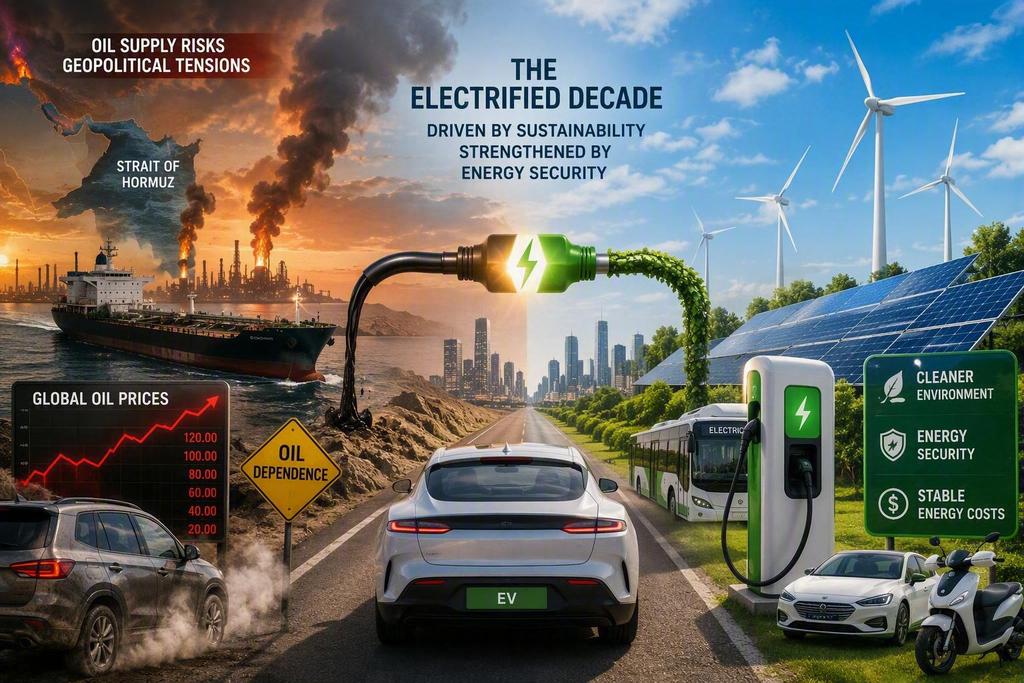
Across Europe, ambitious climate policies, strict emission regulations and strong charging infrastructure have accelerated EV adoption. Countries such as Norway, the Netherlands, Germany and Sweden demonstrate how incentives and supportive policies can make EVs mainstream along with plans to phase out new ICE vehicle sales. In the United States, electrification has become a strategic priority as a driver of technological leadership, industrial competitiveness and energy security. Automakers, including Ford, General Motors and Tesla, are investing heavily in battery technology.
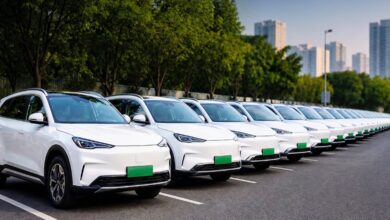
The electrification trend is also expanding across Asia, Latin America and emerging markets, where governments view EVs as a means to reduce oil dependence, improve urban air quality and foster new manufacturing industries. Meanwhile, China has emerged as the world’s largest and most mature EV market. During my visit to Shanghai a few months ago, one observation stayed with me strongly: electric vehicles were not hidden away in traditional automobile showrooms, but they were displayed prominently inside shopping malls, next to premium retail stores, restaurants and consumer electronics brands. For me, this was a clear sign that EVs in China have moved beyond being just vehicles. They have become part of everyday lifestyle, convenience and consumer aspiration. It showed how deeply electric mobility has entered mainstream Chinese society.
In China, buying an EV is increasingly similar to buying a smartphone. Companies like BYD, NIO, XPeng, Zeekr, Li Auto and Xiaomi operate experience centres where consumers can explore vehicles, test technologies and even place orders digitally. This direct-to-consumer approach has helped accelerate EV adoption.
How China Built the World’s Largest EV Ecosystem
- Strong Government Support
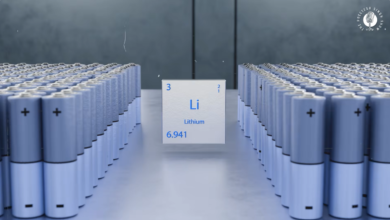
- Battery Leadership
- Charging Infrastructure at Massive Scale
- Intense Competition
During my discussion with Chinese colleagues, I realised that one of the most effective policy drivers behind China’s EV success has been its licence plate advantage. While EV registrations could often be completed immediately, conventional petrol and diesel vehicles faced delays and restrictions. This made EVs the more convenient choice for consumers. China’s experience shows that successful electrification depends not only on vehicle technology but also on a supportive ecosystem of incentives, infrastructure, consumer convenience and government policy.
If China represents the maturity of the EV revolution, India represents its next frontier. China’s success demonstrates how supportive policies, charging infrastructure and consumer-focused incentives can accelerate EV adoption, providing valuable lessons for India. For India, electrification is not only an environmental imperative but also an economic opportunity. With over 80% dependence on imported crude oil, reducing oil consumption can strengthen energy security and improve economic resilience.
India’s EV journey is transforming transportation, energy, manufacturing and urban infrastructure. Supported by government policies, technological advances, rising fuel costs and growing consumer awareness, the market has rapidly evolved from a niche focus on electric two- and three-wheelers to include passenger cars, commercial vehicles, buses and electric trucks.
The Drivers Behind India’s EV Revolution
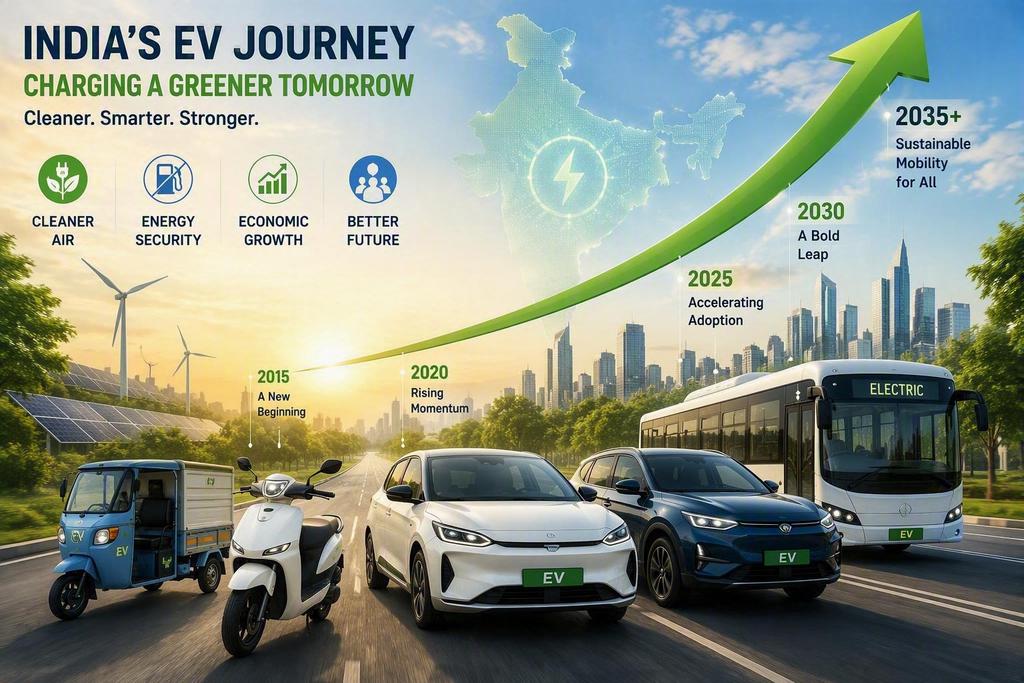
Several factors are driving India’s electrification journey:
1. Government Policy Support
Government initiatives such as FAME, PLI schemes and other EV-focused policies have accelerated adoption and domestic manufacturing. These programmes aim to reduce dependence on imported fossil fuels while strengthening India’s automotive and battery industries.
2. Economic and Environmental Imperatives
With heavy reliance on imported crude oil, EVs offer India a pathway to improved energy security, lower emissions, and cleaner urban air. Their benefits will grow further as renewable energy expands.
3. Advancing Technology
Declining battery costs, improved vehicle range, and better performance have made EVs increasingly practical. Consumers now have access to a growing range of electric two-wheelers, cars, and commercial vehicles.
The Rise of Electric Two-Wheelers
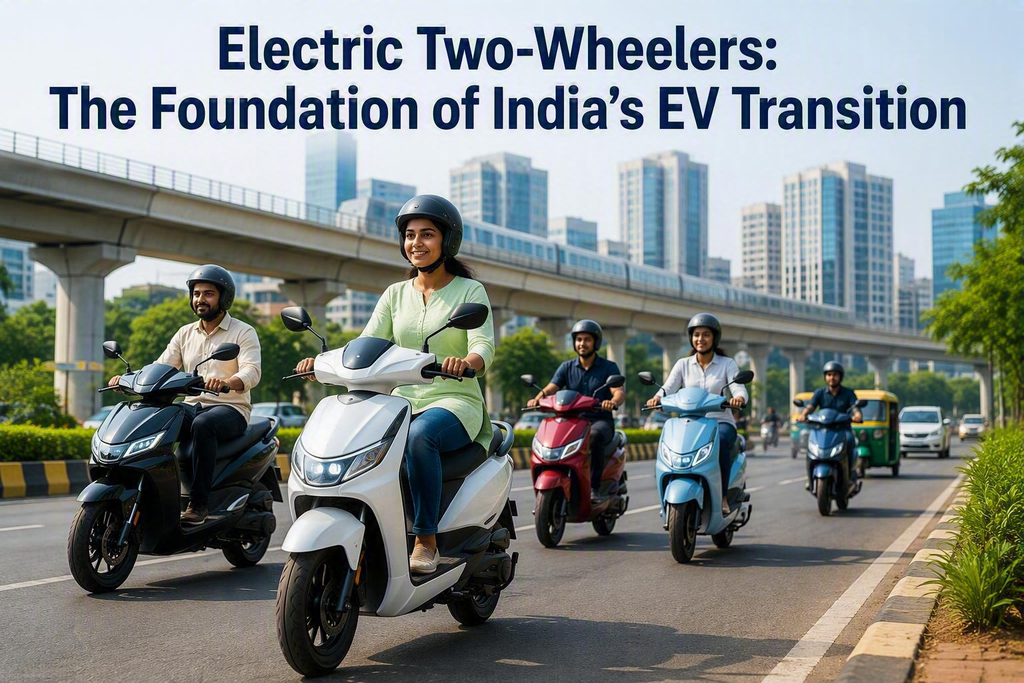
Electric two-wheelers are the foundation of India’s EV transition due to their affordability and suitability for daily urban travel. Companies such as Ola Electric, TVS, Bajaj, Ather and Hero have expanded consumer choices, making e-two-wheelers the largest segment of India’s EV market. Their success highlights the importance of aligning technology with consumer needs and economic realities.
Beyond Two-Wheelers: Expanding the Ecosystem
Electric mobility is expanding across India, with passenger EVs gaining momentum as manufacturers offer more models across price segments. Electric buses are emerging as a key pillar of sustainable public transportation, supported by government initiatives. At the same time, commercial mobility is rapidly electrifying, with fleets, three-wheelers and last-mile delivery vehicles benefiting from lower operating costs.
Building the Supporting Infrastructure
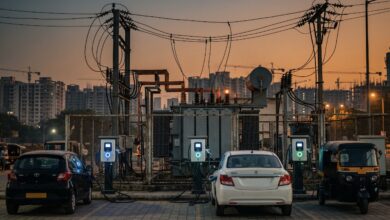
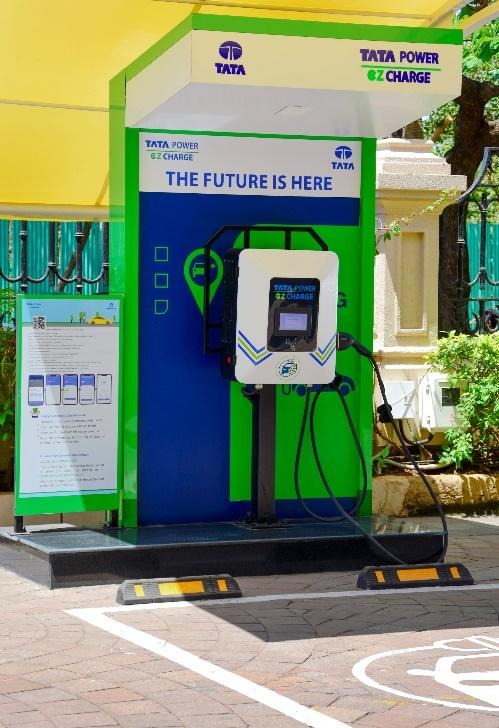
A strong charging network is essential for accelerating EV adoption in India. Through collaboration among government bodies, utilities, automakers and service providers, the country is expanding public and fast-charging stations, workplace and residential charging, along with battery-swapping solutions. These developments are improving charging accessibility, reducing range anxiety and building greater confidence among consumers.
In India, several states are introducing their own EV policies; recently Delhi has launched. The Delhi government has unveiled a comprehensive roadmap to expand EV charging infrastructure, mandating public charging stations at dealerships, introducing a single-window approval mechanism, and promoting community charging through RWAs and housing societies.
The Localization Opportunity
India’s EV ambitions extend beyond vehicle sales to building a complete domestic value chain. Supported by PLI and Make in India initiatives, increased localization can lower costs, create jobs and strengthen supply-chain resilience while positioning India as a major EV manufacturing hub.
Challenges that remain
Despite impressive progress, several challenges persist:
- Battery supply chain dependence for critical minerals such as lithium, nickel, and cobalt.
- Charging infrastructure gaps in smaller cities and rural areas.
- Consumer concerns regarding vehicle range, resale value and battery longevity.
- Grid readiness required to support large-scale electrification.
- Policy harmonisation across states and vehicle segments.
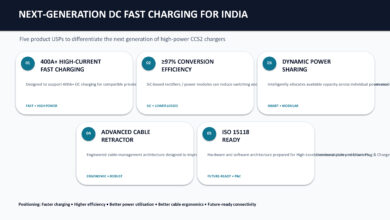
Addressing these challenges will require continued collaboration between industry, policymakers, energy providers and technology innovators. Tata Power operates India’s largest public EV charging network, offering over 5,500 public charging points spanning more than 620 cities and 550+ towns. It provides AC and DC fast-charging solutions for homes, workplaces, commercial fleets and major highways.
The Road Ahead
India’s EV ecosystem is moving from early adoption towards rapid scaling, with the coming years expected to bring greater electrification across all modes of transportation, wider charging networks, stronger domestic battery manufacturing capabilities, and deeper integration of renewable energy with mobility. Together, these developments will play a crucial role in building a cleaner, more efficient and sustainable transportation ecosystem. The electrified decade is not simply about replacing gasoline with batteries. It represents a broader transformation of mobility, energy, manufacturing and sustainability. Tata Group is entering large-scale battery manufacturing through its global subsidiary, Agratas Energy Storage Solutions, building a massive gigafactory in Sanand, Gujarat, with an investment of ₹13,000 crore and scheduled production starting in 2027.
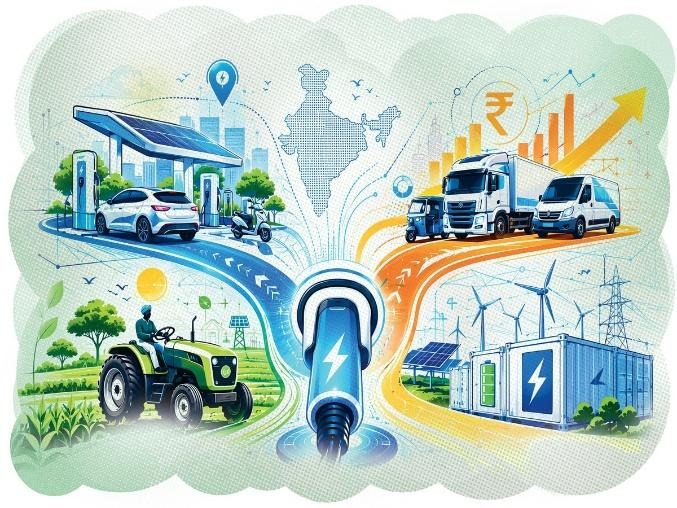
To sum up, India stands at a pivotal moment in its mobility evolution. The country has moved beyond the question of whether electrification will happen and is now focused on determining how rapidly and effectively it can scale. Supported by policy initiatives, technological innovation, infrastructure development, and industry investment, India’s EV ecosystem is steadily expanding into a comprehensive mobility revolution. The electrified decade offers India a unique opportunity to build cleaner cities, strengthen energy security, create high-value manufacturing jobs, and establish itself as a global leader in sustainable transportation. The journey has begun, and the momentum continues to grow.

Mantosh Kumar
General Manager and Head of Engineering Solutions and Standards
AUMOVIO
Note to Readers: The views expressed in this article are those of the author and are presented for informational purposes only. They do not necessarily represent the views of Mobility Electrified.