Charging Beyond the Grid: How BESS Can Unlock India’s Next Phase of EV Infrastructure

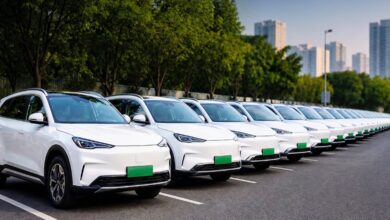
India’s automotive industry is moving rapidly towards electric mobility. EV adoption is growing across passenger vehicles, two-wheelers, commercial fleets, logistics and public transport. But as the number of EVs on the road increases, one question is becoming increasingly important: are we building the charging infrastructure fast enough to support this transition? Just as conventional mobility has always depended on a reliable fuel network, electric mobility needs a dependable charging network. India has already started building this network, with high-capacity DC chargers being deployed across Tier 1, Tier 2 and Tier 3 cities. Charging is no longer limited to a few metropolitan locations; it is gradually becoming an important part of the wider mobility infrastructure. However, as we work towards deploying more charging stations, we are also seeing another challenge becoming increasingly difficult to ignore: power availability.
The Challenge Behind the Charger
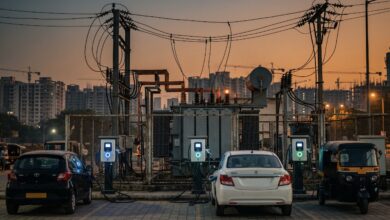
A charging station may look like a simple infrastructure asset, but the electrical infrastructure behind it is far more complex. A location can have excellent traffic movement, strong EV demand and good commercial potential, yet the project may not move forward if sufficient power is not available. High-capacity DC chargers can need large electrical loads, particularly when multiple vehicles need to charge simultaneously. This can put additional pressure on existing transformers and distribution networks. Obtaining a higher sanctioned load, installing more transformers, or upgrading the electrical infrastructure can take considerable time and investment. A commercially attractive site can remain under development simply because the required grid capacity is not immediately available. This makes power availability one of the key factors that will determine how quickly India’s charging network can scale.
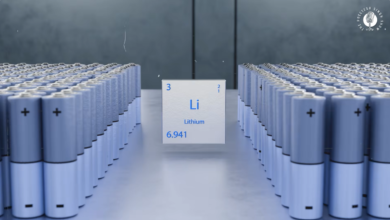
Where Battery Energy Storage Systems (BESS) Can Make a Difference. This is where BESS can become an important part of the charging ecosystem.
BESS should not be viewed as a replacement for the grid. Instead, it can work alongside the grid to provide flexibility in managing charging demand. A charging station can draw energy from the grid during periods of lower demand and store it in the BESS. When charging demand increases, the stored energy can support the chargers. This can help manage peak demand and reduce the pressure on the grid connection. For example, a site may have limited available grid capacity but enough commercial potential to justify multiple high-capacity chargers. Rather than waiting for a complete grid upgrade before scaling the site, integrating BESS could allow the available grid power and stored energy to work together.
From Charging Stations to Energy Hubs
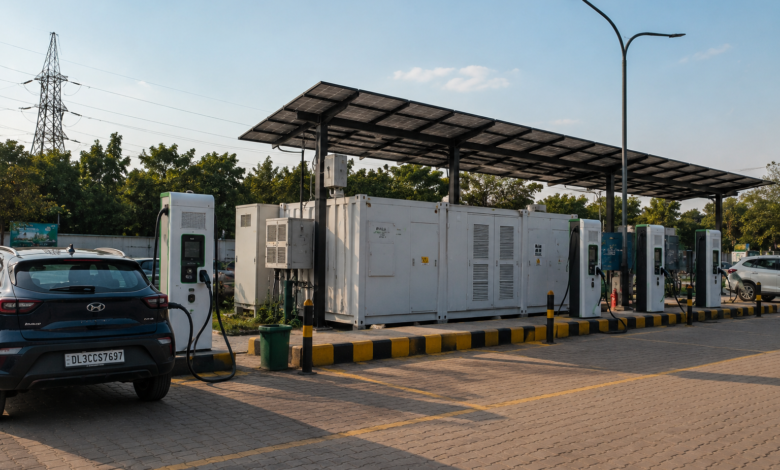
I believe this will gradually change the way charging stations are designed. The charging hub of the future may not simply consist of chargers connected to the grid. It could bring together EV chargers, BESS, solar generation and an intelligent Energy Management System (EMS). Solar energy can be used directly for charging or stored in the BESS, while grid power can continue to provide the base energy requirement. The EMS can then manage how these diverse sources are used depending on charging demand and energy availability. This becomes particularly relevant for highway charging hubs, commercial fleet facilities, logistics parks, and other locations where multiple vehicles may need to charge simultaneously. It also creates an opportunity to make better use of renewable energy. Instead of relying only on the availability of solar generation at a particular time, excess generation can potentially be stored and used when charging demand increases. The result is a charging station that behaves more like an integrated energy hub rather than a standalone electrical load.
Rethinking Charging Site Development
BESS can also influence how we approach site choice and project planning. Today, factors such as traffic, accessibility, land availability, customer demand, and commercial viability are major considerations when evaluating a charging location. Going forward, energy availability should become an equally important part of this evaluation. A site with strong EV demand should not automatically be considered unviable simply because its existing grid capacity is limited. Instead, developers can evaluate whether a combination of available grid power, BESS, renewable energy, and intelligent load management can make the location technically and commercially viable.
Building India’s Electrified Decade
India’s EV transition is not only a mobility transition; it is also an energy-infrastructure transition. The success of electric mobility will depend not just on the number of chargers we deploy, but on whether those chargers can reliably deliver power when and where it is required. The grid will remain central to India’s charging ecosystem. However, as charging demand increases, relying only on conventional grid expansion may not always be the fastest or most practical way to scale. BESS can provide an additional layer of flexibility between the grid and the charger, helping manage peak demand and potentially accelerating deployment in locations where power availability is a constraint. India does not just need more charging stations; it needs smarter charging infrastructure. Integrating BESS, renewable energy and intelligent energy management can help create a charging network that is more flexible, reliable and scalable.
The future of electric mobility will be determined by how effectively we build its infrastructure today. EVs may be the future of mobility, but the energy infrastructure supporting them will determine how quickly that future becomes a reality.

Harsh Verma,
Business Head,
CPO Assist
Note to Readers: The views expressed in this article are those of the author and are presented for informational purposes only. They do not necessarily represent the views of Mobility Electrified.