Accidental Tailwinds: How Policy Is Shaping India’s Electric Car Market in 2026

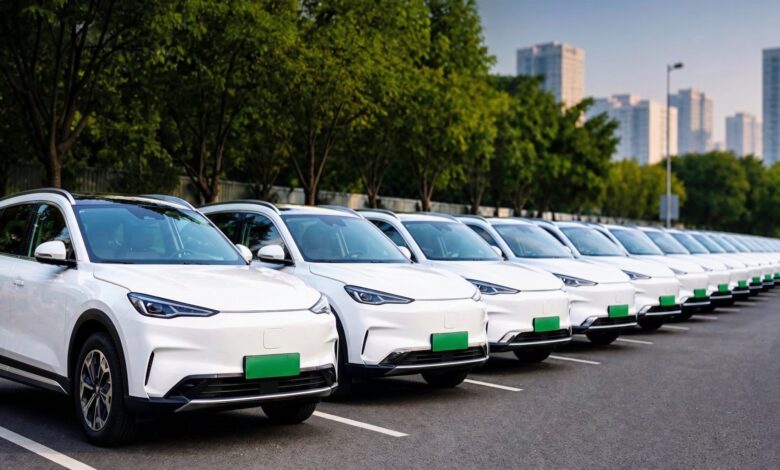
Ethanol policy was never framed as EV policy. This year it did more for electric car demand than most measures that were. That’s how sensitive markets are!
In July 2026, Indians registered 31,788 electric cars — 82 per cent more than in July last year and 7.8 per cent of all new passenger car registrations. Across all segments, it was the industry’s best month on record. When I trace this year’s numbers back to the policies that moved them, the reasons may not be the ones policy makers intended or expected.
Cars were given one lever, not several
Start with a fact that surprises people outside the industry: the electric car is the only vehicle segment in India that has never received a central purchase incentive. PM E-Drive, the ₹10,900 crore successor to FAME-II, funds electric two-wheelers, three-wheelers, buses, trucks, ambulances and public charging infrastructure. Cars were excluded by design.
The stated ground was that the concessional 5 per cent GST rate on electric cars is adequate support. That decision placed the entire weight of central support for electric cars on one instrument – a tax rate. The contrast in adoption is hard to ignore vs the 2W & 3W segments, but there are multiple other factors also at play.
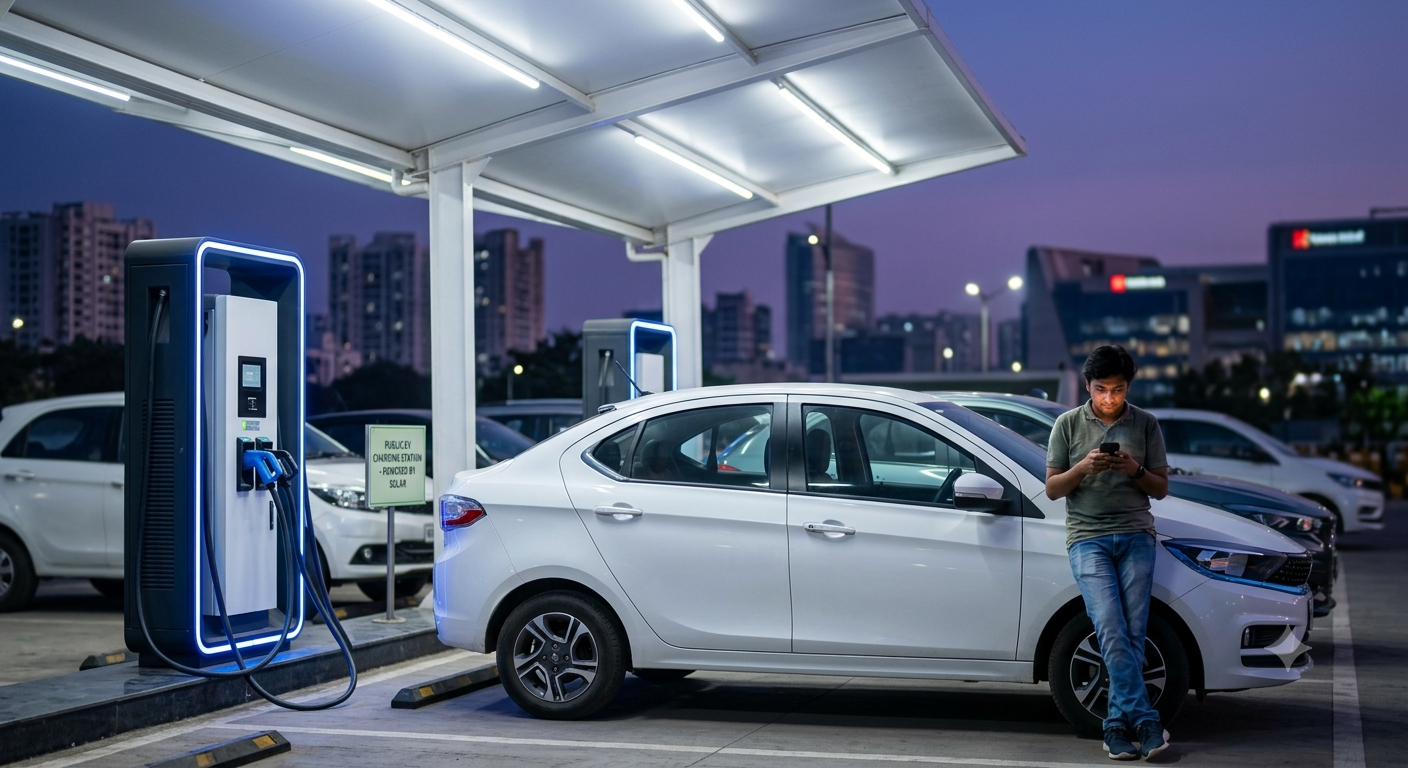
What helped: a fuel policy that backfired?
The strongest demand-side push for electric cars in 2026 came from a policy with no EV intent at all. India reached 20 per cent ethanol blending in 2025, years ahead of the original schedule and E20 became the default petrol nationwide from April 2025, with a roadmap now pointing to E25 and E30.
Then came the backlash. ARAI puts the efficiency dip at 1–6 per cent; the transport minister told Parliament in July that E20 lowers mileage by 2–6 per cent; a LocalCircles survey found roughly five in ten vehicle owners reporting lower mileage and a petition before the Supreme Court seeks mandatory ethanol labelling at pumps. Fewer kilometres per rupee of petrol strengthens the running-cost case for an electric car and market commentary has now explicitly connected E20 discontent to rising EV consideration.
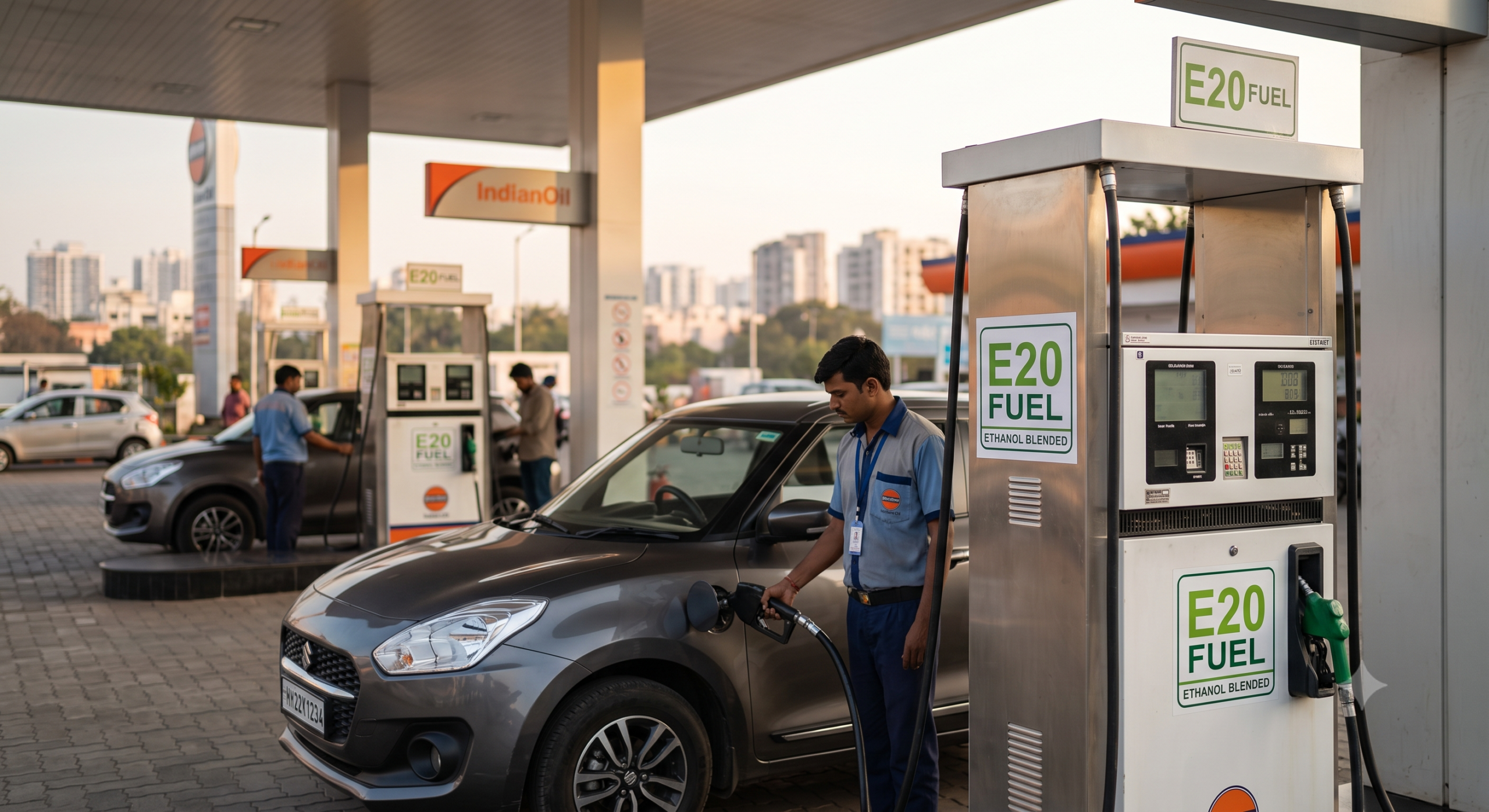
Electric car sales rose 82 per cent through this period. Ethanol policy was never framed as EV policy. This year it did more for electric car demand than most measures that were. Lesson to be learnt: uncertain policies drive customers away fast and OEMs faster!
What Could hurt: the tax advantage is being handed back!
The GST reform of September 2025 replaced the 28-per-cent-plus-cess structure with two slabs: 18 per cent for small cars, 40 per cent for larger cars and SUVs. Electric cars stayed at 5 per cent. On paper, the gap widened for bigger cars and reduced for smaller cars (sub-4m).
But a rate advantage only translates into a price advantage while the tax paid is unrecoverable. Under Section 17(5)(a) of the CGST Act, businesses cannot claim input tax credit on passenger vehicles, barring a few categories. In July 2026, the GST Council’s law committee — as part of an ease-of-doing-business review, proposed allowing companies to claim ITC on cars bought in the company’s name for employee use.
The proposal awaits Council approval.
Consider what that does, for a larger car with an ex-GST price of ₹20 lakh. Today, the electric buyer’s ₹7 lakh advantage is real money. If ITC is allowed, both taxes become recoverable and the advantage goes to zero indeed, the more heavily taxed vehicle recovers more. Retail buyers are unaffected; but corporate and fleet purchases are precisely where electric car volumes have been growing fastest.
What didn’t help: the loosening regulatory push to Greener Cars
The July 2026 draft of CAFE-III eased fleet CO₂ targets relative to earlier proposals. Easier targets mean less regulatory reason for manufacturers to sell electric cars. To be fair, the same draft cut the strong-hybrid super-credit from 2.0 to 1.6 and the flex-fuel credit from 1.5 to 1.1, which narrows the compliance value of non-electric alternatives and dropped a proposed small-car concession after objections that it would principally benefit one manufacturer. The net direction, though, is a weaker pull toward zero-emission vehicles.
Mixed: the states and a ceiling that lapsed
Delhi’s EV Policy 2026 shows both faces at once: a ₹1 lakh scrappage-linked incentive and continued waiver of road tax and registration for EVs — now capped at ₹30 lakh ex-showroom, withdrawing support above that line. And the Ministry of Power’s ceiling on public charging tariffs, capped at the average cost of supply, ran only to 31 March 2026; no extension has been publicly notified.
The pattern and my two cents
Line these up and a pattern emerges. The year’s one clear tailwind was an accidental fuel policy. The headwinds came from tax policy, emissions policy, trade policy, state policy and power policy — each decided by a different owner, for reasons that had little to do with electric cars. Two- and three-wheelers have one scheme, one ministry, one published target. Cars have six or seven instruments and nobody holding the total.
Two modest fixes could still help.
First, if the ITC relief goes through, make it rate-neutral rather than rate-proportional: cap creditable GST at the EV rate or taper it against CO₂. Companies still get the simplification; the transition is not repriced by accident.
Second, publish a periodic consolidated assessment of how these instruments jointly affect the passenger car trajectory — not a new scheme or a new authority, just one view, so that decisions taken elsewhere are seen in context before they take effect.
India’s stated aspiration is 30 per cent EV penetration by 2030, against 7.8 per cent for cars today. The gap will not be closed by accident. It will require strategic multi-body orchestration of directing policies & subsidies in a common direction with clear long term policy intent demonstrated to customer & OEM alike.