Why Sdvs Are The Backbone Of Future Mobility Ecosystems: Is This Replacing The Demand For Traditional Vehicles?

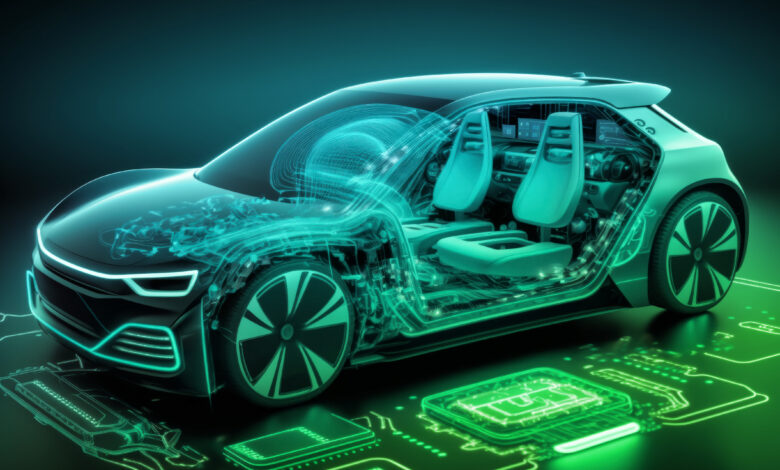
The automotive industry stands at a pivotal crossroads. Software-Defined Vehicles (SDVs) represent a fundamental paradigm shift where software determines an increasing share of vehicle functionality. Unlike traditional vehicles with fixed capabilities at purchase, SDVs can gain new features, improved safety protocols or enhanced performance long after leaving the dealership, transforming the car into a ‘smartphone on wheels’ that evolves throughout its lifecycle. But why is this shift not just desirable but necessary? The answer lies in a confluence of forces that are making the traditional automotive development model unsustainable.
The unsustainable complexity problem: Software complexity in modern vehicles is growing 2-3x faster than development productivity. Simply continuing to add software engineers is NOT a sustainable approach. Modern vehicles now contain over 200 million lines of code, more than a fighter jet or a smartphone and managing this without a unified architecture is simply impossible. The traditional ECU-by-ECU approach is economically unsustainable. Each additional dimension, whether it’s new functions, system configurations, regional variants or new microcontrollers, leads to a MULTIPLICATION of software costs, not a linear increase. This variant explosion means R&D effort grows exponentially, threatening the very economics of vehicle development.
Consumer expectations: Today’s consumers, raised on smartphones, expect their cars to behave similarly: regular updates, new features, personalisation and always-connected experiences. Vehicle differentiation is shifting from horsepower and torque to user experience, digital features, and software capabilities. Perhaps most critically, traditional vehicles depreciate from day one, but consumers now expect products that IMPROVE over time through updates. Remote unlocking, predictive maintenance, automatic efficiency updates and voice assistants are becoming baseline expectations, not premium features.
Industry survival imperative: The business model crisis is real: one-time hardware sales cannot sustain automotive companies in the long term. Recurring software revenue is essential for viability. Meanwhile, big tech players like Apple, Google, Amazon, etc are entering the mobility space. Traditional OEMs must become software companies or risk becoming irrelevant. Adding urgency, Chinese OEMs are now exporting SDV-native vehicles globally, vehicles that are born digital, not retrofitted. Traditional OEMs must match this capability. The fact that 66% of OEMs now plan to partner with software firms is a clear acknowledgement that they cannot do this alone.
Regulatory and safety drivers: Regulation is accelerating the shift. UN R155 now requires automotive cybersecurity management systems, making OTA update capability mandatory for security patches. ISO 26262 functional safety requirements demand the ability to update safety-critical systems throughout the vehicle lifecycle. Software-based powertrain optimisation has become essential for meeting increasingly stringent emission norms.
The economics are compelling: Software-based recalls via OTA are 10-100x cheaper than physical recalls. SDV architecture isn’t just technically superior; it’s economically necessary.
Electrification demands SDV: The rapid adoption of electric vehicles is intrinsically linked to SDV architecture. EVs require sophisticated battery management algorithms that must evolve with battery chemistry and usage patterns. Range optimisation, regenerative braking, and thermal management are all software-intensive domains requiring continuous improvement. Complex charging protocols, grid integration, and smart charging are impossible without software-defined architecture. Significantly, all currently available models with zonal architectures and extensive OTA capabilities are battery electric. EVs are pioneering SDV and the two revolutions are inseparable.
SDVs represent more than a technological upgrade; they are the foundation upon which the entire future mobility ecosystem will be built. Continuous improvement becomes reality. Vehicles improve over time through software updates. A 3-year-old car can be more capable than when purchased, a complete reversal of the traditional depreciation model. SDVs create connected ecosystems linking manufacturers, cloud providers, semiconductor partners, mobility service providers, and software developers in ways impossible with traditional vehicles. Cost efficiency is dramatically improved. Cloud-first workflows enable more than 80% of software bugs to be discovered before hardware availability, 10x faster test runs, and 24/7 worldwide development collaboration. Innovation speed accelerates exponentially. While traditional automotive growth is 3-4%, the SDV segment is expanding at 25-30% annually, signalling where the future lies.
IS SDV REPLACING TRADITIONAL VEHICLES?
This is perhaps the most critical question for manufacturers, suppliers, and consumers alike. The answer is nuanced: SDVs are not replacing traditional vehicles; they ARE the evolution of vehicles. We are in a transition phase where many automakers are deploying intermediate architectures, consolidating some functions while retaining dedicated controllers for safety-critical systems. This hybrid approach allows manufacturers to expand software capabilities while managing development costs and risks. For consumers, SDVs offer unprecedented convenience: remote unlocking, automatic updates for fuel efficiency, and predictive maintenance alerts. Unlike traditional vehicles that depreciate from day one, SDVs can improve over time, fundamentally changing the ownership value proposition. The coexistence model is practical and pragmatic. Pure SDV architecture and traditional systems will overlap for years, with gradual migration as technology matures and ecosystems develop.
The key thesis is clear: SDVs are not replacing traditional vehicles; they ARE the evolution of vehicles. The question isn’t whether SDVs will reshape mobility, but how quickly stakeholders can capitalise on this opportunity. The future of mobility will not be defined by batteries or motors alone, but by code, connectivity, and continuous innovation. The companies that recognise this shift and act on it will define the next era of mobility. Those that don’t will find themselves producing yesterday’s technology in tomorrow’s market.

Umesh Hiremath,
Engineering Manager
Elektrobit
Note to Readers: The views expressed in this article are those of the author and are presented for informational purposes only. They do not necessarily represent the views of Mobility Electrified.